413 - “Am I concerned about it? Not really, not at that age”: Caregiver Perspectives on Pediatric Blood Pressure Screening and Hypertension Risk
Friday, April 24, 2026
5:30pm - 8:00pm ET
Publication Number: 1396.413
Melissa Goulding, University of Massachusetts Medical School, Worcester, MA, United States; Grace W. Ryan, University of Massachusetts Chan Medical School, Worcester, MA, United States; Jessica L. Caouette, University of Massachusetts Medical School, Worcester, MA, United States; Arvin Garg, UMass Memorial Children's Medical Center, Worcester, MA, United States; Michelle Trivedi, UMass Memorial, Worcester, MA, United States; Milagros Rosal, UMass Chan Medical School, Worcester, MA, United States; Stephenie Lemon, UMass Chan Medical School, Worcester, MA, United States
Assistant Professor University of Massachusetts Medical School Worcester, Massachusetts, United States
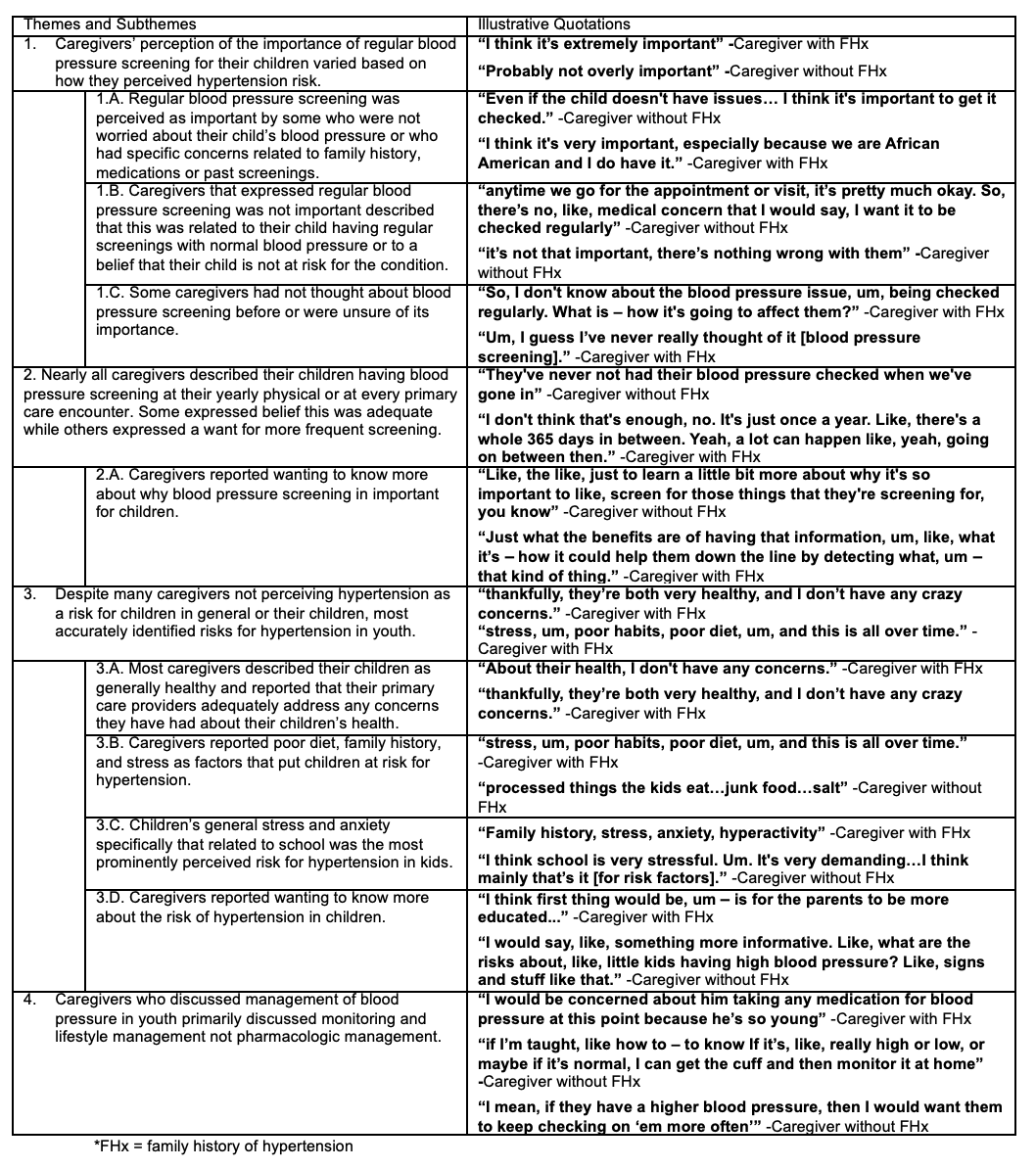
Background: Blood pressure in youth influences cardiovascular health across the life course and approximately 14% of youth in the United States have elevated blood pressure or hypertension. Yet, adherence to the American Academy of Pediatrics ' screening and management guidelines is low, and little is known about how caregivers perceive blood pressure screening and/or pediatric hypertension. Objective: To describe caregiver perspectives on blood pressure screening and hypertension in pediatric populations. Design/Methods: We conducted semi-structured interviews with caregivers of children aged 3-17 years old who were seen within a pediatric primary care clinic at an urban academic medical center. Interview guides were designed to illicit perspectives on blood pressure screening and hypertension in youth. Interviews were audio recorded and professionally transcribed. We used rapid qualitative analysis to synthesize themes from the data. Results: We interviewed 32 caregivers of whom 18 reported personal or family history of hypertension and 2 reported child history of high blood pressure. The mean age was 39 years (SD 9.7) for caregivers and 9 years (SD 4.9) for children. Most caregivers had multiple children and were female (84%). Themes are detailed in Table 1. 1) Caregivers' perception of the importance of regular blood pressure screening for their children varied based on how they perceived hypertension risk. 2) Nearly all caregivers described their children having blood pressure screening at their yearly physical or at every primary care encounter. Most felt this was adequate, while some wanted more frequent blood pressure screening for their children. 3) Despite many caregivers not perceiving hypertension as a risk for their children or children in general, most accurately identified risks for hypertension in youth including diet, family history, and stress. 4) Caregivers who discussed management of blood pressure in youth primarily discussed monitoring and lifestyle management not pharmacologic management.
Conclusion(s): These findings provide important insights on caregivers' perceptions of blood pressure screening and hypertension risk in youth. Caregivers recognized the risk factors for pediatric hypertension and acknowledged the importance of blood pressure screening, but most did not believe their children were at risk for hypertension. This highlights the need for outreach to educate Caregivers about the risks of undiagnosed hypertension in childhood and the impacts on long-term cardiovascular health.