








Neonatal Fetal Nutrition & Metabolism
Session: Neonatal Fetal Nutrition & Metabolism 1

Olivia C. Brandon, BS (she/her/hers)
Medical Student
University of Washington School of Medicine
Seattle, Washington, United States
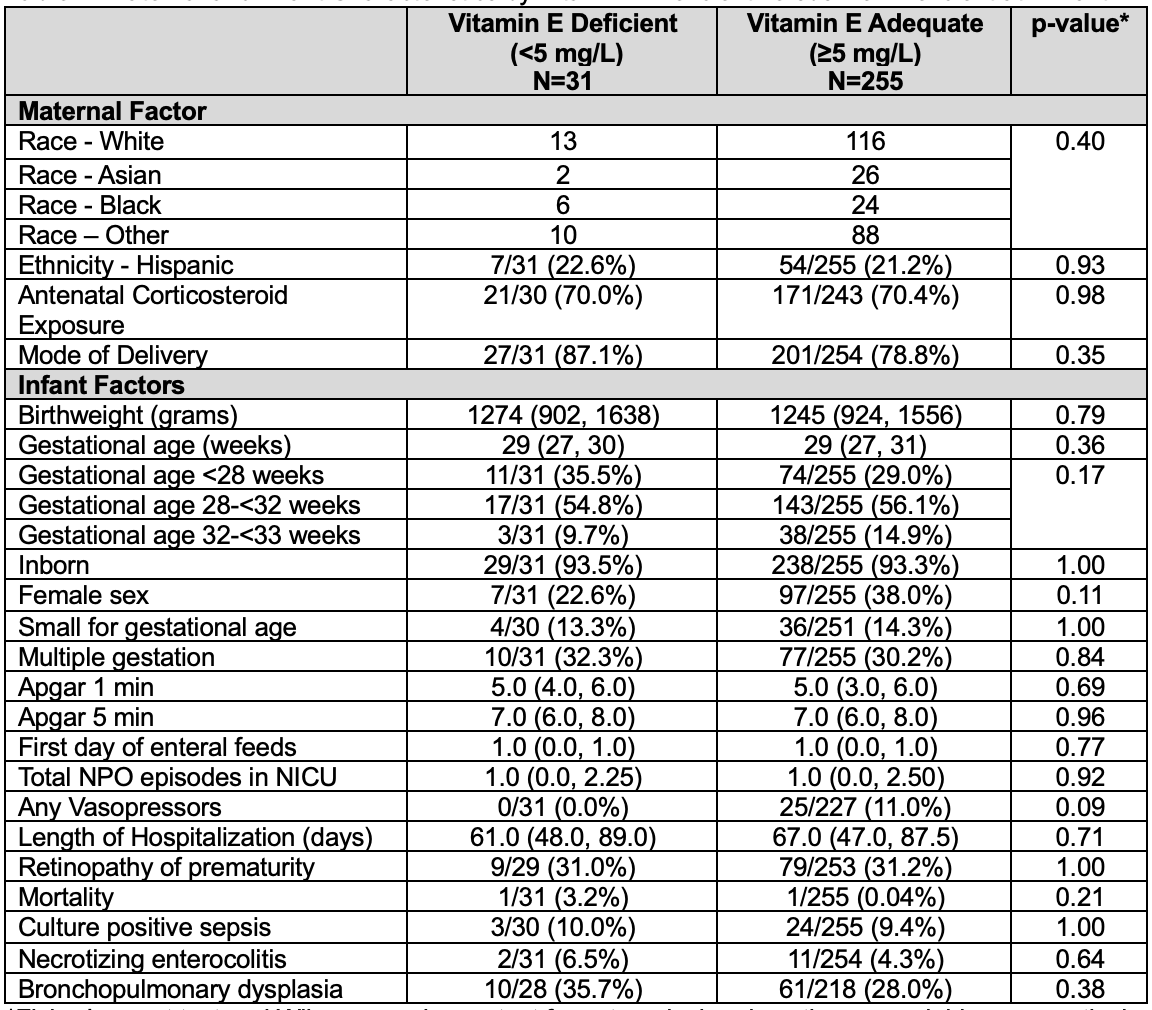 *Fisher's exact test and Wilcoxon rank sum test for categorical and continuous variables, respectively. Continuous data is presented as median (IQR) and categorical data as n (%). Abbreviations: NICU, neonatal intensive care unit; NPO, nil per os (nothing by mouth). Necrotizing enterocolitis was defined as Bell's stage IIA or higher. Bronchopulmonary dysplasia was defined as oxygen or positive pressure support at 36 weeks post-menstrual age. Small for gestational age was defined as birthweight <10th percentile for gestational age using Fenton growth standards.
 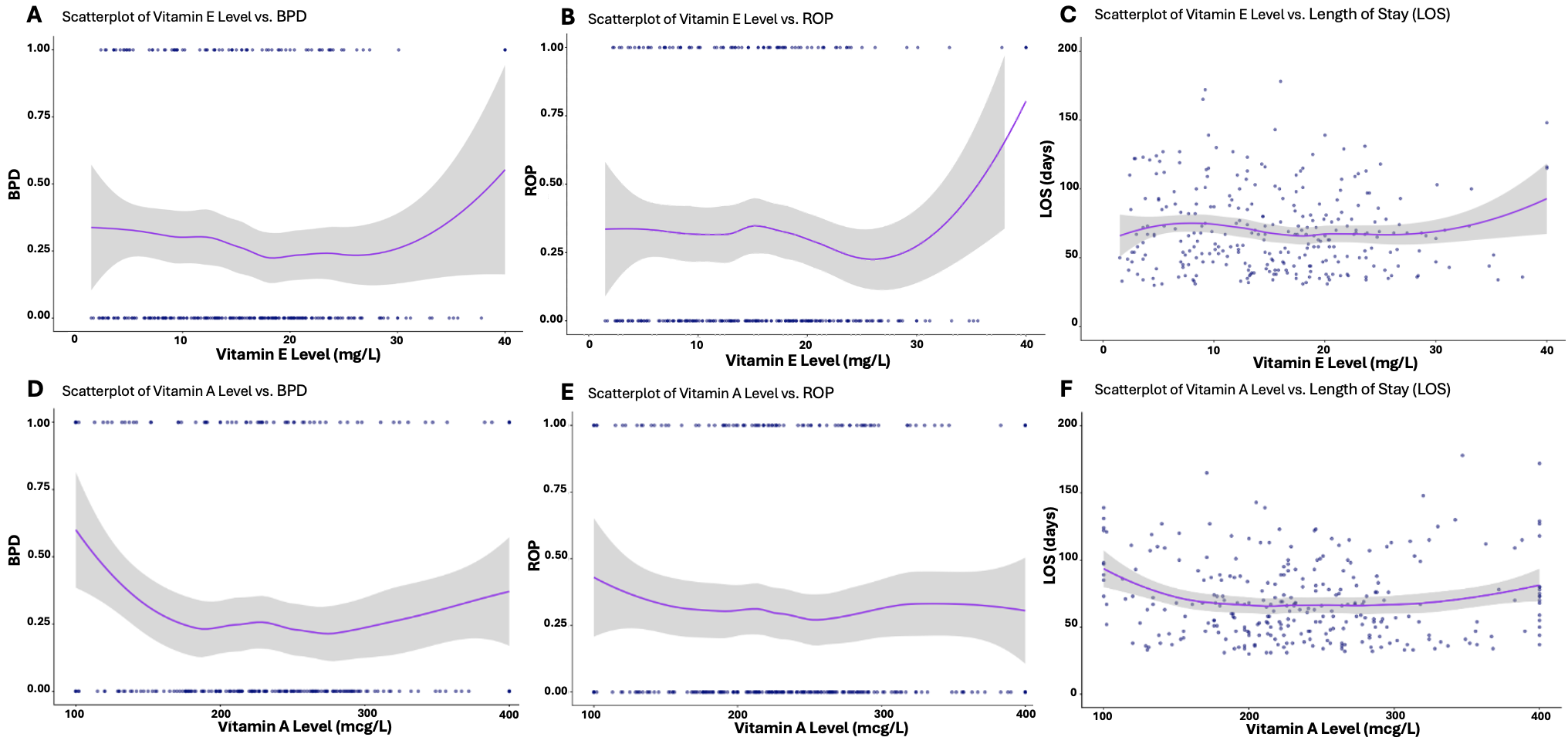 Curves were relatively flat across the observed vitamin E (0-40 mg/L) and vitamin A (100-400 mcg/L) levels, indicating no clear associations, which is consistent with univariate and multivariate analyses. Gray shaded areas represent the 95% confidence intervals of the mean. Points at y=1 represent babies with BPD or ROP, while points at y=0 represent babies without BPD or ROP.
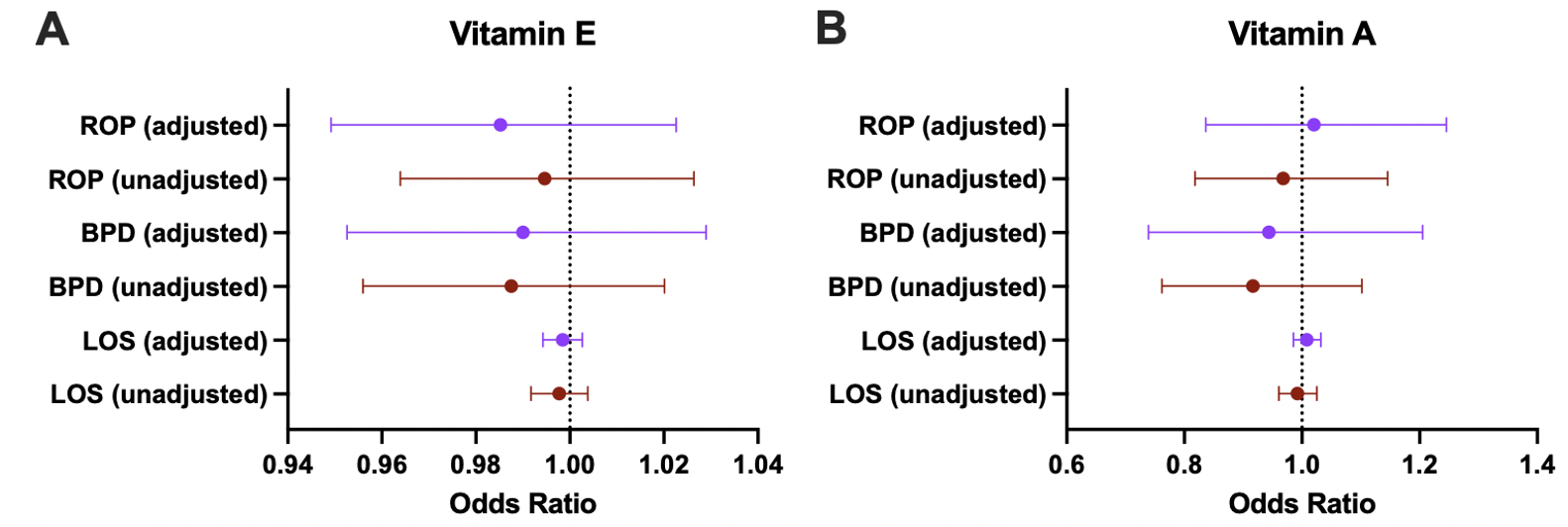 Linear regression was used for LOS (estimate and 95% confidence interval shown), and logistic regression was used for BPD and ROP (odds ratio and 95% confidence interval shown). Adjustments include antenatal corticosteroid exposure, inborn/outborn status, small-for-gestational age status, vasopressor use in the first week after birth, sex, and gestational age. Neither vitamin E nor vitamin A shows any significant associations with in-hospital outcomes. Odds ratios are shown per 1 mg/L increase in vitamin E and per 50 mcg/L in vitamin A.