676 - Effects of Prophylactic Probiotics Supplementation on Infants Born Extremely Preterm or Extremely Low Birth Weight
Friday, April 24, 2026
5:30pm - 8:00pm ET
Publication Number: 1653.676
Arpitha Chiruvolu, Baylor University Medical Center, Dallas, TX, United States; Uma P. Reddy, Texas A&M Health Science Center College of Medicine, Allen, TX, United States; Heather S. Hendrikson, Baylor Scott and White Health System/Aramark, Flower Mound, TX, United States; Amy Reedy, Baylor Scott & White Medical Center of McKinney, McKinney, TX, United States; Sameera Chiruvolu, Case Western Reserve University, Dallas, TX, United States; Sujata Desai, Pediatrix Medical Group, Dallas, TX, United States; Mustafa Suterwala, Texas A&M Health Science Center College of Medicine, Dallas, TX, United States; Jordan Reis, Pediatrix, Dallas, TX, United States
Medical Student Texas A&M Health Science Center College of Medicine Allen, Texas, United States
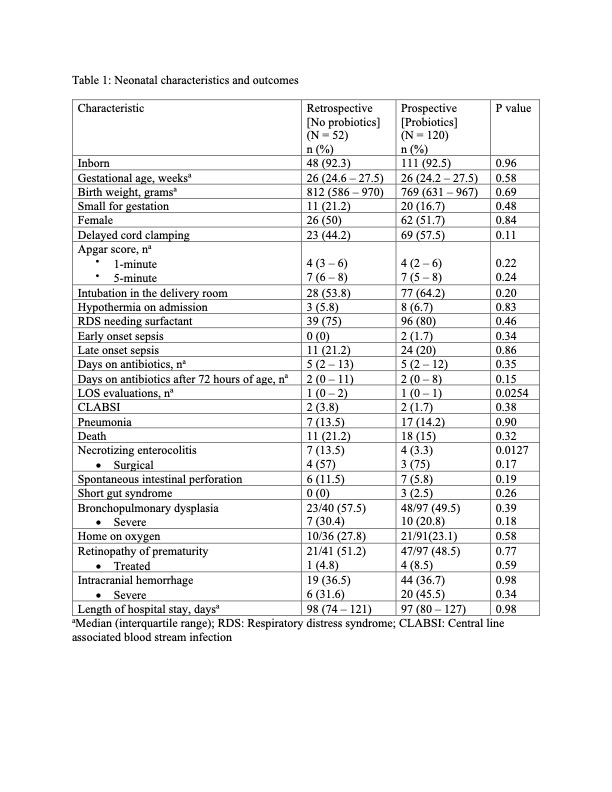
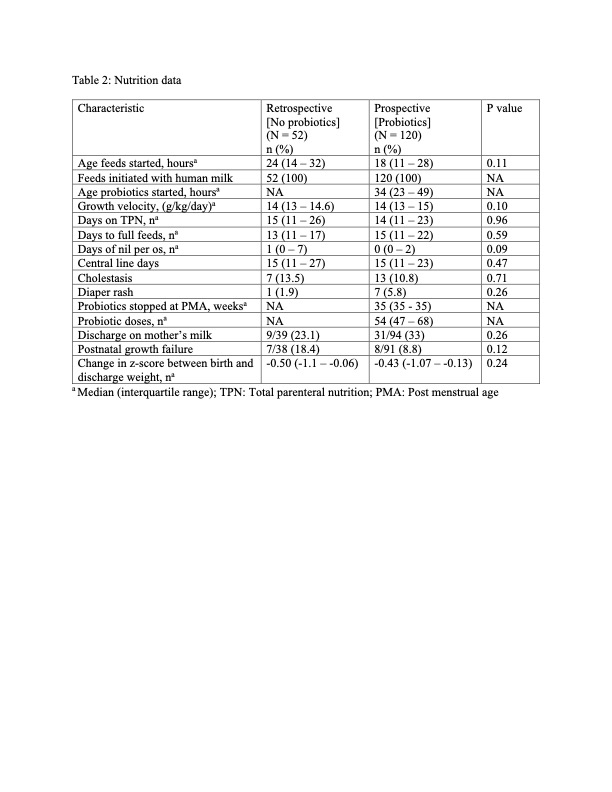
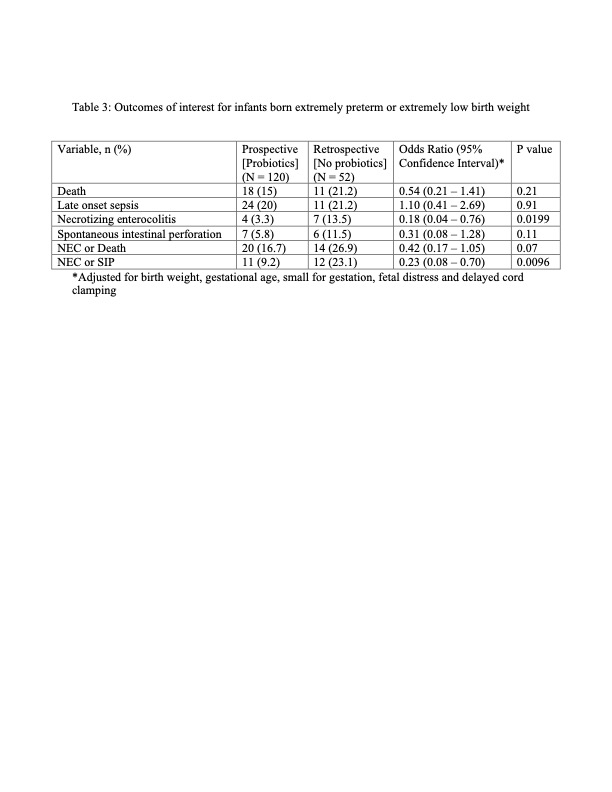
Background: Intestinal dysbiosis appears to be an important risk factor for the development of necrotizing enterocolitis (NEC) in preterm infants. Therefore, optimizing the gut microbiome with probiotics may be a favorable strategy to prevent NEC. In the United States, the use of probiotics in preterm infants had been increasing until the FDA warning in September 2023 which prompted majority of the hospitals, including ours, to pause administration. We feel it is important to report our experience with prophylactic probiotics administration especially in infants born extremely preterm (EP) or extremely low birth weight (ELBW) as there is insufficient evidence regarding safety and efficacy in this high-risk population. Objective: To evaluate the effects of a multi-strain NICU-specific probiotic product (Similac Triblend™ consisting of Bifidobacterium lactis (BB-12®), Bifidobacterium infantis (BB-02™), and Streptococcus thermophilis (TH-4®)) on infants born EP or ELBW. We hypothesized that a guideline-driven routine supplementation would be associated with a reduction of NEC incidence by 50%, from the baseline of 13.5% (one year prior) to 7% in two years after implementation. Design/Methods: In this cohort study, 120 infants born EP or ELBW who received probiotics during the prospective study period (two years after implementation; July 1, 2020 to June 30, 2022; Probiotics group) were compared to a retrospective cohort of 52 EP or ELBW infants who qualified to receive probiotics, but did not, as they were born one year prior to implementation (July 1, 2019 to June 30, 2020; No probiotics group). The outcomes of interest were NEC, death and late-onset sepsis. Results: The median birth gestational age was 26 weeks in both groups. Probiotics were started at a median age of 34 hours of life and were given until 35 weeks post menstrual age. (Tables 1 & 2) The incidence of NEC decreased from 13.5% in the No Probiotics group to 3.3% in Probiotics group (a risk reduction of 75%). Multiple logistic regression after adjusting for different variables showed a significant reduction in NEC with odds ratio (95% confidence interval) 0.18 (0.04 - 0.76). There were no significant differences in the incidence of death or late-onset sepsis. (Table 3) No cases of sepsis with probiotic organisms were noted.
Conclusion(s): A significant reduction was noted in the incidence of NEC with supplementation of probiotics in infants born EP or ELBW with no adverse effects. We are in the process of analyzing the effects of pausing the probiotics administration in this population.
Table 1: Neonatal characteristics and outcomes
Table 2: Nutrition data
Table 3: Outcomes of interest for infants born extremely preterm or extremely low birth weight