Neonatologist Sanford Children's Hospital - Fargo Fargo, North Dakota, United States
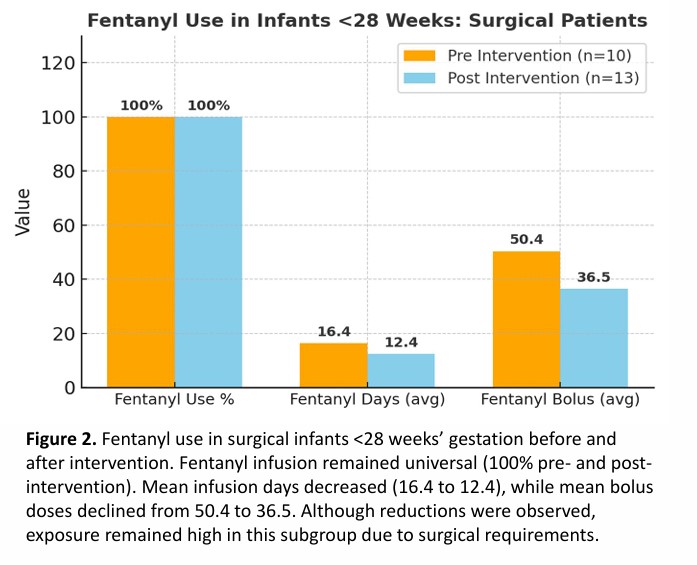
Background: Prolonged opioid exposure in extremely preterm infants is associated with adverse outcomes, including neurodevelopmental impairment, delayed extubation, hypotension, and feeding intolerance. Baseline data in our Level IV NICU demonstrated a high prevalence and duration of continuous fentanyl infusions in infants < 28 weeks' gestation. Recognizing the need for opioid stewardship and culture change, a multidisciplinary team launched a quality improvement (QI) initiative aimed at minimizing unnecessary continuous sedation while maintaining adequate pain control. Objective: To reduce the prevalence, duration, and bolus dosing of continuous fentanyl infusions among extremely and very preterm neonates through a structured, education-driven QI strategy. Design/Methods: Beginning September 2023, a multidisciplinary team of neonatologists, nurses, respiratory therapists, pharmacists, and educators implemented a standardized opioid-reduction initiative. Interventions included targeted staff education on sedation risks, reinforcement of non-pharmacologic comfort measures, and standardized fentanyl weaning and bolus protocols. Data from the post-intervention period (September 2023-July 2025) were compared with baseline data (January 2020-August 2022). Primary measures were the rate of continuous fentanyl infusion, mean infusion duration, and mean number of bolus doses in both surgical and non-surgical patients. Results: A total of 54 infants were included in the pre-intervention group and 46 patients in the post-intervention group. Among non-surgical infants < 28 weeks' gestation, continuous fentanyl use decreased from 34% to 18%, mean infusion duration declined from 5.8 to 1.4 days, and bolus doses decreased from 20.3 to 9.8 (Figure 1). In surgical infants < 28 weeks, fentanyl exposure remained universal (100%), yet mean infusion duration decreased from 16.4 to 12.4 days and bolus doses from 50.4 to 36.5 (Figure 2). The rate of unplanned extubations remained unchanged between the pre- and post-intervention periods.
Conclusion(s): A structured, multidisciplinary opioid-stewardship quality improvement initiative emphasizing education, non-pharmacologic care, and standardized weaning protocols significantly reduced fentanyl exposure among extremely preterm infants.










.png)