316 - Patterns in secure messaging among hospitalists at a large children’s hospital
Friday, April 24, 2026
5:30pm - 8:00pm ET
Publication Number: 1300.316
Emma I. Milne, Johns Hopkins All Children's Hospital, St Petersburg, FL, United States; John M. Morrison, Johns Hopkins All Children's Hospital, Saint Petersburg, FL, United States; Jamee Walters, Johns Hopkins All Children's Hospital, St Petersburg, FL, United States
Pediatric Resident, PGY-3 Johns Hopkins All Children's Hospital St Petersburg, Florida, United States
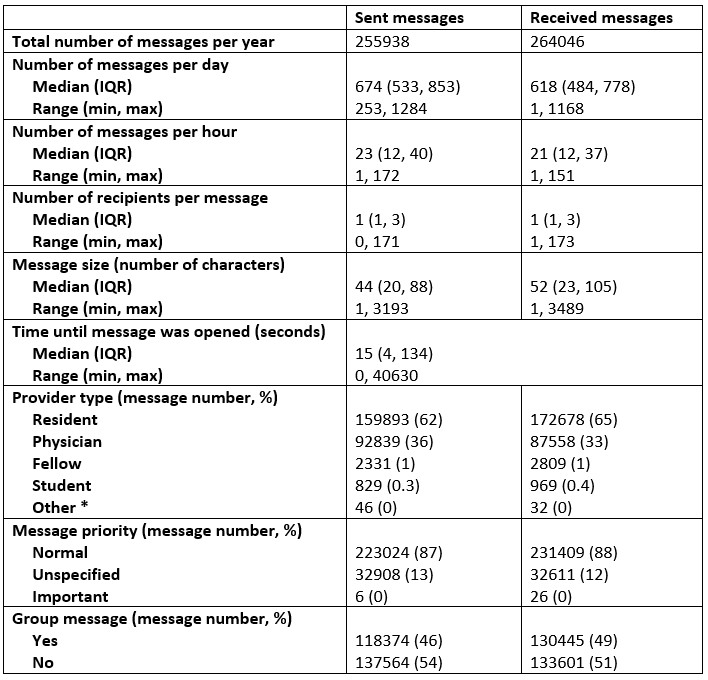
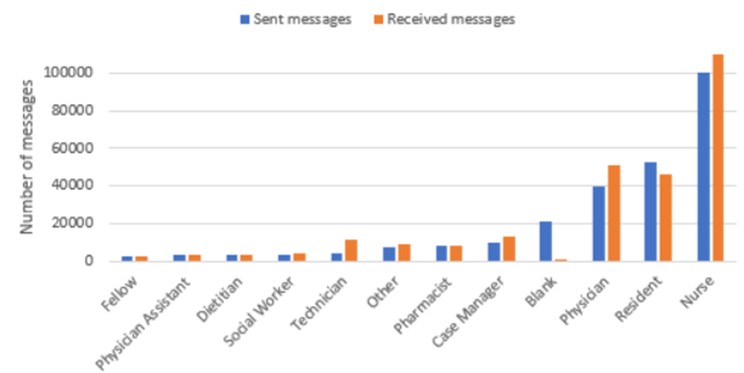
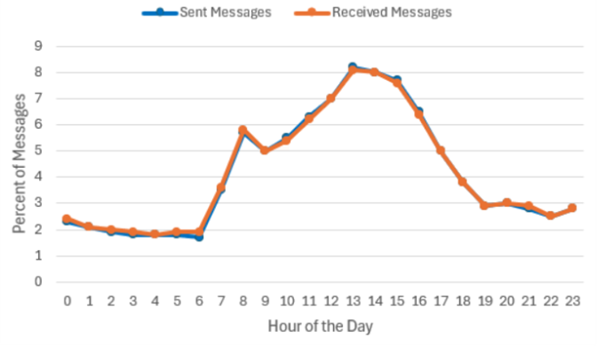
Background: Secure chat messaging replaced hospital paging due to its ease of use and reliability. Emerging data from adult hospitals highlighted issues such as high daily message volumes that can be associated with alarm fatigue, increased multitasking, and greater cognitive load. However, how secure chat messaging is utilized in pediatric hospitals remains poorly understood. Objective: To characterize secure chat messaging at a large, academic tertiary care children's hospital. Design/Methods: We conducted a retrospective cross-sectional study on Epic secure chat messages exchanged by hospital medicine providers from July 1, 2023 to July 1, 2024 at a large academic children's hospital. Message characteristics including message date, time, size, priority, and time a message was opened were extracted. Data were analyzed to evaluate message volume trends over time, and a Pearson correlation coefficient was calculated to assess if message volume was correlated with average morning patient census. Results: Hospitalists sent 255,938 messages and received 264,046 messages in a 12-month period (Table 1). Most messages were received by resident trainees, and the majority of messages were exchanged between residents and nurses (Figure 1). The median time a hospitalist took to open a message was 15 seconds, and the percentage of message volume increased throughout the morning during rounds (Table 1, Figure 2). There was not a statistically significant correlation between the average morning monthly census and the number of messages sent (p = 0.2) or received (p = 0.234).
Conclusion(s): High daily message burden was demonstrated at our children's hospital, which has impacts on hospitalist providers' work satisfaction, burn out, and workflow based on prior studies. Future studies on improving message volume using institutional guidelines should be explored.
Table 1. Hospitalist Sent and Received Message Count and Characteristics.
Figure 1. Distribution of providers who were sent messages by hospitalists (blue) and who received messages from hospitalists (orange).
Proportion of messages sent (blue) and received (orange) by hospitalists by hour of the day.