Session: Health Equity/Social Determinants of Health 2
199 - Perinatal Health and School Readiness in Virginia: An Ecological Analysis
Friday, April 24, 2026
5:30pm - 8:00pm ET
Publication Number: 1188.199
Mohammad Jahanaray, Virginia Commonwealth University, Richmond, VA, United States; Jennifer LoCasale, Virginia Commonwealth University, CHARLOTTESVILLE, VA, United States; Noelle Maison, Virginia Commonwealth University School of Medicine, Richmond, VA, United States; Bergen B. Nelson, Children's Hospital of Richmond at VCU, Richmond, VA, United States
Associate Professor Children's Hospital of Richmond at VCU Richmond, Virginia, United States
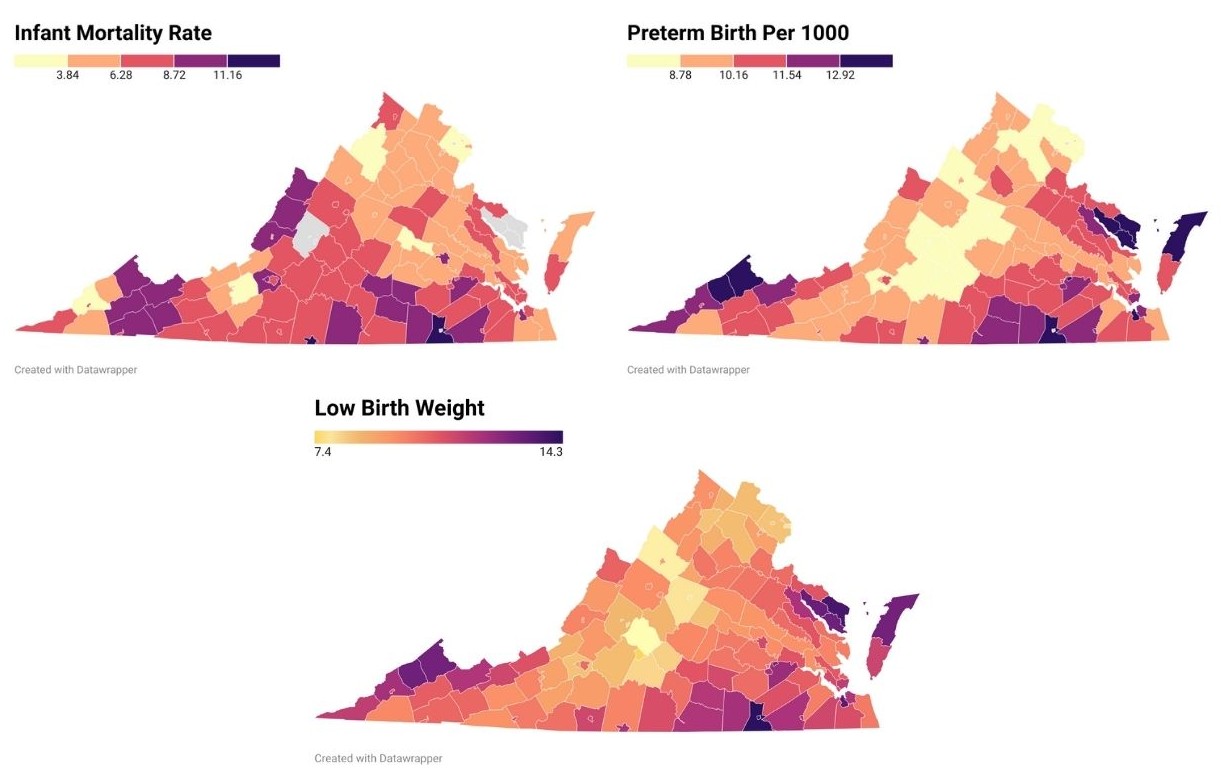
Background: Early childhood is a sensitive period that sets the foundation for school readiness, an early indicator of later academic success and health. Perinatal adversities such as low birth weight and preterm birth are linked to lower school readiness. While prior studies have examined perinatal health and school readiness at the individual level, more recent work suggests that understanding community patterns of children's health and school readiness, as well as the community-level experiences and resources that might shape their development, could provide population-level insights to better guide policy and practice. Objective: This study examines how city- and county-level perinatal health relates to school readiness in Virginia and whether community-level opportunity mediates these associations. Design/Methods: This cross-sectional ecological study used 2020-2022 county-level data from Virginia to examine associations between perinatal health risks (low birth weight, preterm birth, infant mortality) and 2023 school readiness (Virginia Kindergarten Readiness Program). The 2023 Child Opportunity Index (COI) measures community-level opportunity. Analyses included descriptive statistics, Pearson correlations, Kruskal-Wallis tests with Dunn's post-hoc comparisons, and mediation analyses using Hayes' PROCESS macro to test indirect effects of COI on the relationship between perinatal health and school readiness. Results: Virginia localities analysis showed that only 59% of children are ready for school. Perinatal indicators averaged 8.3% low birth weight, 9.7% preterm births, and 5.9 infant deaths per 1,000 live births. School readiness was negatively correlated with all perinatal risks and positively correlated with the COI. Significant geographic disparities were observed across urban-rural and regional classifications. Mediation analyses indicated that COI mediated the relationship between perinatal health risks and readiness.
Conclusion(s): This study revealed poorer community-level perinatal health, reflected in higher rates of low birth weight, preterm birth, and infant mortality were associated with lower school readiness across Virginia localities (Table 1). Community opportunity emerged as a key mediator, underscoring the influence of neighborhood resources on early development (Table 3). Enhancing community opportunity through improvements in education, healthcare access, and socioeconomic infrastructure may mitigate the negative effects of perinatal health disparities and promote equitable readiness for school entry statewide.










.png)