Session: Neonatal Pulmonology - Clinical Science 1: Bronchopulmonary Dysplasia I
372 - Deep Learning–Based Prediction Using Chest Radiographs for Risk of Bronchopulmonary Dysplasia in Preterm Infants
Friday, April 24, 2026
5:30pm - 8:00pm ET
Publication Number: 1356.372
Vivek V. Shukla, University of Alabama at Birmingham, Birmingham, AL, United States; Avinash Singh, Children's of Alabama, Birmingham, AL, United States; Tao Chen, UAB, Spanish Fort, AL, United States; Arie Nakhmani, University of Alabama at Birmingham, Birmingham, AL, United States; Colm P. Travers, University of Alabama at Birmingham, Birmingham, AL, United States; Namasivayam Ambalavanan, University of Alabama School of Medicine, Birmingham, AL, United States; Waldemar Carlo, University of Alabama, Birmingham, AL, United States
Assistant Professor University of Alabama at Birmingham Birmingham, Alabama, United States
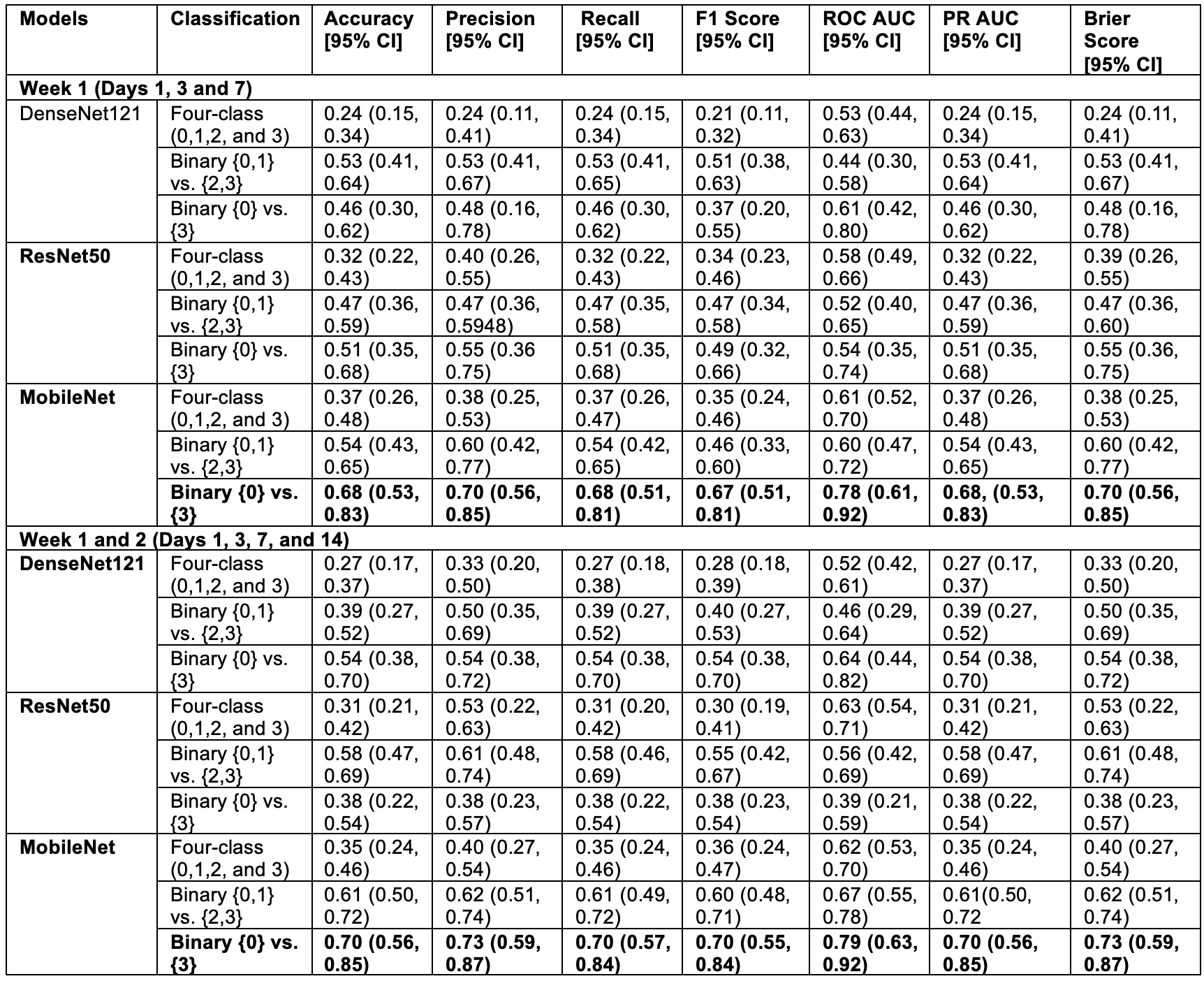
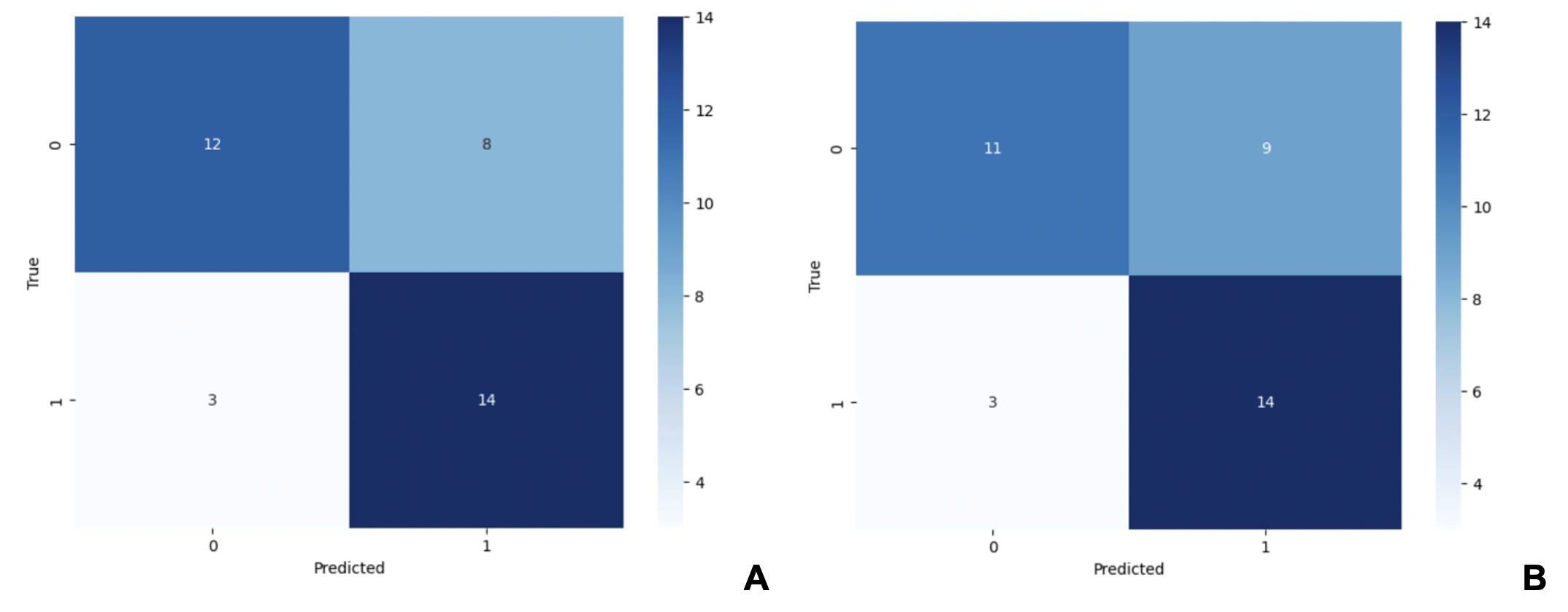
Background: Bronchopulmonary dysplasia (BPD), a major cause of morbidity in preterm infants, is diagnosed weeks after birth using oxygen and respiratory support criteria, and early prediction of risk is limited. Objective: To test the hypothesis that deep learning analyses of neonatal chest radiographs can achieve clinically relevant performance (area under the receiver operating characteristic curve, AUC > 0.75) for early identification of BPD risk. Design/Methods: We analyzed 1,127 chest radiographs (from postnatal days 1, 3, 7, and 14 as available) from 400 preterm (≤29 weeks gestation) infants admitted to the Neonatal Intensive Care Unit at the University of Alabama at Birmingham, each assigned a bronchopulmonary dysplasia (BPD) level (0-3, Jensen's definition). Among them, 137 infants (34.3%) had all four images available, while 263 infants (65.8%) had one or more missing images, of which 33 infants had all images missing and were excluded from further analyses. Images were preprocessed for intensity normalization, inversion correction, resizing (320×320 pixels), grayscale-to-red-green-blue conversion to ensure compatibility with ImageNet-pretrained convolutional neural networks (CNNs), and standardization. Analysis was done using infant-level data split (60% training, 20% validation, 20% testing). Three ImageNet-pretrained CNNs-Dense Network 121 (DenseNet121), Residual Network 50 (ResNet50), and Mobile Network (MobileNet)-were fine-tuned using transfer learning for three severity groupings: (i) four-class (0,1,2,3); (ii) {0,1} vs. {2,3}; and (iii) 0 vs. 3. Performance was evaluated using AUC (primary), accuracy, precision, recall, F1 score, area under the precision-recall curve (PR-AUC), and Brier score, with 95% confidence intervals by bootstrap resampling. Results: In the four-class classification, using radiographs from first week (days 1, 3, and 7) performance was limited (best ROC AUC 0.61, MobileNet). For the binary {0,1} vs. {2,3} classification, MobileNet achieved AUC of 0.60. The best performance was observed in the 0 vs 3 classification, where MobileNet achieved AUC of 0.78. Similarly, using radiographs from first two weeks (days 1, 3, 7, and 14), in the four-class classification performance was limited (best AUC 0.63, ResNet50). For the binary {0,1} vs. {2,3} classification, MobileNet achieved AUC 0.67. The best performance was observed in the 0 vs. 3 classification, where MobileNet achieved AUC 0.79 (Table 1, Figure 1).
Conclusion(s): Deep learning models using neonatal chest radiographs demonstrate feasibility for earlier identification of infants at risk for BPD.
Table 1: Model Performance Comparison
Figure 1: Confusion Matrices for MobileNet Model, A) Week 1 (Days 1, 3, and 7) and B) Week 1 and 2 (Days 1, 3, 7, and 14)









.jpeg.jpg "Vivek V. Shukla, MD (he/him/his) photo")