70 - Variable association of fetal fentanyl and substance exposure with congenital anomalies and syndromes in neonates < 34 weeks gestation
Friday, April 24, 2026
5:30pm - 8:00pm ET
Publication Number: 1063.70
Julia Mayne, Women & Infants Hospital of Rhode Island, Providence, RI, United States; Mara G. Coyle, The Warren Alpert Medical School of Brown University, Providence, RI, United States; Betty R. Vohr, Women & Infants Hospital, Alpert Medical School of Brown University, Bristol, RI, United States; Richard Tucker, Women & Infants Hospital of Rhode Island, Providence, RI, United States; Elisabeth McGowan, Women & Infants Hospital of Rhode Island, Providence, RI, United States
Assistant Professor Women & Infants Hospital of Rhode Island Providence, Rhode Island, United States
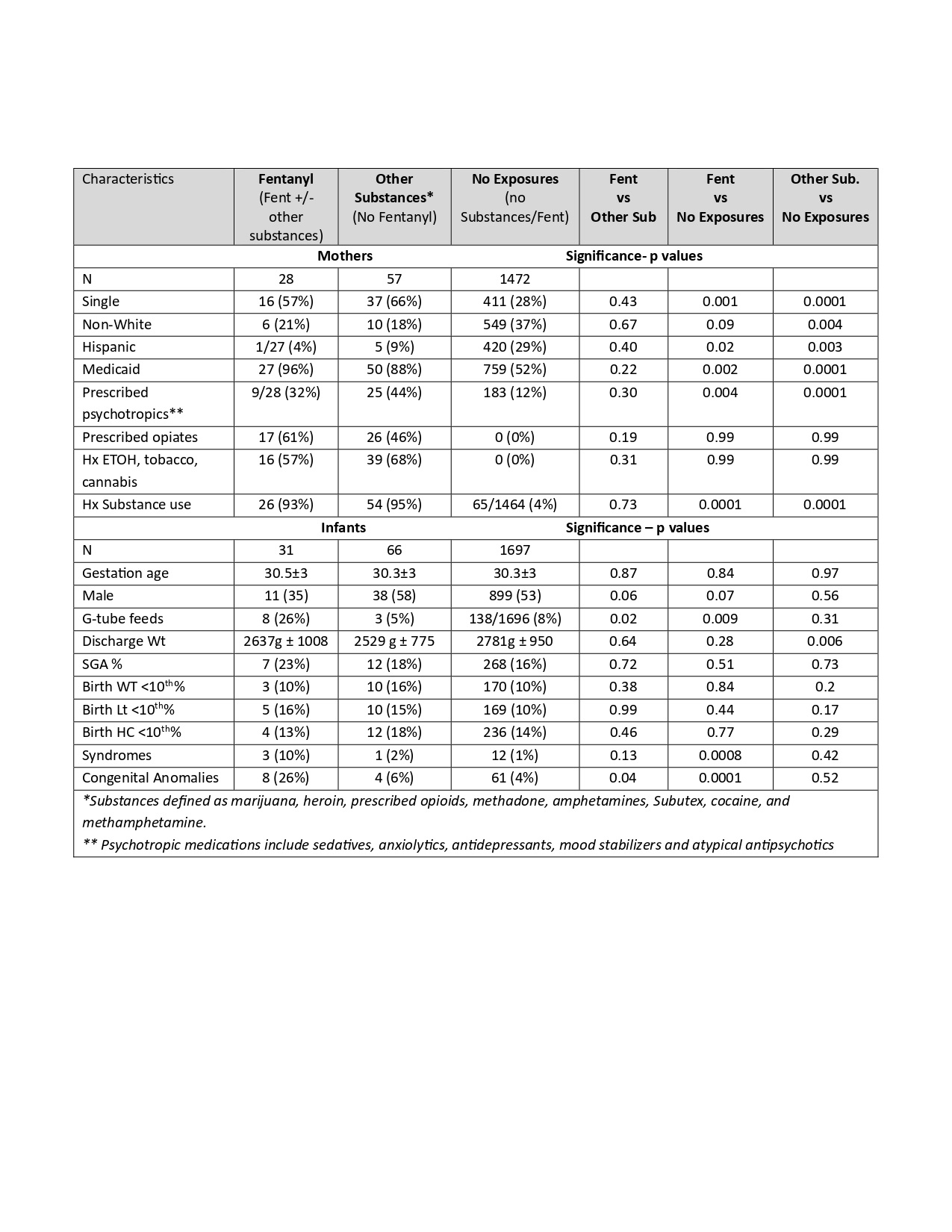
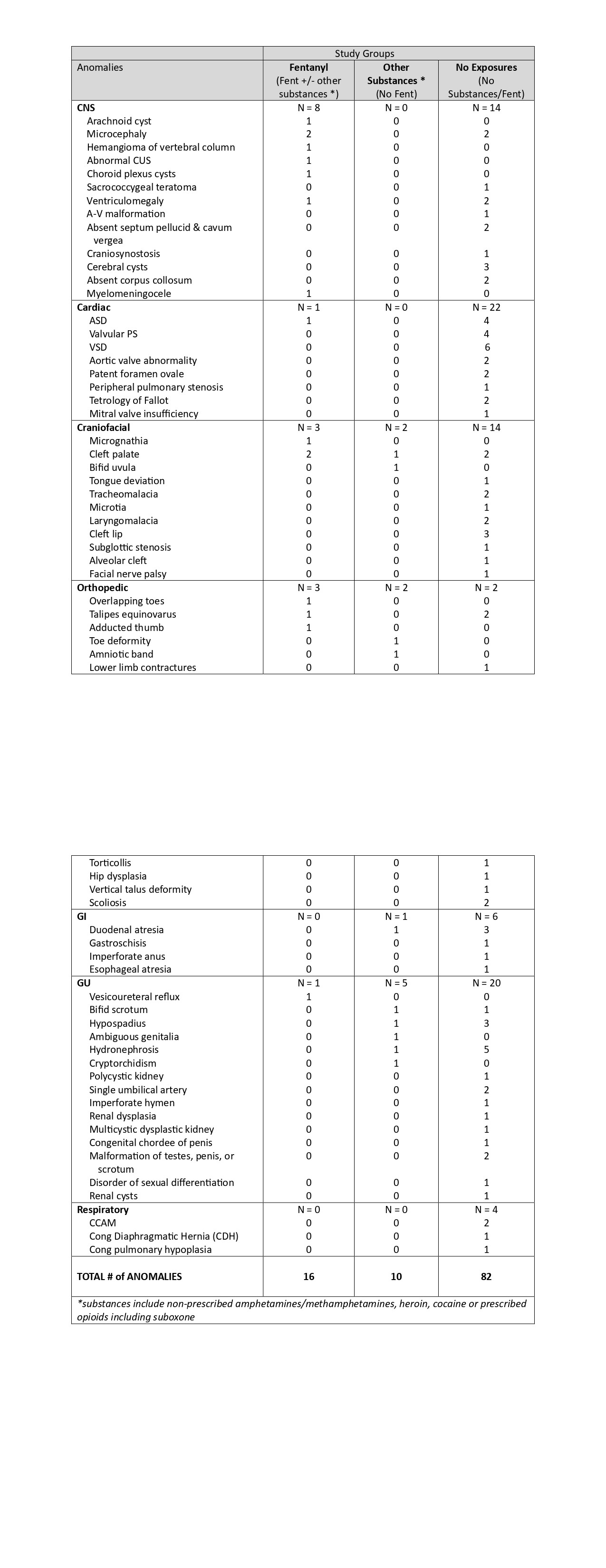
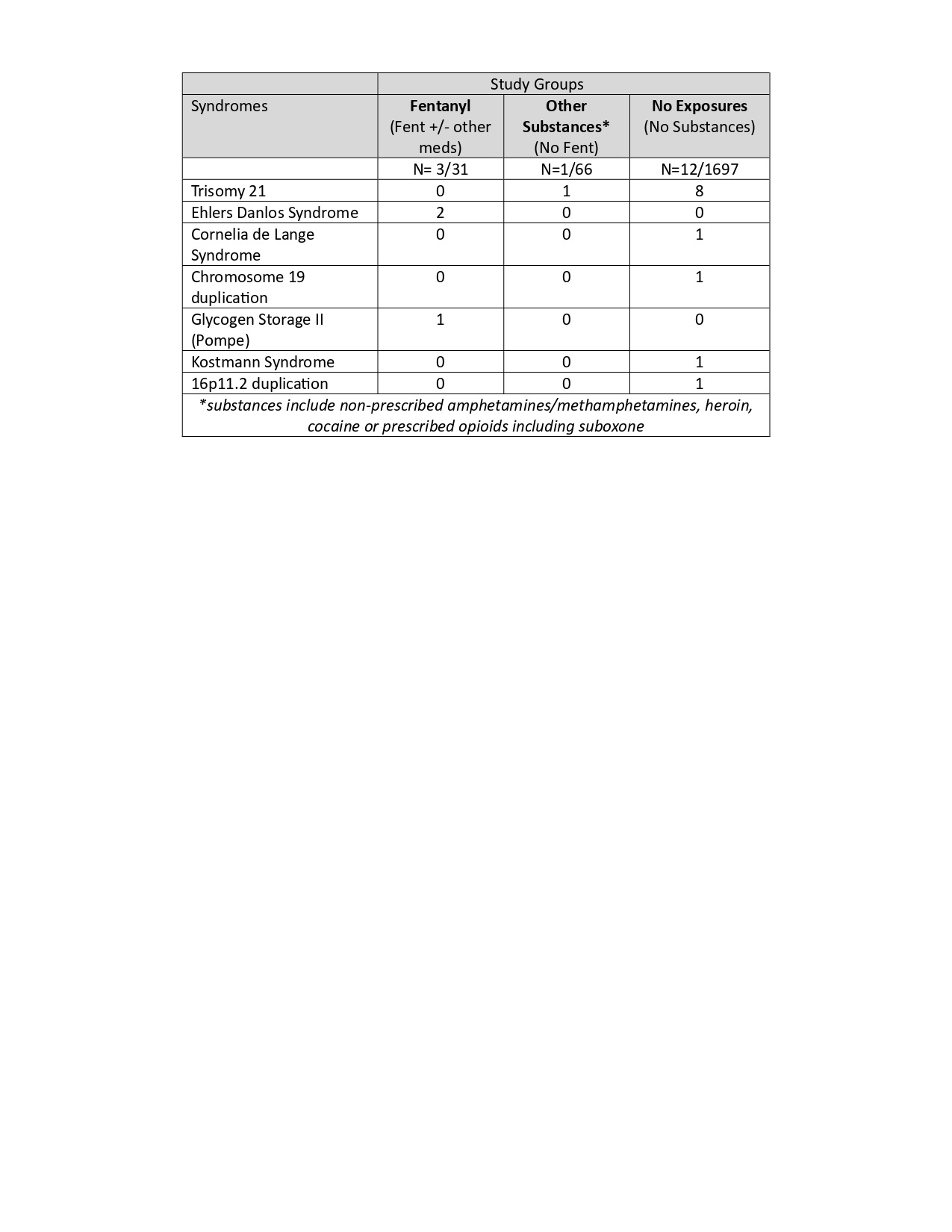
Background: Substance use, including fentanyl, during pregnancy continues to increase in the United States. Associations between opioid use in pregnancy and offspring congenital abnormalities and syndromes have been reported among children born term gestation, yet data in preterms remain limited. Objective: To examine the effects of fetal exposures to fentanyl and other substances on children born preterm ( < 34 weeks gestation). Design/Methods: We conducted a retrospective analysis of prospectively collected data on a cohort of infants born between 2018-2025 and < 34 weeks gestation. Three groups of mother-infant dyads admitted to Women & Infants NICU were analyzed: 1. Fentanyl group, defined as fentanyl use during pregnancy +/- other illicit substances, 2. Substances or other opiates but no fentanyl exposure group, and 3. No exposures to substances, fentanyl or other opiates. Maternal socioeconomic data and infant medical data were collected from the medical record and/or maternal interview. Data on congenital anomalies were collected and divided into groups by organ systems. Data on infant syndromes were also collected. Results: A total of 1,557 mother-infant dyads were included. Compared with unexposed mothers, those with fentanyl or other substance exposures were more often single (57-66% vs 28%, p < 0.001), enrolled in Medicaid (88-96% vs 52%, p< 0.001), and prescribed medications (32-44% vs. 12%, p< 0.001) (Table 1). Infants with fentanyl exposure had lower discharge weights compared with unexposed infants (2637 ± 1008 g vs 2781 ± 950 g, p = 0.006). Syndromic diagnoses were more frequent among fentanyl-exposed infants (10%) compared with those with other substances (1%) or no exposures (1%, p=0.008). Congenital anomalies were also highest among fentanyl exposed infants (26%) relative to other substances excluding fentanyl (6%) and unexposed infants (4%, p< 0.001). The most common organ system affected by infants in the fentanyl group were CNS (8/16, 50%) whereas cardiac anomalies predominated in unexposed infants (22/82; 27%) (Table 2). Among fentanyl exposed infants, syndromes included Ehlers Danlos Syndrome and Glycogen Storage type II disease (Table 3).
Conclusion(s): Fetal fentanyl exposure was associated with elevated rates of congenital abnormalities and syndromes compared with other substance exposed and non-exposed preterm infants. Rates were the highest in the fentanyl-exposed group.