18 - Quantifying patterns of MRI identified injury and prevalence of asymmetry in single site cohort of neonates with neonatal encephalopathy
Friday, April 24, 2026
5:30pm - 8:00pm ET
Publication Number: 1016.18
Emily Garavatti, CHOC Children's Hospital of Orange County, Ranchos Palos Verdes, CA, United States; Rahul Nikam, Rady Children’s Health, Orange, Santa Ana, CA, United States; Brenda Rieger, CHOC Children's Hospital of Orange County, Orange, CA, United States; Terrie E. Inder, CHOC Children's Hospital of Orange County, Orange, CA, United States
Neonatal Neurologist Children's Hospital of Orange County Ranchos Palos Verdes, California, United States
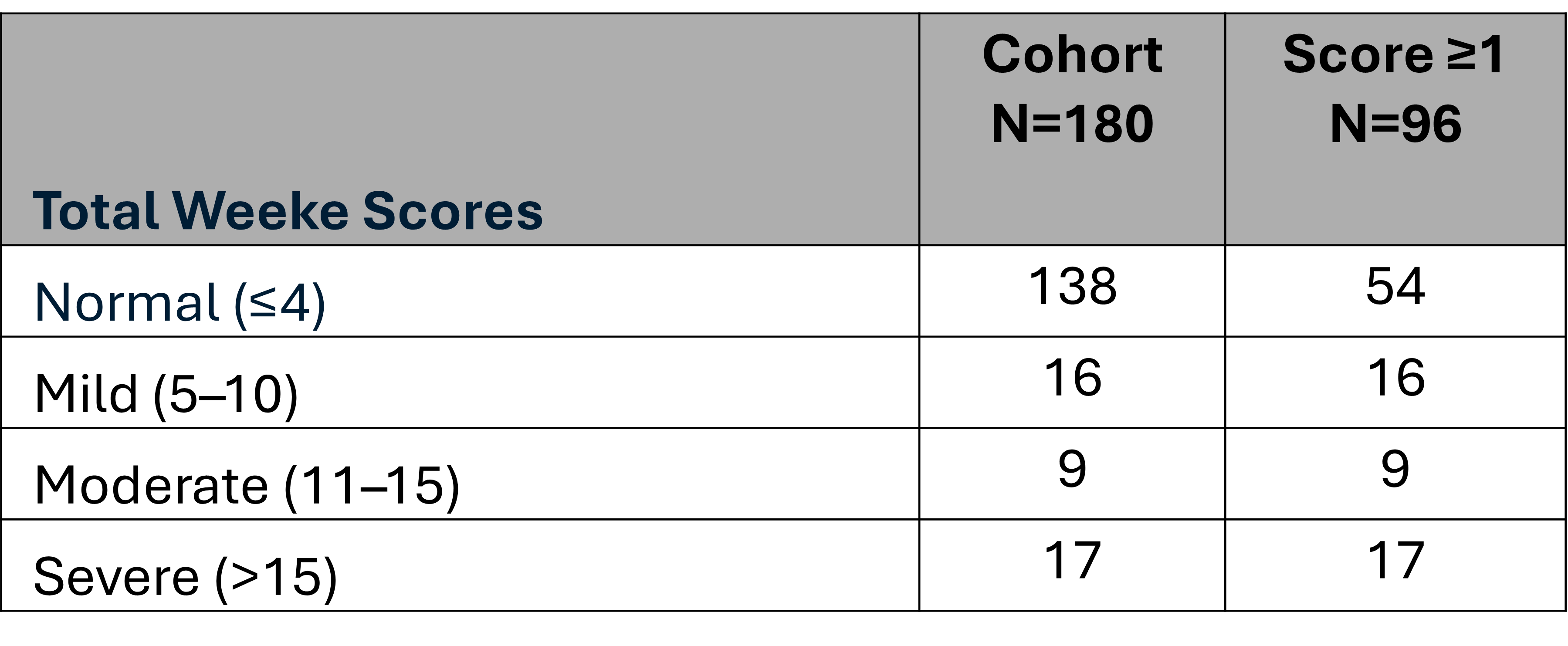
Background: Several common patterns of injury have been identified in neonatal encephalopathy (NE), though the prevalence of asymmetrical injury is uncommonly reported. Objective: We aim to quantify patterns of injury and prevalence of asymmetry noted on magnetic resonance imaging (MRI). Design/Methods: This is a single site retrospective analysis of MRIs obtained in infants undergoing hypothermia for NE. Rady Children's Hospital Orange County IRB approval was obtained. MRIs were assigned Weeke score by two team members, discrepancies were resolved by a 3rd person. Those with any injury on Weeke score were re-reviewed for laterality of asymmetry and classified into pattern of injury based on published literature. Results: 192 cases were identified at Children's Hospital Orange County between January 2023-December 2024. 180 cases had MRIs obtained with 96 cases having injury ( See Table 1). The frequency of injury location and prevalence of asymmetry based on Weeke scoring (Table 2) and pattern of injury (Table 3) reveal that cerebellar hemorrhages are more commonly unilateral and more commonly seen on the left. White matter lesions are also often unilateral, both as punctate white matter lesions and restricted diffusion. Conversely, basal ganglia, hippocampal, optic radiation, brainstem, and perirolandic injury are most commonly seen bilaterally. Although deep grey and brainstem injury are commonly thought to be bilateral, in our cohort unilateral injury was seen in 5-10%.
Conclusion(s): Perinatal hypoxic-ischemic injury is commonly conceptualized as global perfusional deficit that results in bilateral injury. Data from our cohort suggests that unilateral injury occurs often in infants with evidence of perinatal hypoxic-ischemic injury. Further research is needed to understand pathophysiology, possible physiologic vulnerability, leading to unilateral injury.
Table 1. Total Weeke Score by Severity
Table 2. Total Weeke Score by Category
Table 3. Summary of Injury by Common Patterns seen in Neonatal Encephalopathy