158 - Chronicling the Ketamine: An Analysis of Trends in Ketamine-Related TikToks from 2023-2025
Friday, April 24, 2026
5:30pm - 8:00pm ET
Publication Number: 1148.158
Grace Cason, Donald and Barbara Zucker School of Medicine at Hofstra/Northwell, Uniondale, NY, United States; Eric Wang, Northwell Health, New Hyde Park, NY, United States; Joseph Mekhail, Northwell Health, New York, NY, United States; Ruth Milanaik, Northwell Health, Great Neck, NY, United States
Medical Student Donald and Barbara Zucker School of Medicine at Hofstra/Northwell Uniondale, New York, United States
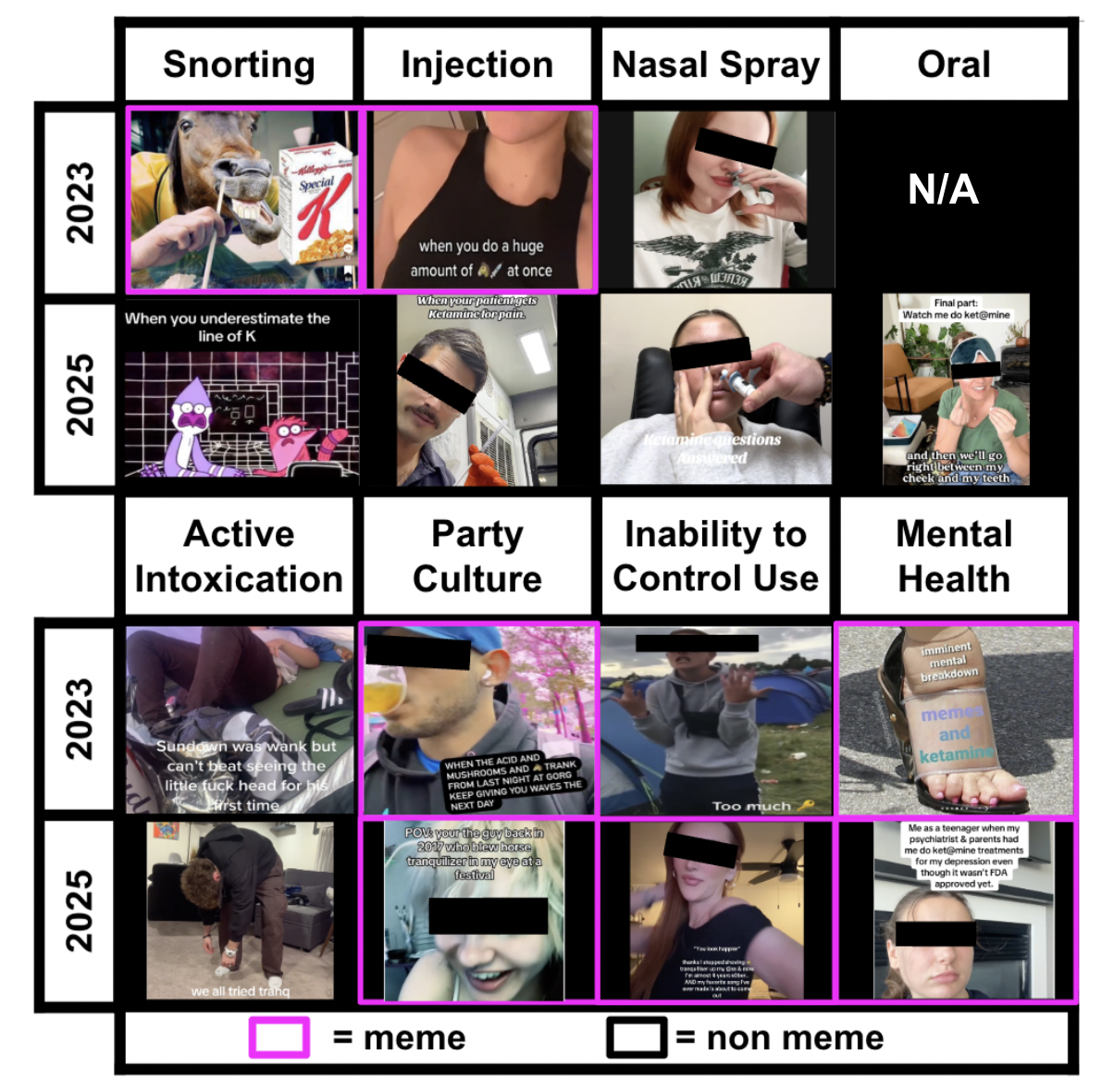
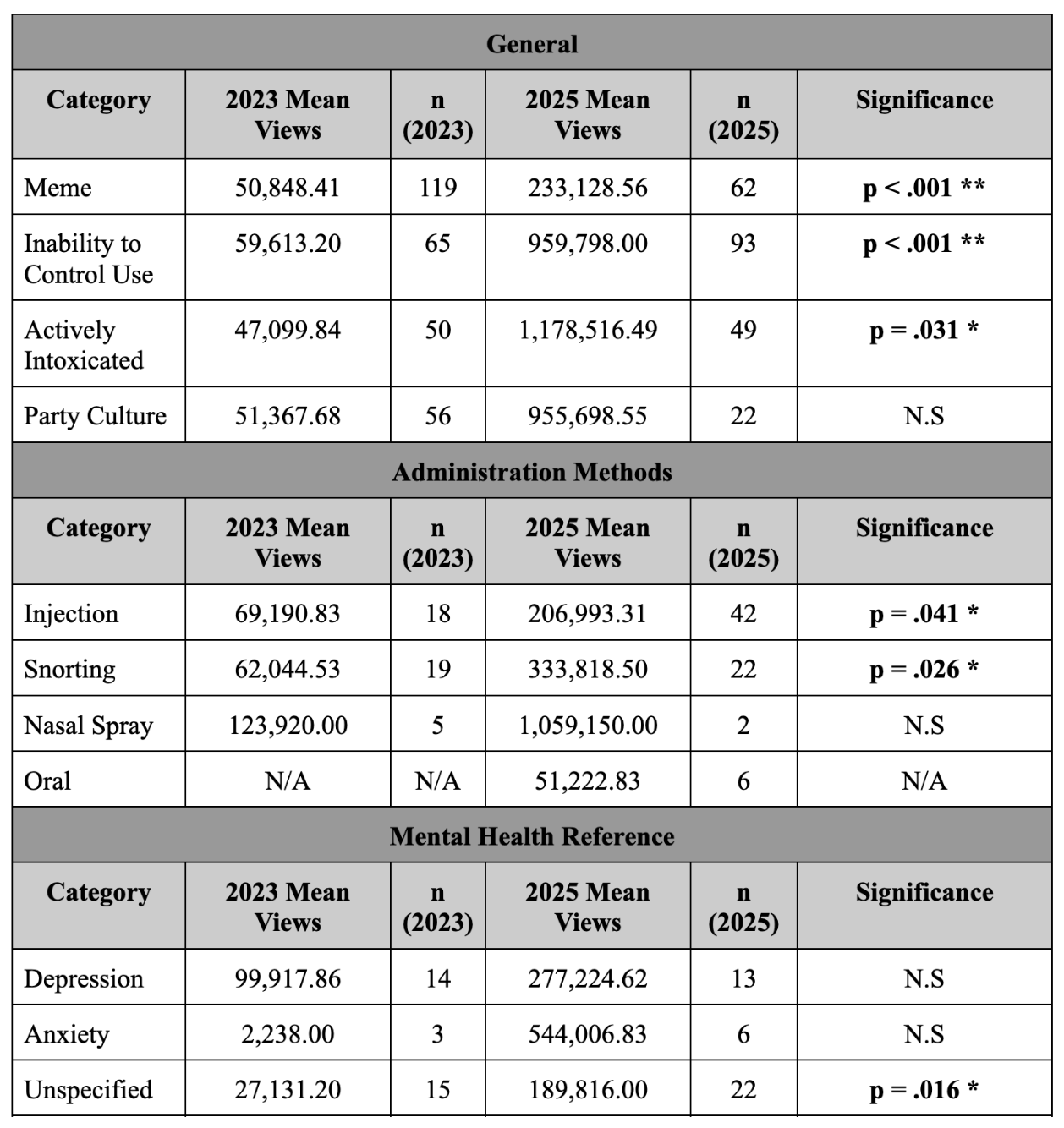
Background: Ketamine is a dissociative, euphoria-inducing drug that has seen a resurgence in recreational use. Administration methods include snorting, smoking, intravenous injection, and oral ingestion. Ketamine misuse can result in overdose, depression, abnormal liver function, and death. TikTok, whose largest user group is aged 10-19, may expose adolescents to ketamine-related content. This study examines longitudinal trends in ketamine-related TikTok content to inform pediatric clinicians about adolescent exposure and perceptions. Objective: To compare ketamine-related TikTok content and engagement between 2023 and 2025, focusing on themes, portrayal of use, and creator demographics. Design/Methods: The top 185 TikTok videos labeled with #ket, #ket@mine, #horsetranq, #horsetranquilizer, #tranq, and #specialK were collected in June 2023 and again in October 2025 (n=370). For each video, coders recorded: (1) creator age, (2) perceived creator gender, (3) meme status, (4) party-culture reference, (5) perceived ability to control use, (6) references to mental health, (7) active intoxication, and (8) administration method. Creator age and control of use were either self-reported by creators or estimated by coders. A meme was defined as any post that emulates a circulating audio or visual trend (Figure 1). Results: Total views increased from 9,617,511 in 2023 to 108,418,865 in 2025. Mean views per video were higher in 2025 than in 2023 (p <.001). Meme videos and videos referencing an inability to control use showed the largest increases in mean views from 2023 to 2025 (p <.001); videos featuring intoxicated individuals also increased (p=.031) (Figure 2). Across administration methods, injection- (p=.041) and snorting-related (p=.026) videos increased in mean views, whereas nasal spray videos did not. Oral administration appeared in 2025 but not in 2023. There were no significant changes in the mean views of videos referencing depression or anxiety. Gender and age distributions remained similar across data collection points, with college-aged creators comprising the largest demographic group (27%); females represented a higher proportion of these creators in both years (80%).
Conclusion(s): Ketamine-related TikTok content became far more visible between 2023 and 2025, suggesting that videos involving intoxication, loss of control, and meme-based formats are increasing in popularity. These trends may normalize recreational ketamine use for adolescent viewers. Pediatric clinicians should discuss social media portrayals of substance use during adolescent visits and provide anticipatory guidance on ketamine-related harms.
Figure 1. Meme and Non Meme Examples of Categories
Figure 2. Changes in Average Video Views by Content Category, 2023-2025