TOP 34 - Combatting Childhood Obesity in Military Connected Youth: Closing Knowledge Gaps with a Novel Curriculum
Saturday, April 25, 2026
3:30pm - 5:00pm ET
Publication Number: 2785.TOP 34
Danyelle Watkins, Tripler Army Medical Center, Kailua, HI, United States; Kristan E. Madison, Uniformed Services University of the Health Sciences F. Edward Hebert School of Medicine, Bethesda, MD, United States; McKenzie R. Bowling, Walter Reed National Military Medical Center, Rockville, MD, United States
Resident Tripler Army Medical Center Kailua, Hawaii, United States
Background: Childhood obesity, defined as a body mass index (BMI) ≥ 95% percentile, represents a public health crisis, affecting over 20% of children and posing significant adverse risks to long-term health. While obesity rates are slightly lower among military-connected youth, with 1 in 7 affected comparatively, this population is more likely to express aspirations for future military service, making them a crucial demographic for national defense. Overweight and obesity are the leading medical disqualifications for military service eligibility, threatening military recruitment and readiness and highlighting the necessity for effective interventions. There is a recognized deficiency in the training and confidence of healthcare providers regarding the care of childhood obesity. To address this issue, we have increased focus on improving pediatric obesity education for pediatric healthcare providers. Objective: We aimed to determine if implementation of a focused curriculum on pediatric obesity recognition, evaluation, and management would improve provider confidence and knowledge in pediatric obesity care. Design/Methods: We created a curriculum with online brief high-yield videos followed by an interactive in-person learning session. Using the Wilcoxon Signed-Rank Test, we investigated the differences in confidence, perceived barriers, and knowledge of pediatric obesity-related topics before and after the intervention. Pediatric and family medicine residents from 5 GME programs participated in the curriculum and voluntarily completed a pre-survey and an immediate post-survey with a planned repeat post-survey six months after curriculum exposure. The curriculum was offered multiple times across the sites, with some trainees exposed more than once.
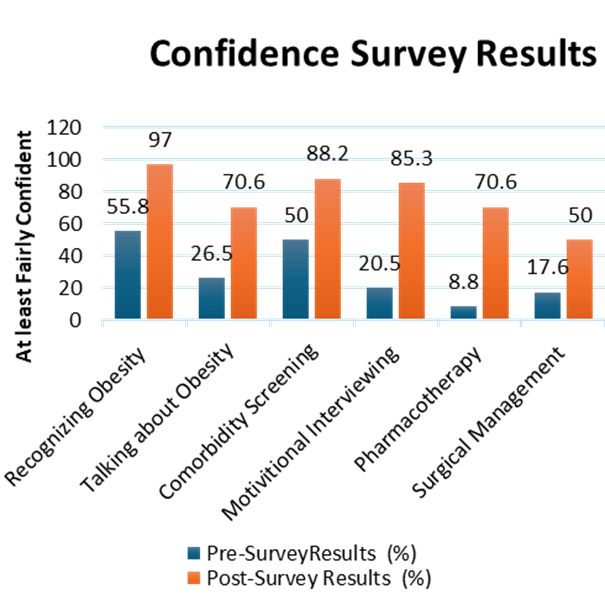
Resident Confidence in Components of Pediatric Obesity Care Pre- and Post- Curriculum Participation (n=34).
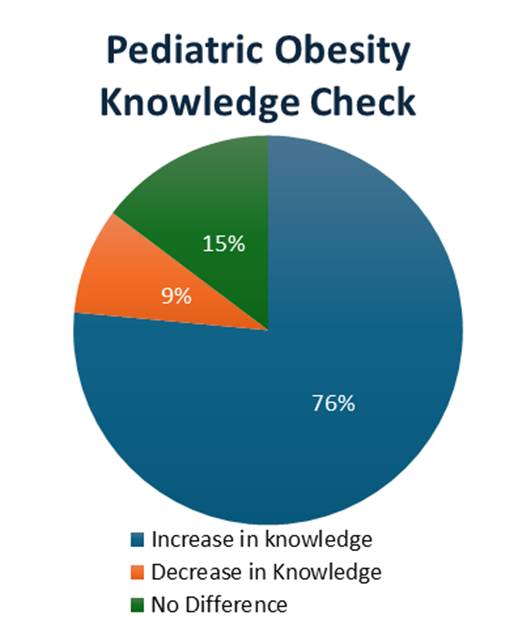
Resident Performance on Overall Knowledge Questions Pre- and Post-Curriculum Participation (n=34)