187 - Perceptions of a Perinatal Mental Health Intervention to Enhance Coping Skills and Increase Access to Care
Saturday, April 25, 2026
3:30pm - 5:45pm ET
Publication Number: 2180.187
Carolyn Ahlers-Schmidt, KUSM-W CRIBS, Wichita, KS, United States; Ashley Hervey, University of Kansas School of Medicine-Wichita, Wichita, KS, United States; Jessica Provines, Wichita State University, Wichita, KS, United States; Marci Young, Suspenders4Hope/Wichita State University, Wichita, KS, United States
Director of Pediatric Research KUSM-W CRIBS University of Kansas School of Medicine-Wichita Wichita, Kansas, United States
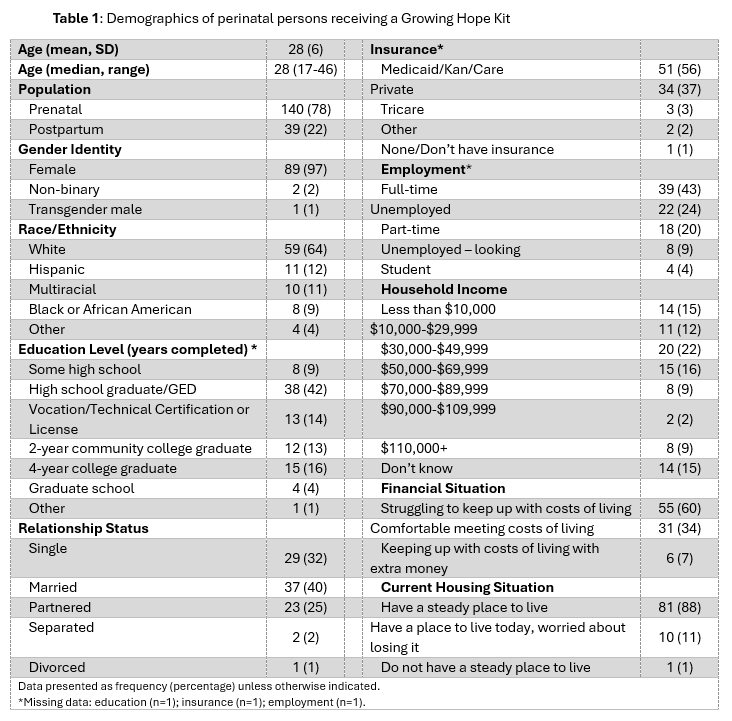
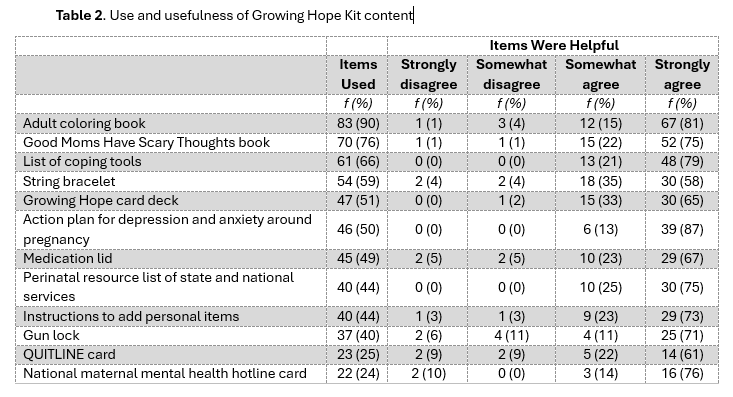
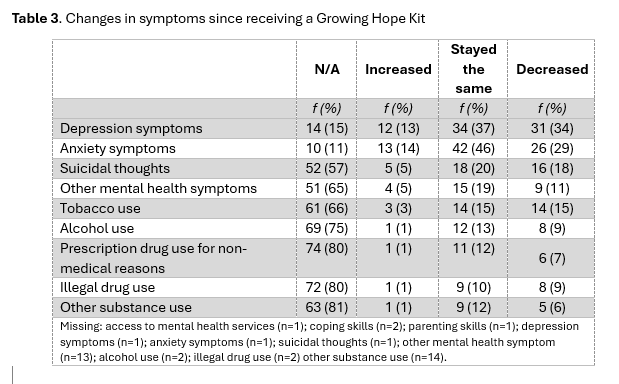
Background: Mental health concerns are the #1 complication of childbearing and are a key factor in pregnancy-related deaths. Maternal mental health challenges have long-lasting impacts on infants' social, emotional and cognitive development. US economic burden for untreated perinatal mental health conditions is estimate at over $14 billion per year. To increase distress tolerance and access to resources, a toolkit was developed by perinatal educators and mental health experts. The Growing Hope Kit was founded on an evidence-based intervention (hope box) and developed using the Social-ecological Model, Positive Psychology framework and Sources of Strength. It includes information and activities to enhance coping strategies based on cognitive behavioral therapy and dialectical behavioral therapy, mental wellness and parenting skills. Items in the kit include instructions, book, activity card deck, coping strategies tool, bracelet, gun and medication locks, coloring book, and resources (https://babytalkict.com/growing-hope). Objective: A cross-sectional evaluation of end-user perceptions on the $50 Growing Hope Kit to enhance adoption, implementation, and sustainability. Design/Methods: The Growing Hope Kit was piloted through a statewide prenatal education program (10/2024-6/2025) in a rural state with limited access to services. Edinburgh Postnatal Depression Scale and a substance use screening were completed at enrollment and 6 weeks postpartum. Those who scored positive (EPDS ≥10 or endorsed self-harm) received a brief intervention and referral, per standard care. Staff also offered a Kit, provided at class or shipped. A 26-item survey was emailed 4 weeks later, with 2 reminders. The KUSM IRB approved this study. Results: Surveys were completed by 51% (92/179; Table 1). Initial impressions were grateful (62%), excited (62%), and interested (57%). Most liked the look and size (95%) and would be comfortable being seen with the box (84%). Individual items and their usefulness are in Table 2. Kits increased coping strategies (70%), parenting skills (52%) and access to services (37%). Some also reported decreased symptoms and harmful behaviors (Table 3).
Conclusion(s): Overall, Growing Hope Kits appear to be a beneficial perinatal intervention to increase access to tools/resources, parenting skills and coping strategies. They may also have some positive impacts on symptoms and/or behaviors, though causation cannot be assumed. Results are limited by the self-report nature of the data. Additional research will determine impacts on mental health and infant outcomes.
Table 1: Demographics of perinatal persons receiving a Growing Hope Kit
Table 2. Use and usefulness of Growing Hope Kit content
Table 3. Changes in symptoms since receiving a Growing Hope Kit