








Hematology/Oncology
Session: Hematology/Oncology 1
Simran Bansal, BS (she/her/hers)
Medical Student (MS2)
Harvard Medical School
Brookline, Massachusetts, United States
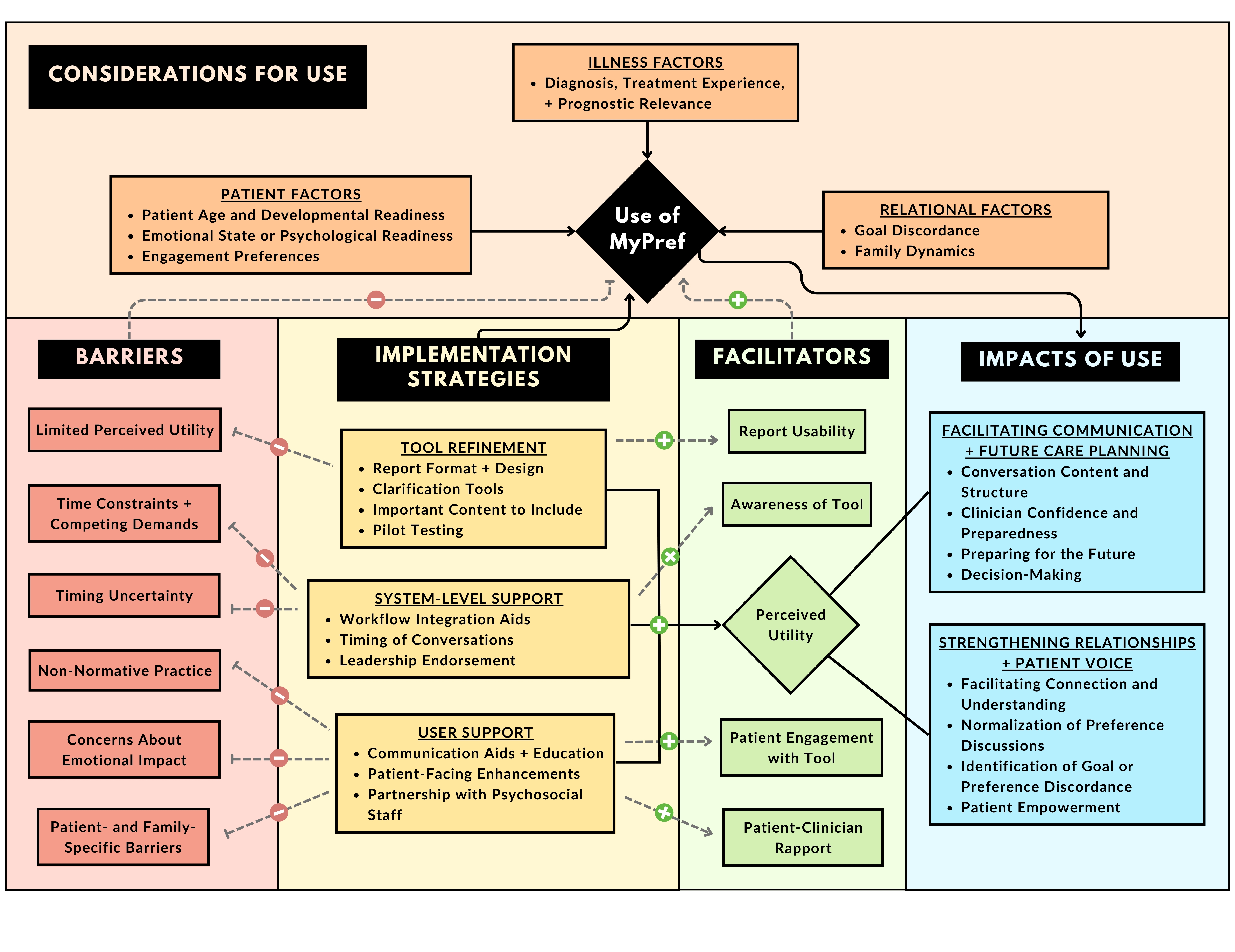 Interviewed clinicians identified contextual factors influencing MyPref use-patient (age, developmental readiness, emotional state, engagement preferences), illness (diagnosis, treatment experience, prognostic relevance), and relational (goal discordance, family dynamics). Barriers include time constraints, limited perceived utility, timing uncertainty, non-normative practice, concerns about emotional impact, and patient- or family-specific barriers. Facilitators include report usability, awareness of the tool, perceived utility, patient engagement, and patient-clinician rapport. Implementation strategies-tool refinement, system-level support, and user support-address barriers while reinforcing facilitators, leading to impacts including improved communication and anticipatory care planning, and strengthening of relationships and patient voice.
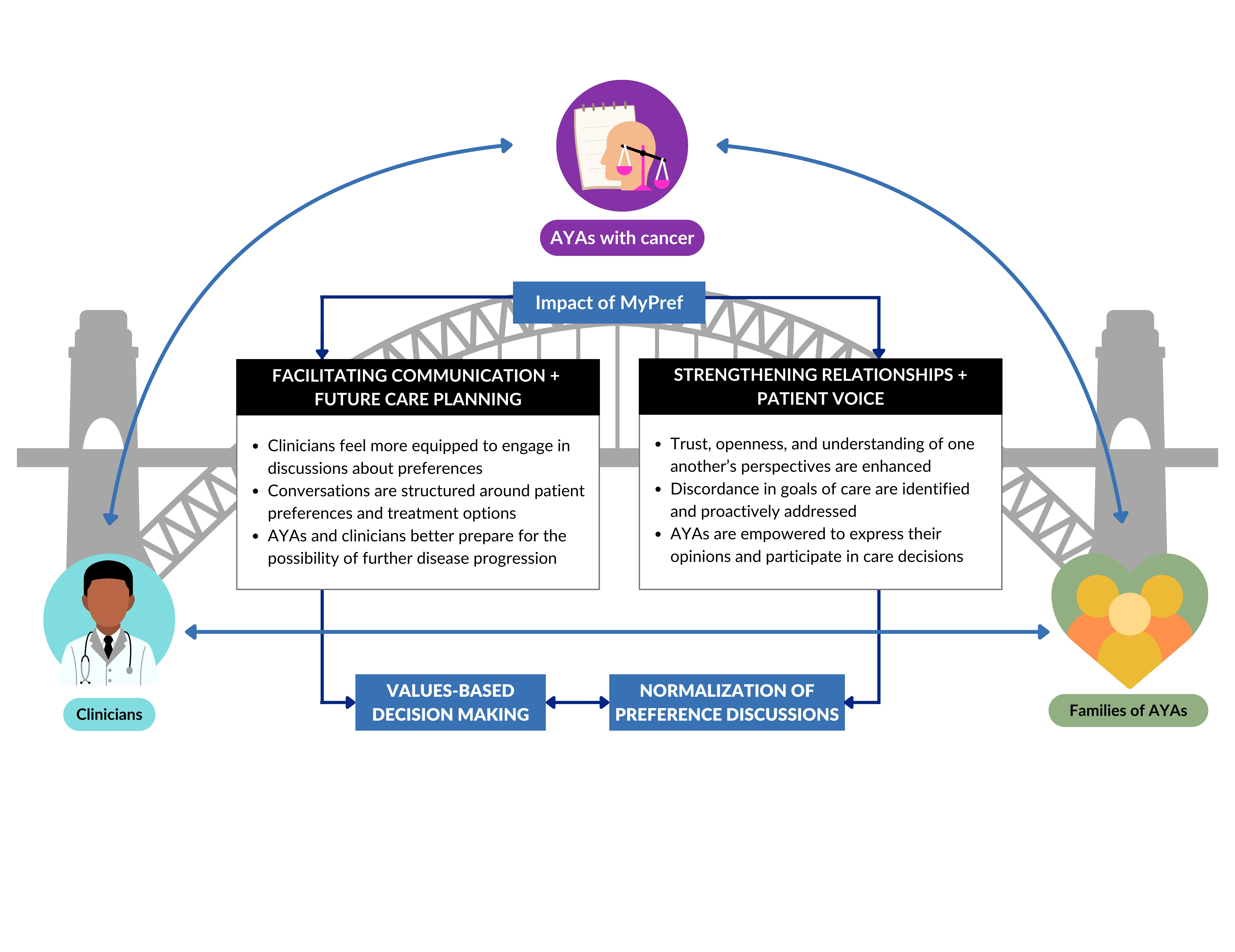 The bridge metaphor depicts how MyPref connects clinicians, AYAs, and families in cancer care. Two primary impacts are highlighted: facilitating communication and future care planning (left box) and strengthening relationships and patient voice (right box). These processes reinforce values-based decision-making and normalize preference discussions (lower boxes), creating a cycle of patient-centered care.
.jpg) Representative quotations from pediatric oncology clinicians illustrate how MyPref was perceived to shape communication and care. Clinicians described MyPref as supporting future planning by encouraging reflection on patient goals, fostering empowerment by giving AYAs a voice in difficult conversations, promoting normalization of preference discussions, and strengthening connection through more authentic and holistic dialogue.
Representative quotations from pediatric oncology clinicians illustrate how MyPref was perceived to shape communication and care. Clinicians described MyPref as supporting future planning by encouraging reflection on patient goals, fostering empowerment by giving AYAs a voice in difficult conversations, promoting normalization of preference discussions, and strengthening connection through more authentic and holistic dialogue.