270 - Adding Context to Characterize Pre-Hospital Interventions for U.S. Youth Drowning with Narrative Data, 2018-2024: A Retrospective Convergent Mixed Methods Study
Saturday, April 25, 2026
3:30pm - 5:45pm ET
Publication Number: 2260.270
Charlene Walton, Ann & Robert H. Lurie Children's Hospital of Chicago, Chicago, IL, United States; MIchelle Macy, Ann & Robert H. Lurie Children's Hospital of Chicago, Chicago, IL, United States; Sriram Ramgopal, Ann & Robert H. Lurie Children's Hospital of Chicago, CHICAGO, IL, United States; Xavier Idriss, Ann & Robert H. Lurie Children's Hospital of Chicago, Chicago, IL, United States; Remle Crowe, ESO, Copperas Cove, TX, United States; Kathryn (Callie) C. Kaplan, Ann & Robert H. Lurie Children's Hospital of Chicago, Chicago, IL, United States; Ali Treichel, ESO, Portland, OR, United States
Pediatric Emergency Medicine Fellow Ann & Robert H. Lurie Children's Hospital of Chicago Chicago, Illinois, United States
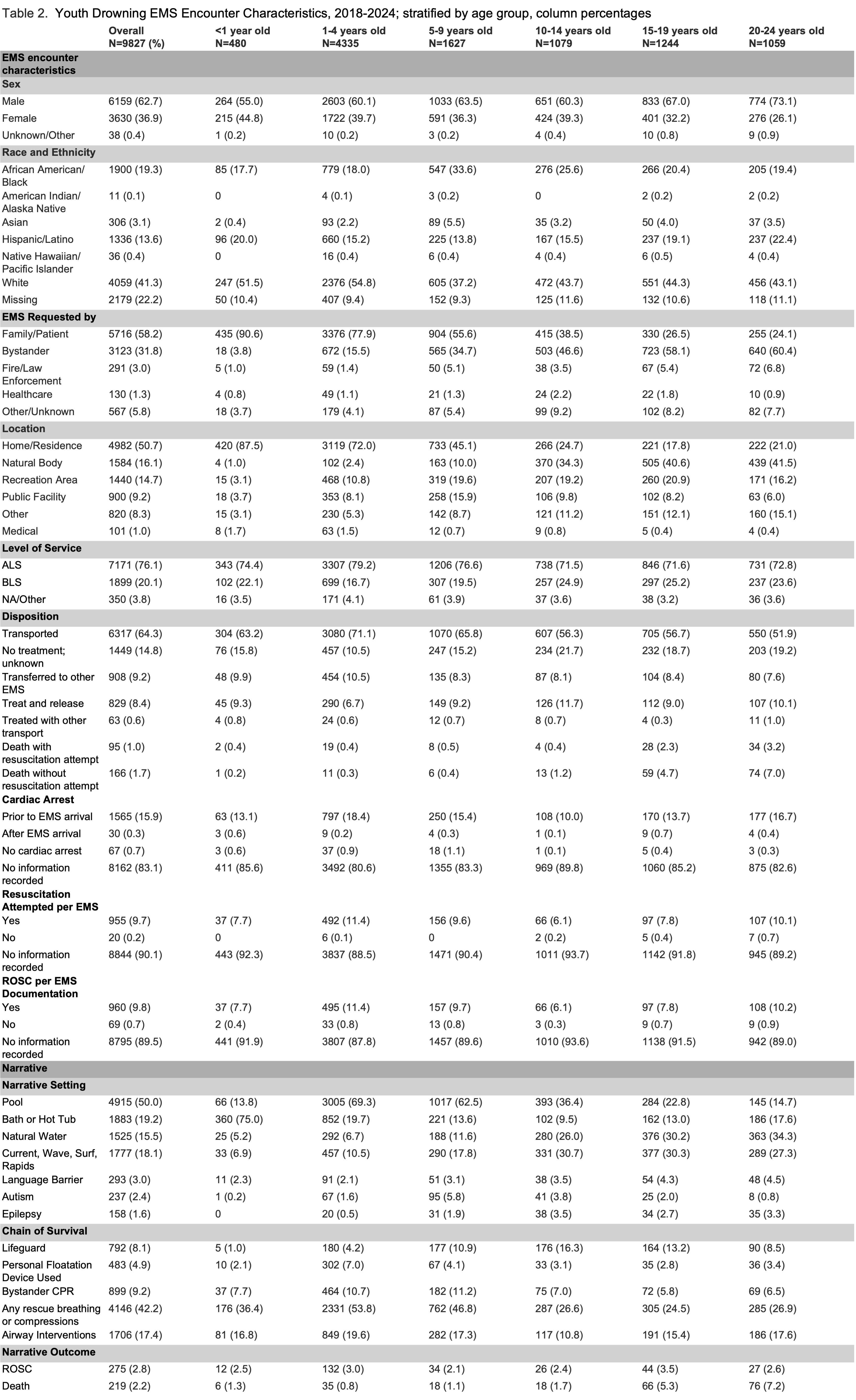
Background: Drowning is the leading cause of death among U.S. children and disproportionately affects 1- to 4-year-olds and Black and Indigenous youth. Emergency Medical Services (EMS) play a key role in the drowning chain of survival, but few studies have characterized EMS responses to drowning events. Studying this missing link will inform equity-focused water safety interventions. Objective: To (1) characterize youth involved in drowning events using clinical, administrative, and narrative data from a national EMS registry, and (2) analyze EMS narrative data to investigate the environmental context and community responses of these events. Design/Methods: We performed a retrospective convergent mixed methods study of EMS records of youth drowning encounters from ESO Data Collaborative, which includes over 3,000 EMS agencies in the U.S. We included patients < 24 years from 2018-2024 with EMS impressions of drowning/submersion and protocols indicating drowning/diving/scuba accident. We coded EMS narratives for keywords related to location (e.g., pool, bathtub), resuscitation efforts before EMS arrival (e.g., bystander CPR), and context (e.g., language barriers). We calculated descriptive statistics for patient, call, scene, and disposition characteristics. We summarized keywords with counts and percentages. We compared demographic, clinical, and narrative characteristics across 5-year age categories. Results: We analyzed 9,824 EMS encounters (median age 5 years, IQR 2-14). Approximately two-thirds of patients were male (62.7%). Nearly half of patients (47.9%) were identified by EMS as white, 22.0% Black, 16.5% Hispanic, and race was missing or unknown for 10.0% of the sample. Calls were most commonly initiated by family members (58.2%) and bystanders (31.8%). Overall, 64.3% of drowning victims were transported by EMS to a healthcare facility from scene locations including home (50.7%, median age 3), natural bodies of water (16.1%, median age 16), recreational areas (14.7%, median age 9), and public spaces (9.2%, median age 5). Common themes amongst narratives included events occurring in pools (50.0%) and bathtubs (19.2%) with 42.2% of all encounters noting rescue breaths, compressions, or CPR and 17.4% referencing airway interventions.
Conclusion(s): Drowning incidents requiring EMS response most often involved young children at home or in pools, were frequently witnessed by family or bystanders, and narratives commonly noted resuscitative efforts by bystanders or EMS, underscoring the need for targeted prevention efforts in residential communities and family training in CPR.










.jpg)