122 - Improvement of Sickle Cell Disease Care Mitigates the Healthcare Utilization Induced by Increased Prevalence: Experience of a Tertiary Pediatric Center
Saturday, April 25, 2026
3:30pm - 5:45pm ET
Publication Number: 2117.122
Maude Cigna, The Hospital for Sick Children, Toronto, ON, Canada; Alexia Muresan, CHU Ste Justine, Ile-Perrot, PQ, Canada; Karine Leduc, CHU Sainte-Justine, Montréal, PQ, Canada; Nathalie Fournier, Hôpital Ste-Justine, Montreal, PQ, Canada; Maria Tamer, Saint-Justine Hospital, Longueuil, PQ, Canada; Jean-François Delisle, CHU Sainte-Justine, University of Montreal, Montreal, PQ, Canada; Jérémi Charbonneau, CHU Sainte-Justine, Montreal, PQ, Canada; Valérie Arsenault, CHU Sainte-Justine, Montreal, Montreal, PQ, Canada; Nancy Robitaille, Universite de Montreal Faculty of Medicine, Montréal, PQ, Canada; Evelyne D.Trottier, CHU Sainte-Justine, Montréal, PQ, Canada; Stéphanie Forté, University of Montreal, Montreal, PQ, Canada; Yves Pastore, Sainte-Justine, MONTREAL, PQ, Canada; Thomas Pincez, Universite de Montreal Faculty of Medicine, Montreal, PQ, Canada
Clinical Fellow The Hospital for Sick Children Toronto, Ontario, Canada
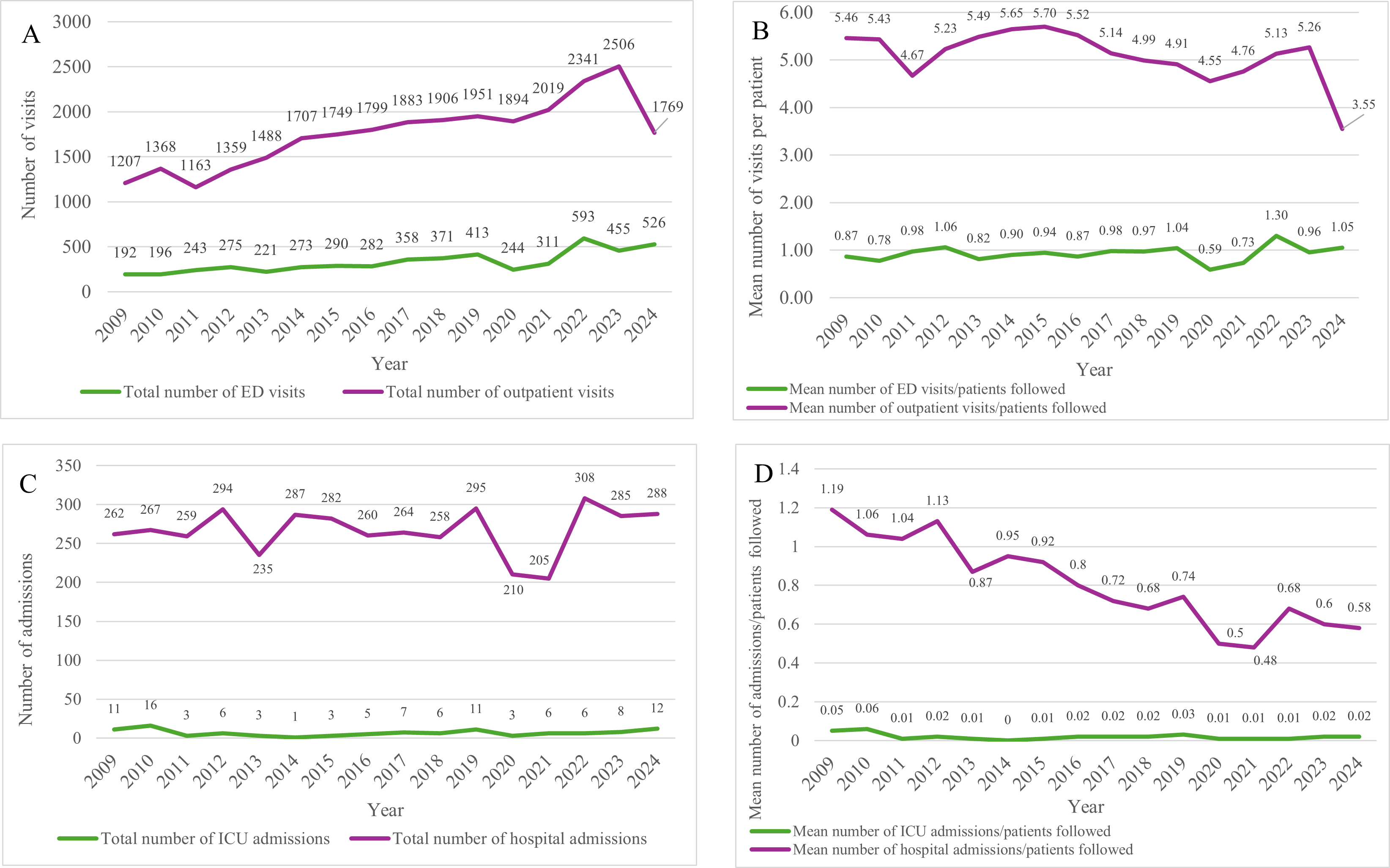
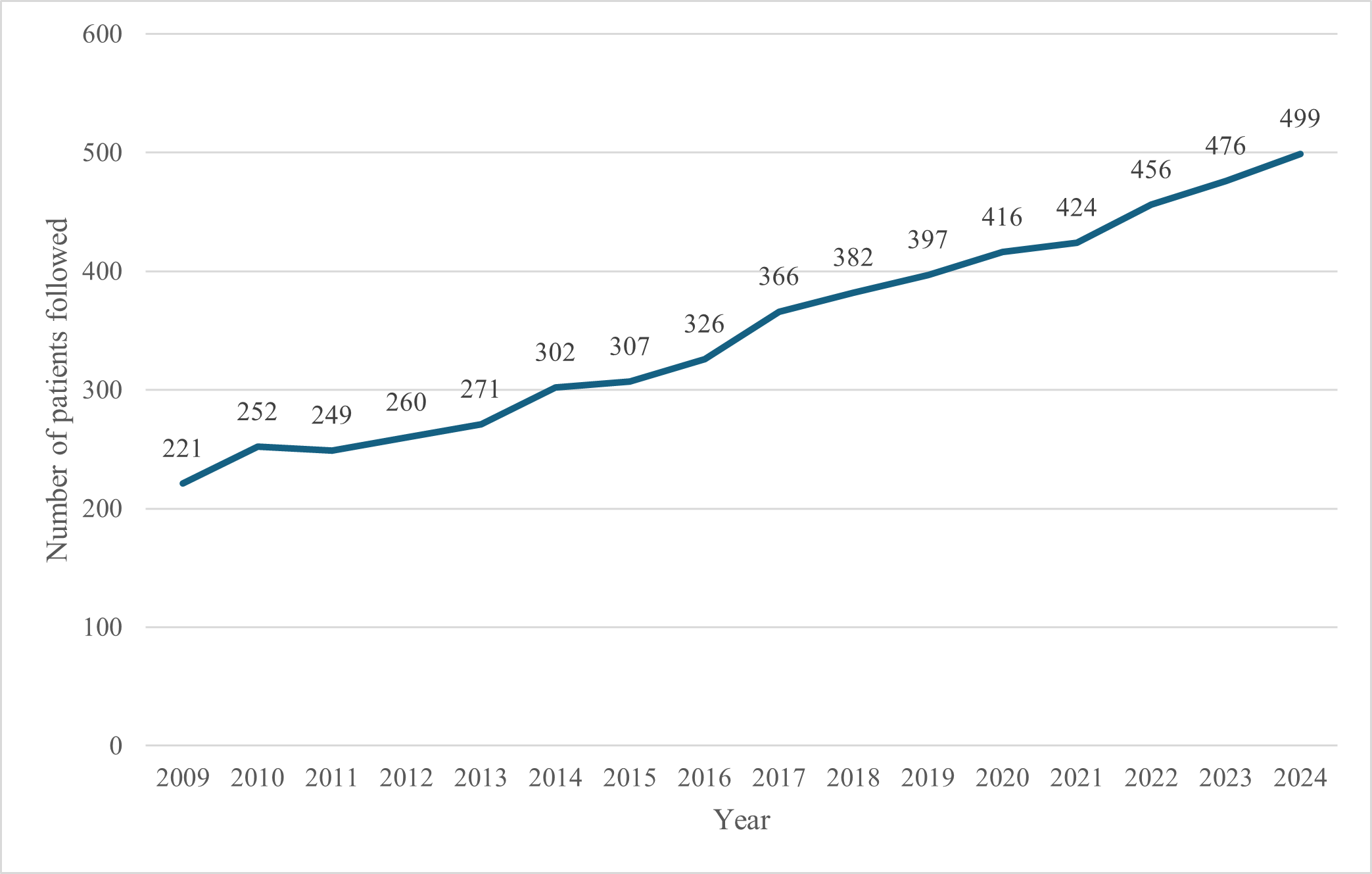
Background: Sickle cell disease (SCD), one of the most frequent monogenic diseases, leads to significant morbidity. Its prevalence is increasing worldwide, but epidemiological data are extremely limited in Canada. Numerous progresses have been made in the management of the disease. Yet, the effect in real-life setting of these improvements combined with the increased prevalence of SCD is unknown. Objective: We aimed to assess the impact of the practice changes on the evolution in the healthcare utilization (HCU) of children ( < 18 years old) with SCD in a Canadian pediatric tertiary center, by a retrospective review of HCU markers from 2009 to 2024. Design/Methods: Significant practice changes were made at our institution over the study period, following quality improvement projects, to favor out-patient management. This included standardization of pain and fever management in the emergency department (ED), in clinics and on the ward. A provincial newborn screening program was initiated in 2013, and hydroxyurea has been increasingly used in accordance with guidelines. Results: The number of children with SCD followed at our center more than doubled between 2009 and 2024 (221 to 499 patients, Fig.1). During the study period, mean time to hydroxyurea introduction decreased from 5.0 to 0.3 years (p < 0.0001) and mean fetal hemoglobin percentage per year increased from 9.14% to 18.39% (p < 0.0001) (Fig.2A-B). Reflecting the number of patients followed, the number of annual outpatient and ED visits increased significantly (1207 to 1769 and 192 to 526, respectively, p< 0.0001, Fig.3A). However, this was not reflected in the number of hospitalisations, which remained stable (p=0.89), nor in the number of intensive care admissions (p=0.97) (Fig.3C). In effect, the mean annual number of outpatient visits and of hospitalisations per patients per year decreased (p=0.03 and p< 0.0001, respectively, Fig.3B-D). The mean number of ED visits per number of patients followed remained stable (p=0.42, Fig 3B), but the percentage of admissions per visits decreased from 62.5% to 42.6% (p < 0.0001).
Conclusion(s): Although the number of patients with SCD followed at our institution drastically increased in 15 years, the practice changes likely mitigated the impact on HCU. It illustrates the significant role that management improvement and multidisciplinary teamwork have in the care of patients with SCD. Considering the important increase in HCU overall, allocated resources should be increased accordingly to allow for continuous optimal care of this vulnerable population, continuous education and further quality improvement projects.
FIGURE 1 Evolution in the number of patients with SCD followed per year from 2009 to 2024
FIGURE 2 Evolution in the time between 1st consultation and hydroxyurea initiation and in the mean percentage of HbF in patients with SCD from 2009 to 2024
FIGURE 3 Evolution in the number of visits and admissions for patients with SCD from 2009 to 2024









.png)