123 - Efficacy and Safety of Eltrombopag for Treatment of Pediatric Immune Thrombocytopenia: A Systematic Review and Meta-analysis
Saturday, April 25, 2026
3:30pm - 5:45pm ET
Publication Number: 2118.123
Sofia O. Dias, Faculty of Medical Sciences of São José dos Campos - Humanitas, Jacareí, Sao Paulo, Brazil; Camila B. Bocater, Faculty of Medical Sciences of São José dos Campos - Humanitas, Taubaté, Sao Paulo, Brazil; Jonathan R. Lopes, Humanitas, São José dos Campos, Sao Paulo, Brazil; João Diniz, Hospital municipal universitario de taubate, Tremembe, Sao Paulo, Brazil; Milena Peres. Ribeiro, Faculty of Medical Sciences of São José dos Campos - Humanitas, São José dos Campos, Sao Paulo, Brazil
Student Faculty of Medical Sciences of São José dos Campos - Humanitas Jacareí, Sao Paulo, Brazil
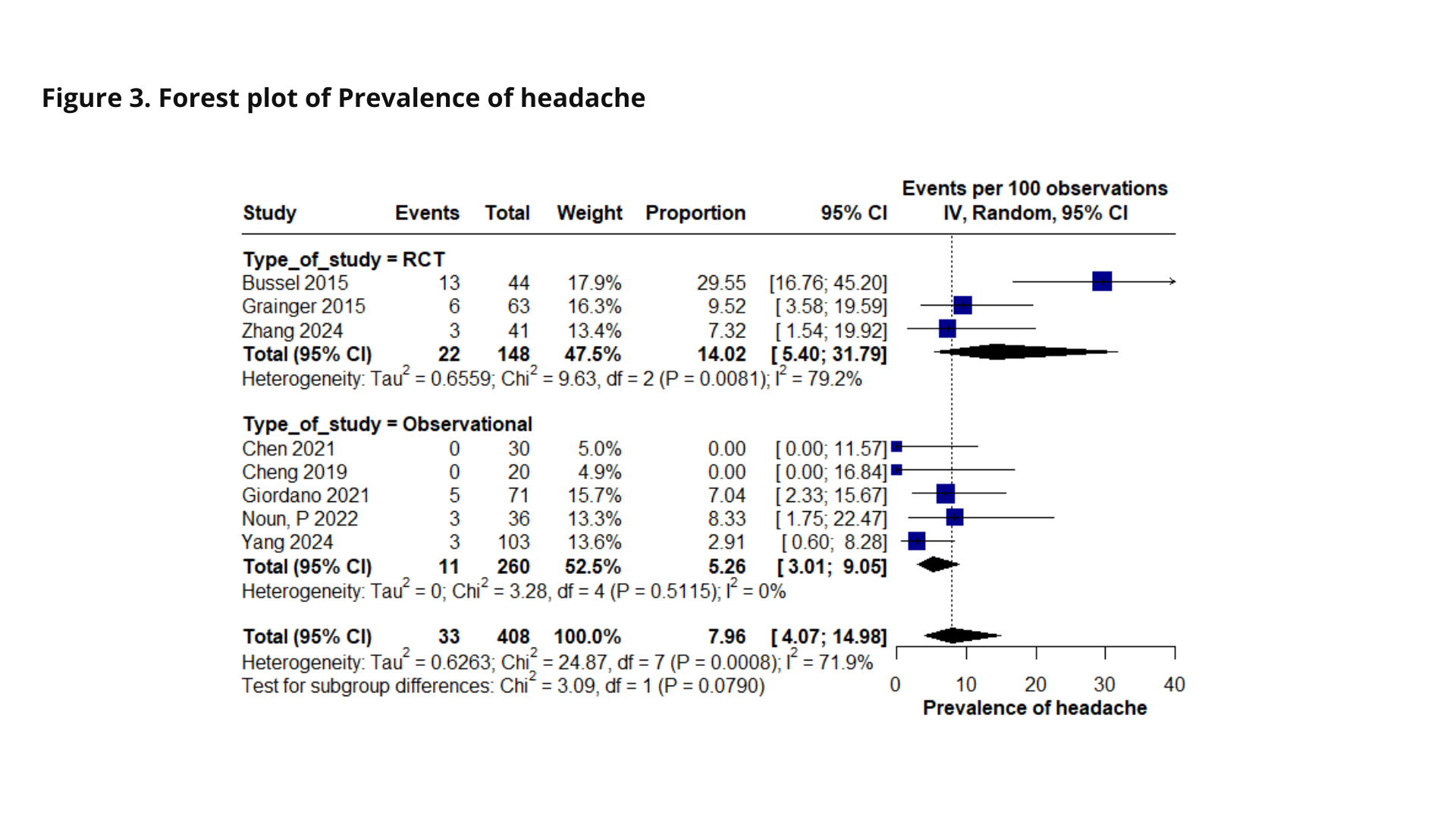
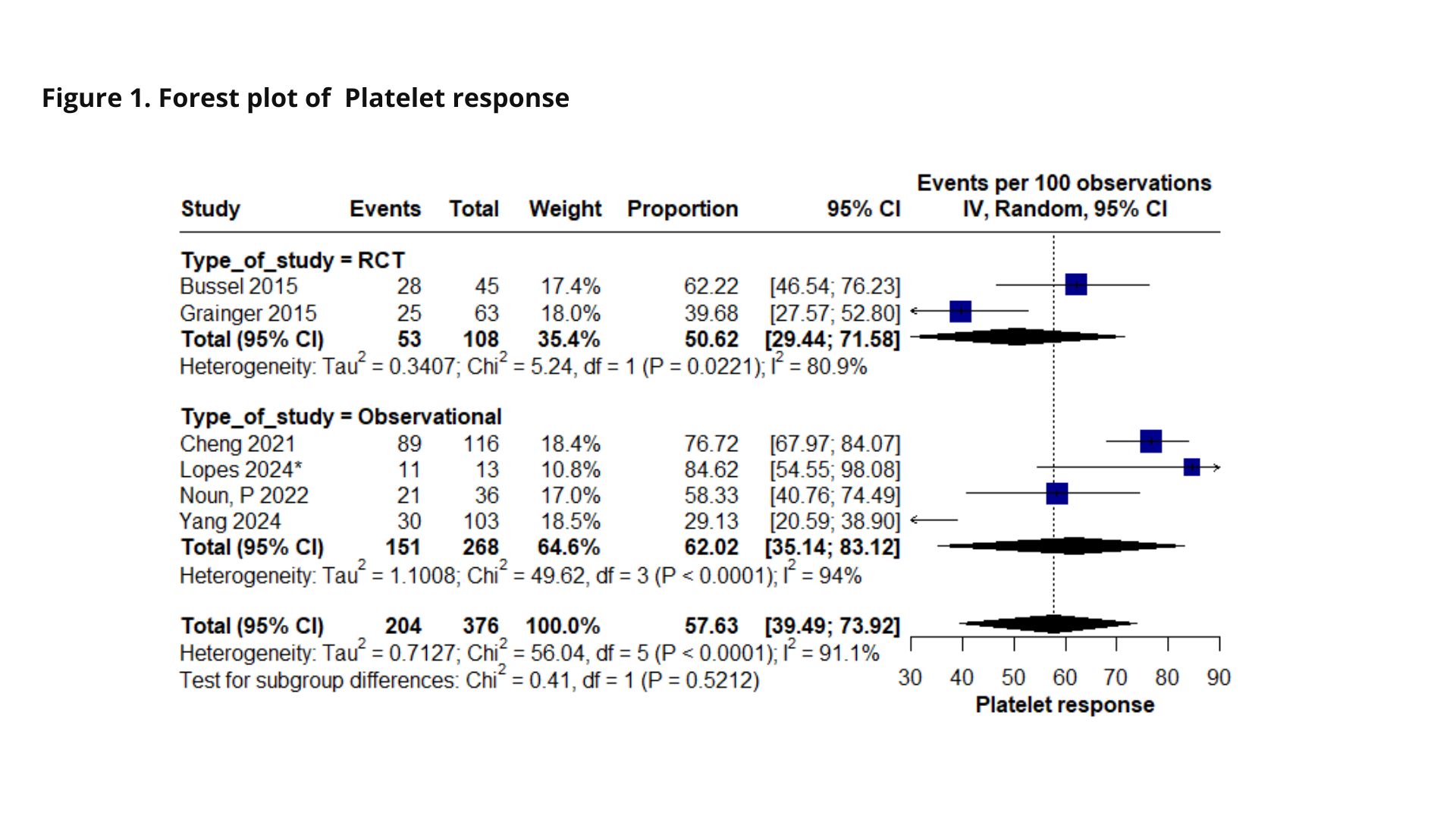
Background: Pediatric immune thrombocytopenia (ITP) is an autoimmune condition characterized by isolated low platelet counts and an increased risk of bleeding. Eltrombopag, an oral thrombopoietin receptor agonist, stimulates platelet production; however, evidence regarding its efficacy and safety in pediatric populations remains limited and heterogeneous. Objective: To evaluate the efficacy and safety of eltrombopag in pediatric ITP by synthesizing data from randomized and observational studies. Design/Methods: PubMed, EMBASE, and the Cochrane Library were systematically searched for randomized controlled trials (RCTs) and observational studies assessing eltrombopag in pediatric ITP. The primary outcome was the platelet response rate, defined as the proportion of patients achieving platelet counts ≥50 × 10⁹/L. Secondary outcomes included the incidence of significant bleeding events and headache. Statistical analyses were conducted using RStudio (version 2025.09.1+401), and between-study heterogeneity was assessed with Cochrane's Q test and the I² statistic. Results: Twelve studies (n = 724) met inclusion criteria. The pooled platelet response rate (≥50 × 10⁹/L) was 57.6% (95% CI, 45.0-70.1%; I² = 91.1%). Response rates were similar between RCTs (50.6%) and observational studies (62.0%; p = 0.52). The pooled prevalence of significant bleeding events was 4.8% (95% CI, 1.5-8.1%; I² = 6.4%). The overall prevalence of headache was 7.9% (95% CI, 3.9-14.6%; I² = 71.9%), with a trend toward higher rates in RCTs (14.2%) compared with observational studies (5.2%; p = 0.07).
Conclusion(s): Eltrombopag demonstrates a favorable efficacy and safety profile in pediatric immune thrombocytopenia, achieving platelet response in approximately 58% of patients. The therapy is associated with low rates of bleeding and clinically meaningful adverse effects such as headache. These findings support eltrombopag as an effective and generally well-tolerated therapeutic option for children with chronic ITP.
Figure 1. Forest plot of Platelet response
Figure 2. Forest plot of Prevalence of significant bleeding










.png)