Session: Neonatal Less Than 25 Weeks 3: Predicting Prognosis, Counseling, and Potpourri
770 - Postnatal Day Survival Milestones for Infants Born at 22-24 Weeks' Gestation
Saturday, April 25, 2026
3:30pm - 5:45pm ET
Publication Number: 2751.770
Zubin S.. Shah, Pediatrix Medical Group, Dallas, TX, United States; Matthew Rysavy, McGovern Medical School at the University of Texas Health Science Center at Houston, Houston, TX, United States; Kaashif Ahmad, Pediatrix Medical Group, Houston, TX, United States; Dan Ellsbury, Pediatrix Medical Group, Des Moines, IA, United States; Reese H.. Clark, Duke University School of Medicine, Marietta, SC, United States; Veeral Tolia, Pediatrix, Dallas, TX, United States
Neonatologist Pediatrix Medical Group Dallas, Texas, United States
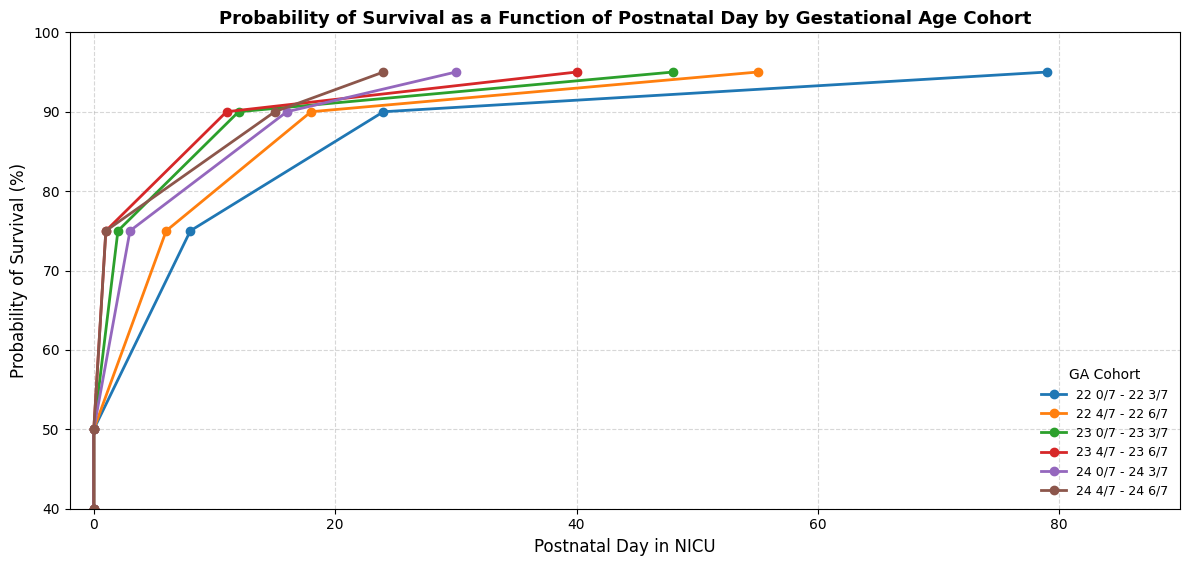
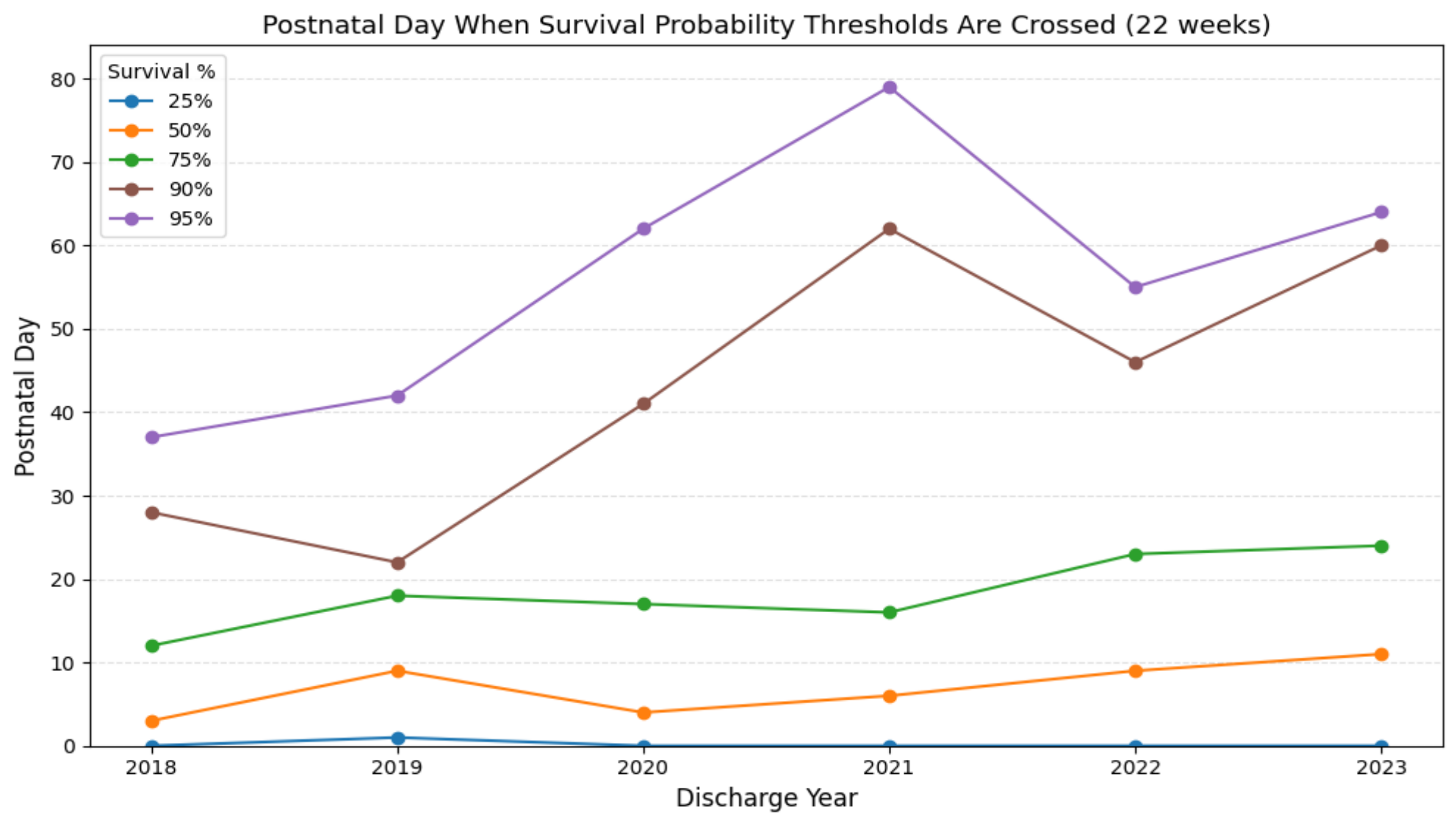
Background: Survival for infants born at 22-24 weeks' gestation has improved over time, yet clinicians and families lack contemporary data describing how survival probability evolves with each successive day of life in the NICU. Understanding these dynamic survival patterns and their temporal shifts is essential for accurate counseling and care planning. Objective: To characterize survival as a function of postnatal day among infants born at 22-24 weeks' gestation and to evaluate temporal changes in survival milestones and timing of death. Design/Methods: We analyzed a multicenter cohort of 5,141 infants born at or admitted to participating centers on postnatal day 0 or 1 at 22 0/7-24 6/7 weeks' gestation at 191 NICUs in the Pediatrix Clinical Database Warehouse from 2018 to 2023. The probability of survival on each postnatal day was calculated as the proportion of infants surviving to discharge or postnatal day 120 among infants alive on that day. Infant gestational age at birth was categorized in partial weeks (e.g, 22 wk 0-3 d and 22 wk 4-6 d) to discern changes in prognosis during each week. We identified the postnatal day at which the probability of survival crossed specific thresholds. Temporal changes in these milestones and in the timing of death were assessed across epochs using nonparametric trend testing. Results: Of 676, 2072, and 2393 infants admitted to the NICU at 22, 23, and 24 wk, 21.4%, 35.5%, and 64.5% survived. At 22 wk, the probability of survival surpassed 50% for infants on day 8. The probability of survival was 95% for 22-wk infants on day 79. By comparison, at 24 weeks, the probability of survival surpassed 50% on day 1 and surpassed 95% on day 24. There were important differences by partial weeks, with infants born at 22 wk 0-3 d surpassing 95% probability of survival on day 79, 24 days later than infants born at 22 wk 4-6 d (p < 0.001). From 2018 to 2023, the postnatal day at which survival for 22-wk infants crossed 50% and 95% thresholds increased from 3 to 11 (p=0.056) and 37 to 64, respectively (p=0.091). Among infants who died, the median (IQR) DOL at which death occurred increased from 1 (0, 5) to 2 (0, 12) (p=0.024).
Conclusion(s): The probability of survival for infants born at 22-24 weeks' gestation increases with each successive day alive in the NICU. The postnatal day at which 50% and 95% probability of survival were reached increased throughout the study, possibly reflecting greater early survival and a redistribution of mortality to later time points. The findings from our study will help improve the quality of postnatal counseling.
Table 1. Study Population Characteristics of infants born at 22 0/7-24 6/7 weeks' gestation in the Pediatrix Clinical Database Warehouse from 2018 to 2023.
Figure 1. Probability of Survival as a Function of Postnatal Day by Gestational Age at Birth
Figure 2. Temporal changes in the Postnatal Day at Which Survival Probability Thresholds are Crossed for Infants Admitted to the NICU at 22 weeks