339 - Parent-Reported Household Tobacco and E-cigarette Exposure and Asthma Control in Children: A Cross-Sectional Study
Saturday, April 25, 2026
3:30pm - 5:45pm ET
Publication Number: 2328.339
Janani Ramachandran, Childrens Hospital of Philadelphia, Houston, TX, United States; Jeritt Thayer, Childrens Hospital of Philadelphia, Philadelphia, PA, United States; Jessica Rice, Childrens Hospital of Philadelphia, Philadelphia, PA, United States; Monica Lu, Childrens Hospital of Philadelphia, Philadelphia, PA, United States; Sharon Mcgrath-morrow, Children's Hospital of Philadelphia, Philadelphia, PA, United States; Robert Grundmeier, Childrens Hospital of Philadelphia, Philadelphia, PA, United States; Alexander G. Fiks, Childrens Hospital of Philadelphia, Philadelphia, PA, United States; Brian Jenssen, Children's Hospital of Philadelphia, Philadelphia, PA, United States
Clinical Research Study Lead Children's Hospital of Philadelphia, United States
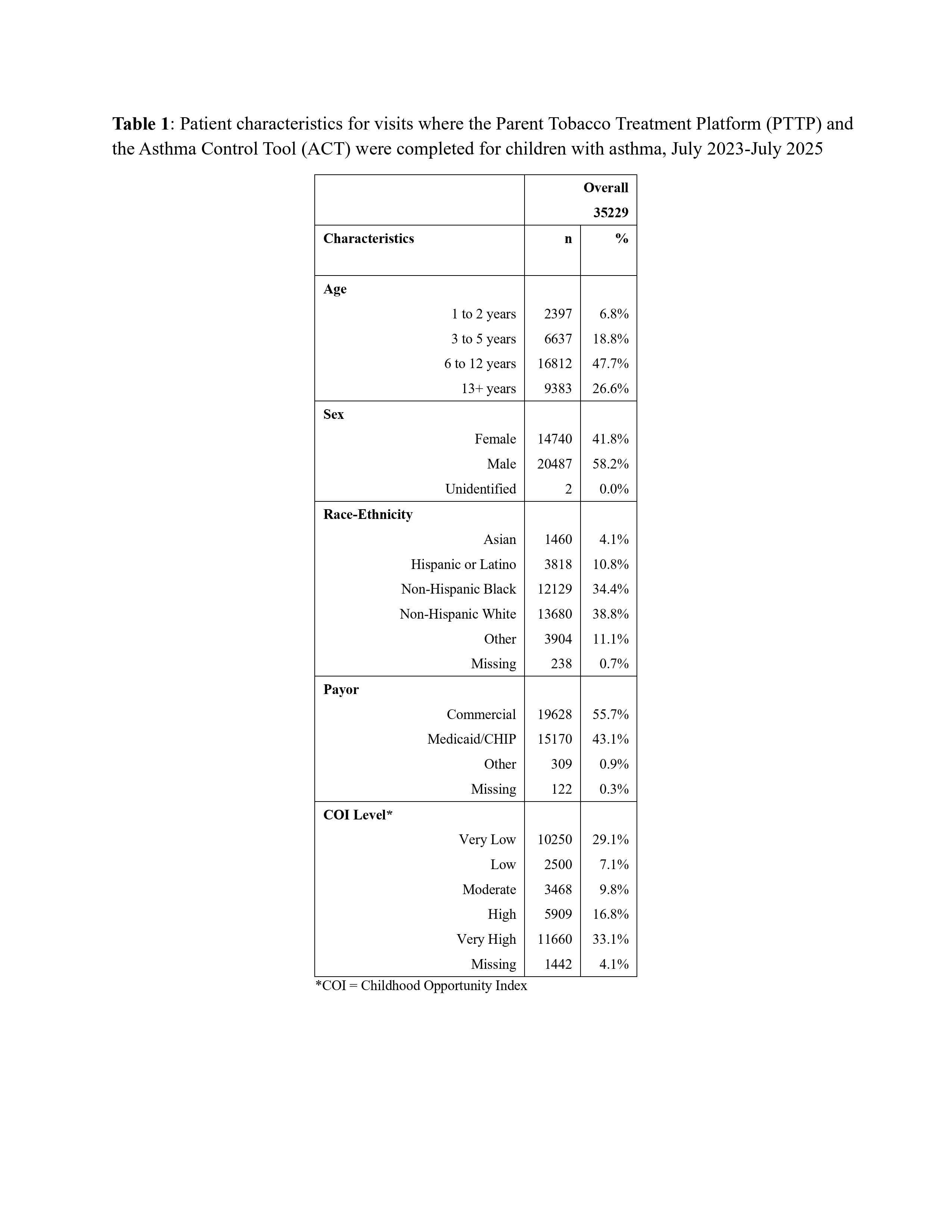
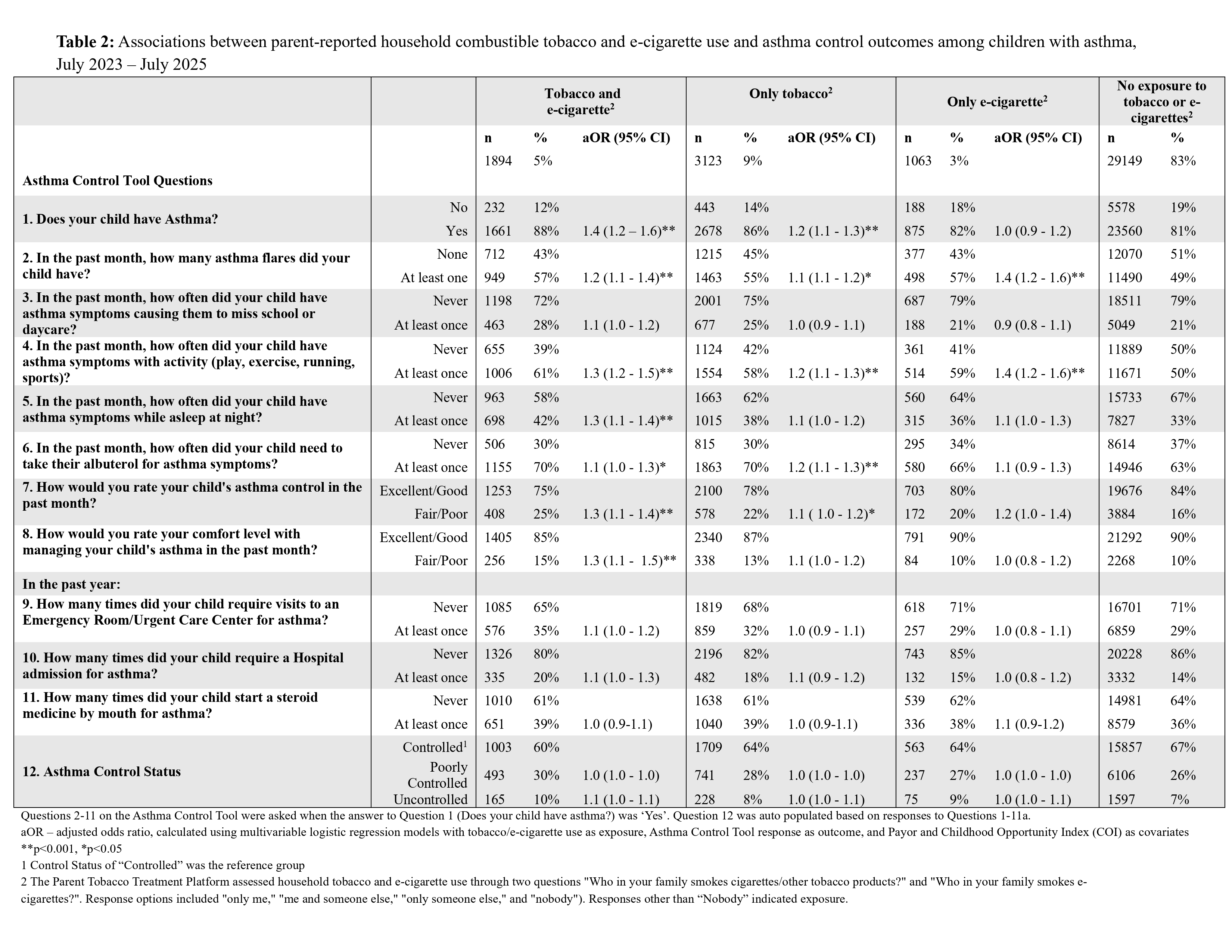
Background: Secondhand smoke worsens respiratory illnesses in children, particularly asthma. The impact of combined combustible tobacco and e-cigarette exposure on pediatric asthma control needs further investigation. Objective: To examine associations between parent-reported household tobacco and e-cigarette use and parent-reported asthma control among children with asthma. Design/Methods: In this cross-sectional study, we used electronic health record data from an urban primary care network (2023 - 2025). We included visits where parents of children aged ≥1 year with asthma diagnosis completed both a parent tobacco treatment platform (PTTP) and asthma control tool (ACT). The PTTP asked questions on who in the family smoked combustible tobacco and/or e-cigarettes. The ACT assessed asthma symptoms, control, medication use and healthcare utilization. Exposure was categorized as: both tobacco and e-cigarettes, tobacco only, e-cigarettes only, or none (reference). We used multivariable logistic regression to estimate adjusted odds ratios (aOR) and 95% confidence intervals (CI), adjusting for child insurance and Childhood Opportunity Index (COI). Results: Among 35,229 encounters (48% aged 6-12 years, 42% female, 34% Non-Hispanic Black, 43% Medicaid insured, 29% from very low COI neighborhoods; Table 1), household use of tobacco and e-cigarette was reported in 5%, tobacco only in 9%, and e-cigarette only in 3% of the encounters. After adjusting for covariates, combined tobacco and e-cigarette exposure was associated with nighttime symptoms (aOR 1.3, 1.1-1.4), worse parent rating of asthma control (aOR 1.3, 1.1-1.4), and lower parental comfort with asthma management (aOR 1.3, 1.1-1.5; Table 2). E-cigarette-only exposure was associated with more asthma flares (aOR 1.4, 1.2-1.6) and activity-related symptoms (aOR 1.4, 1.2-1.6), comparable to or exceeding combined exposure. Tobacco-only exposure showed more modest associations. Healthcare utilization outcomes were not significantly associated with any exposure type after adjustment.
Conclusion(s): Household tobacco and e-cigarette use, as reported by parents, are associated with worse parent-reported asthma control among children with asthma, even after adjusting for socioeconomic factors. E-cigarette-only exposure showed associations with asthma symptoms comparable to combined exposure, challenging assumptions that e-cigarettes pose low risk. Findings underscore the importance of comprehensive tobacco cessation counseling for families, including both combustible tobacco products and electronic products.
Table 1: Patient characteristics for visits where the Parent Tobacco Treatment Platform (PTTP) and the Asthma Control Tool (ACT) were completed for children with asthma, July 2023-July 2025
Table 2: Associations between parent-reported household combustible tobacco and e-cigarette use and asthma control outcomes among children with asthma, July 2023 - July 2025