94 - Empowered Transitions: A Co-Designed, Community-Engaged Intervention to Support Black Family Health in Early Infancy
Saturday, April 25, 2026
3:30pm - 5:45pm ET
Publication Number: 2090.94
Ashley C. Nmoh, Duke University School of Medicine, Durham, NC, United States; Danielle Alese Cooke. Little, Pediatrics Supporting Parents, Durham, NC, United States; Javier Rodriguez, Duke University School of Medicine, Durham, NC, United States; Tiffany Solomon, Durham Pediatrics Supporting Parents, Durham, NC, United States; Karen Sheffield-Abdullah, UNC Chapel Hill School of Nursing, Chapel Hill, NC, United States; Elizabeth Erickson, Duke University School of Medicine, Durham, NC, United States; Eliana M.. Perrin, Johns Hopkins University School of Medicine, Baltimore, MD, United States; Michelle White, Duke University School of Medicine, Durham, NC, United States
Medical Student (MS3) Duke University School of Medicine Durham, North Carolina, United States
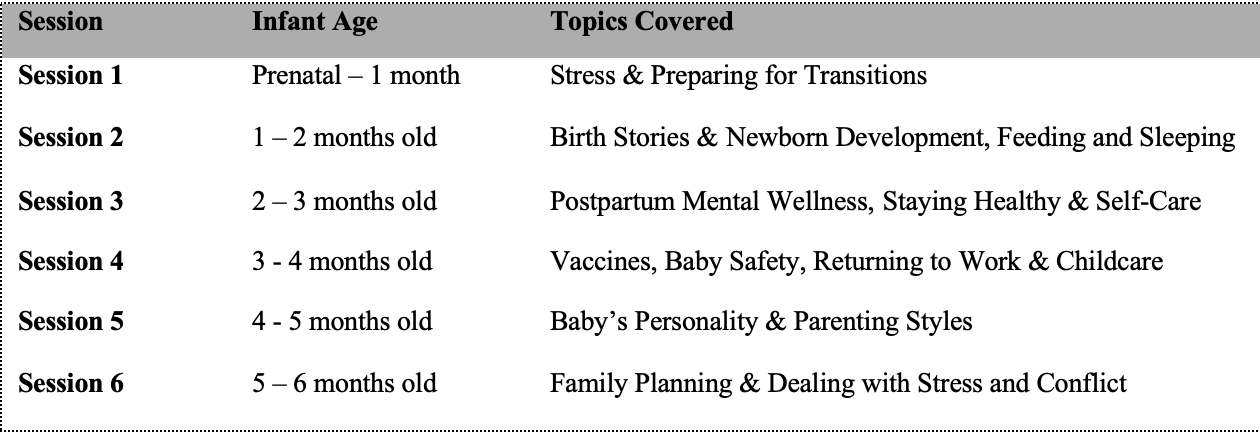
Background: Early infancy is a time of heightened stress as parents recover from childbirth and adapt to parenthood. Black parents face additional burdens, including a higher risk of post-partum mood disorders, racialized stressors and a lack of culturally responsive pediatric care. Few interventions address the unique needs of Black families during infancy, and none have been co-designed in direct partnership with parents. Objective: To evaluate the feasibility and acceptability of Empowered Transitions (ET), a co-designed, culturally-tailored group intervention supporting the socioemotional and physical health of Black families in early infancy. Design/Methods: We partnered with Black parents and community stakeholders to guide all stages of ET's design and evaluation. Nine co-design sessions informed a six-session, monthly virtual intervention (Aug 2024-Feb 2025) led by Black health professionals. The intervention included mindfulness-based stress management, parenting education, and community resource navigation (Table 1). Black parents of infants born in Fall 2024 were recruited through community and clinical networks to pilot the intervention. Participants completed demographic forms, session evaluations, feedback interviews, and surveys to assess feasibility and acceptability. Quantitative data were analyzed descriptively, and qualitative data were analyzed using rapid qualitative analysis, collectively yielding data to guide program implementation. Results: Twenty-two parents (77% mothers; mean age = 33 years) participated (Table 2). The average participant attended 3.7 out of 6 total sessions. All participants found sessions helpful, learned new information, felt comfortable sharing, trusted facilitators, and would recommend ET to other Black parents. Mean acceptability ratings ranged from 4.6-4.8/5 for appeal, enjoyment, and facilitator knowledge. Sessions were rated as easy to attend (mean = 4.7/5) and schedule-friendly (mean = 4.3-4.6/5). Qualitative interviews (n = 12) highlighted ET's impact: parents reported reduced isolation, greater parenting confidence, and improved mental health (Table 3). Participants valued the culturally-affirming space and suggested more father involvement, increased peer interaction, and more frequent sessions throughout their child's first year.
Conclusion(s): Empowered Transitions is a feasible and acceptable intervention that may strengthen parenting confidence, wellbeing, and community among Black families in early infancy. Increasing father engagement and extending the program's duration may further enhance Empowered Transitions' impact.










.png)
.png)
