54 - Impact of low-dose late postnatal dexamethasone on growth and other short-term outcomes in very low birth weight infants – A retrospective cohort study
Saturday, April 25, 2026
3:30pm - 5:45pm ET
Publication Number: 2051.54
Megan N. Murphy, Baylor College of Medicine, Houston, TX, United States; Kiely Fagundes, Baylor College of Medicine, Houston, TX, United States; Amy B. Hair, Baylor College of Medicine, Houston, TX, United States; Muralidhar H. Premkumar, Baylor College of Medicine, Houston, TX, United States; Daniela Dinu, Baylor College of Medicine, Houston, TX, United States; Hariharan Gokulakrishnan, Baylor College of Medicine, Houston, TX, United States; Laura Gollins, Texas Children's Hospital, Houston, TX, United States; Joseph Hagan, Baylor College of Medicine, Houston, TX, United States
Pediatric Resident Baylor College of Medicine Houston, Texas, United States
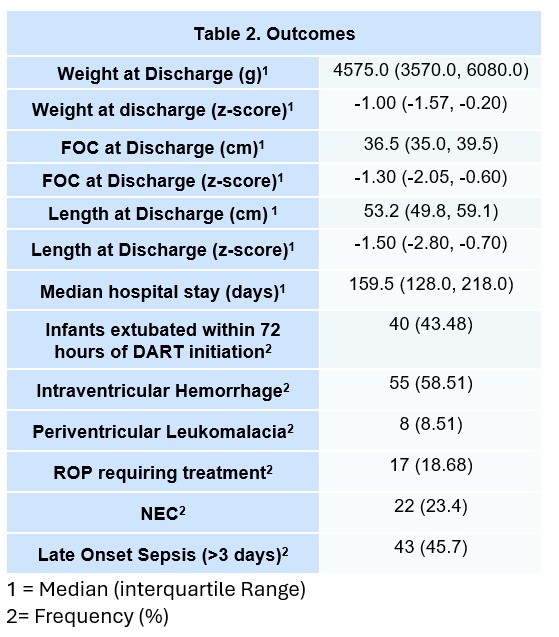
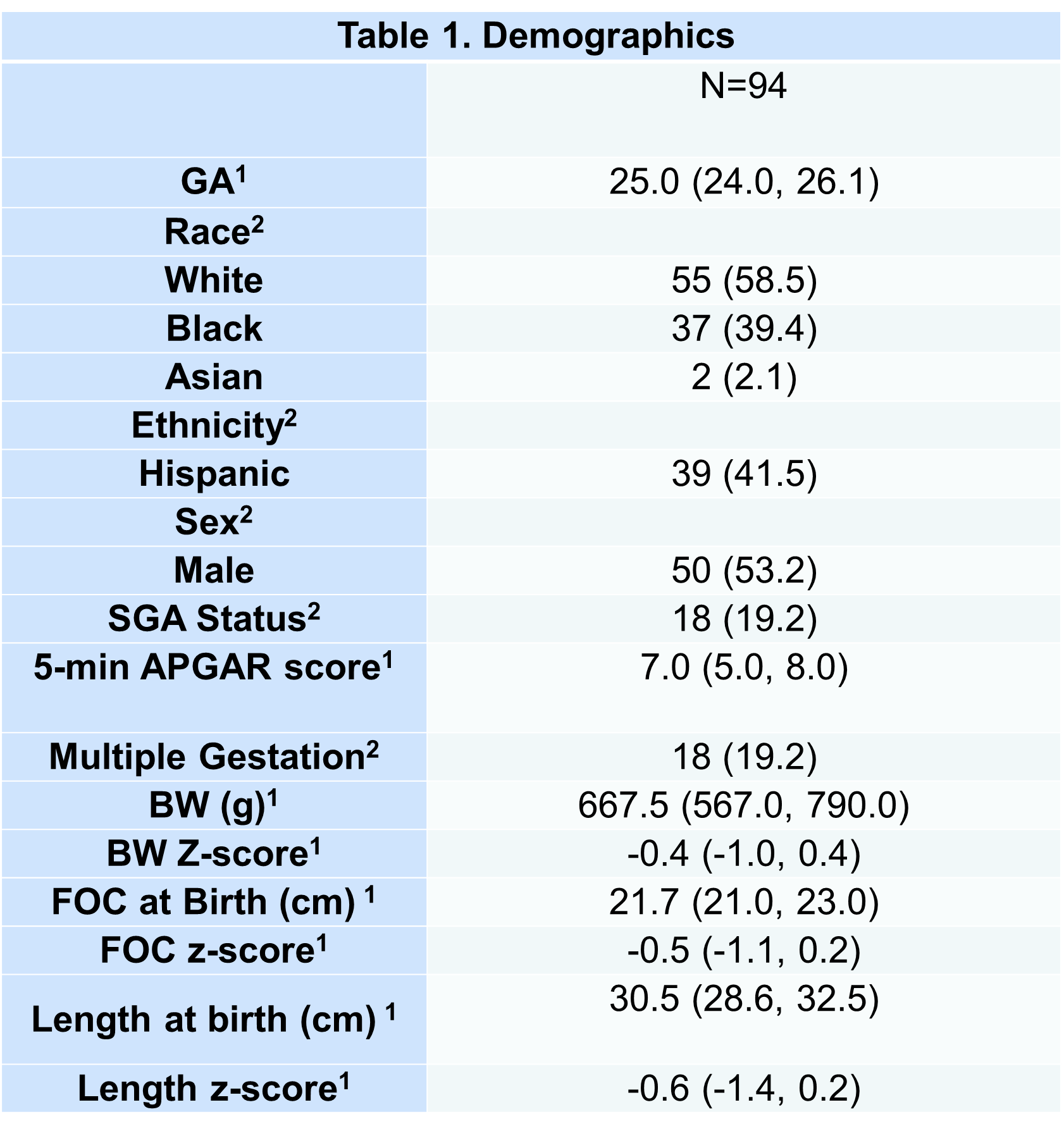
Background: Very low birth weight (VLBW: < 1500 g) infants have increased risk of developing bronchopulmonary dysplasia (BPD) due to prolonged mechanical ventilation. Low-dose dexamethasone (DART) (cumulative dose of 0.89 mg/kg over 10 days) administered after the first few weeks of life can aid in extubation, and reduce mortality and BPD incidence. The catabolic effects of dexamethasone may impair growth velocity in infants with BPD. The impact of DART therapy on short-term growth outcomes in VLBW infants remains unclear. Objective: Evaluate the short-term growth outcomes in preterm VLBW neonates ( < 30 weeks gestational age) treated with DART. Design/Methods: Retrospective cohort study of VLBW infants born at a single institution from January 2019 to December 2023 who received at least one course of DART. Weight was measured daily, head circumference and length were measured weekly, and a daily average was calculated. The primary outcomes investigated included growth velocities - weight (g/day), head circumference (cm/day), and length (cm/day) - compared during three periods: a) 10 days before DART (pre-DART), b) during DART treatment, and c) 10 days after DART (post-DART). Mixed-effects linear models were used to compare growth velocities between time periods while accounting for repeated measures within infants. Results: The study included 94 infants, with a median birth weight of 667.5 g (IQR: 567.0, 790.0), gestational age of 25.0 weeks (IQR: 24.0, 26.1), and median hospital stay of 159.5 days (IQR: 128.0, 218.0). 43% of infants were extubated within 72 hours of starting DART.
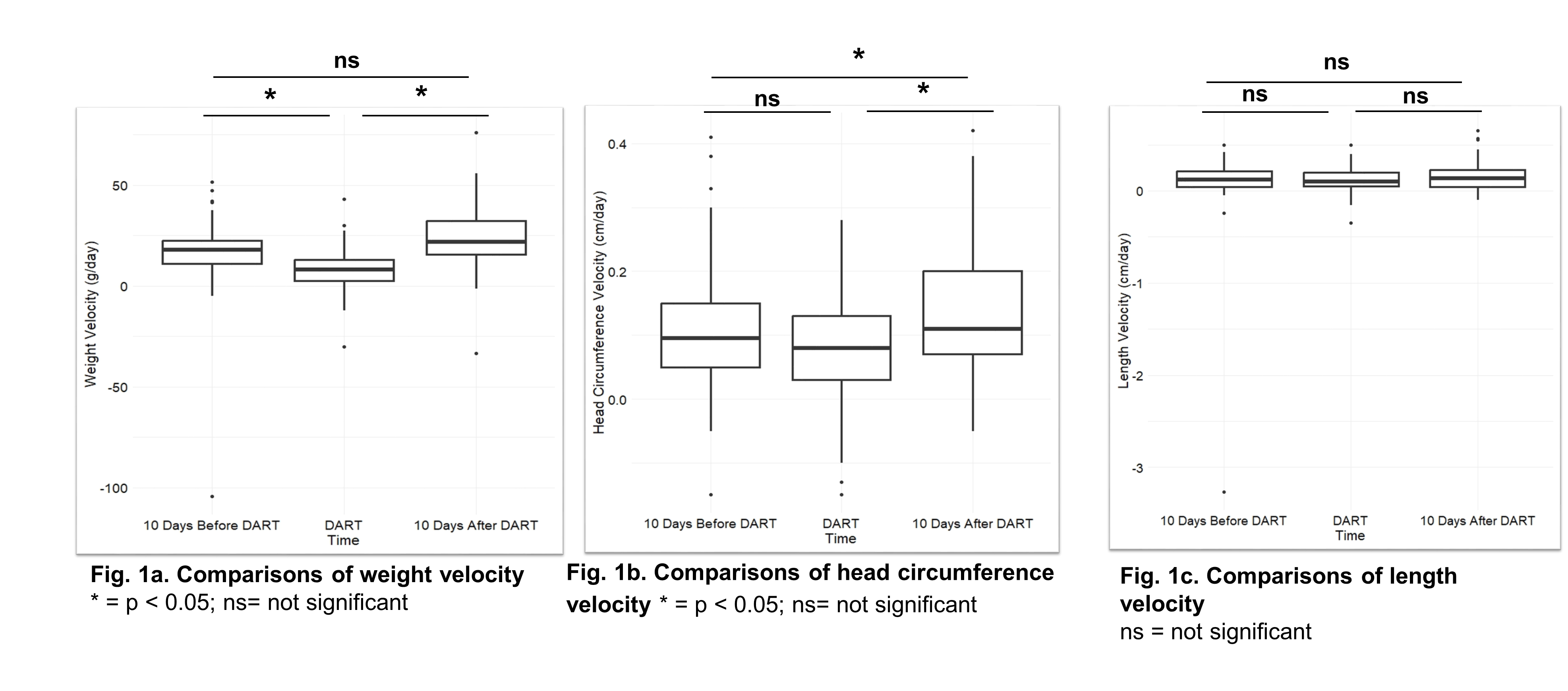
Mean weight velocity during DART was 7.9 ± 9.6 g/day, significantly lower compared to pre-DART (17.4 ± 15.6 g/day; p< 0.001) and post-DART (24.3 ± 14.0 g/day; p< 0.001).
Mean head circumference velocity during DART was 0.081± 0.081 cm/day, not significantly different than pre-DART (0.099 ± 0.090 cm/day; p= 0.133), but significantly lower than post-DART (0.133 ± 0.093 cm/day; p< 0.001).
Mean length velocity during DART was 0.121 ± 0.125 cm/day, not different from pre-DART (0.110 ± 0.354 cm/day; p=0.736) or post-DART (0.150 ± 0.148 cm/day; p=0.408).
Conclusion(s): In VLBW infants, DART was associated with a transient decrease in growth velocity, with no change in head circumference and length velocities. Weight and head circumference velocities improved after completion of DART, possibly indicating a significant but reversible catabolic effect. These findings highlight the short-term growth impact of DART and underscore the need for research to explore this association's long-term implications and strategies to mitigate its effects.
Figure 1. Boxplots of velocity during each time period
Table 1. Demographics 1. Median (interquartile range) 2. Frequency (%)










 1. Median (interquartile range)