328 - Beyond the Inhaler: The Impact of Social Determinants of Health on Recurrent Childhood Asthma Hospitalizations
Saturday, April 25, 2026
3:30pm - 5:45pm ET
Publication Number: 2317.328
Mukosolu Ben-Okafor, BronxCare Hospital, Bronx, NY, United States; Sheena Mathew, Bronx Care health system, yonkers, NY, United States; Get Ye Kong, BronxCare Health System, Bronx, NY, United States; Ngan Thy Chu, BronxCare Health System, Bronx, NY, United States; Savita Manwani, Bronx Care Health System, Bronx, NY, United States; Yossef Alnasser, BronxCare Health System, New York, NY, United States
Resident BronxCare Hospital Bronx, New York, United States
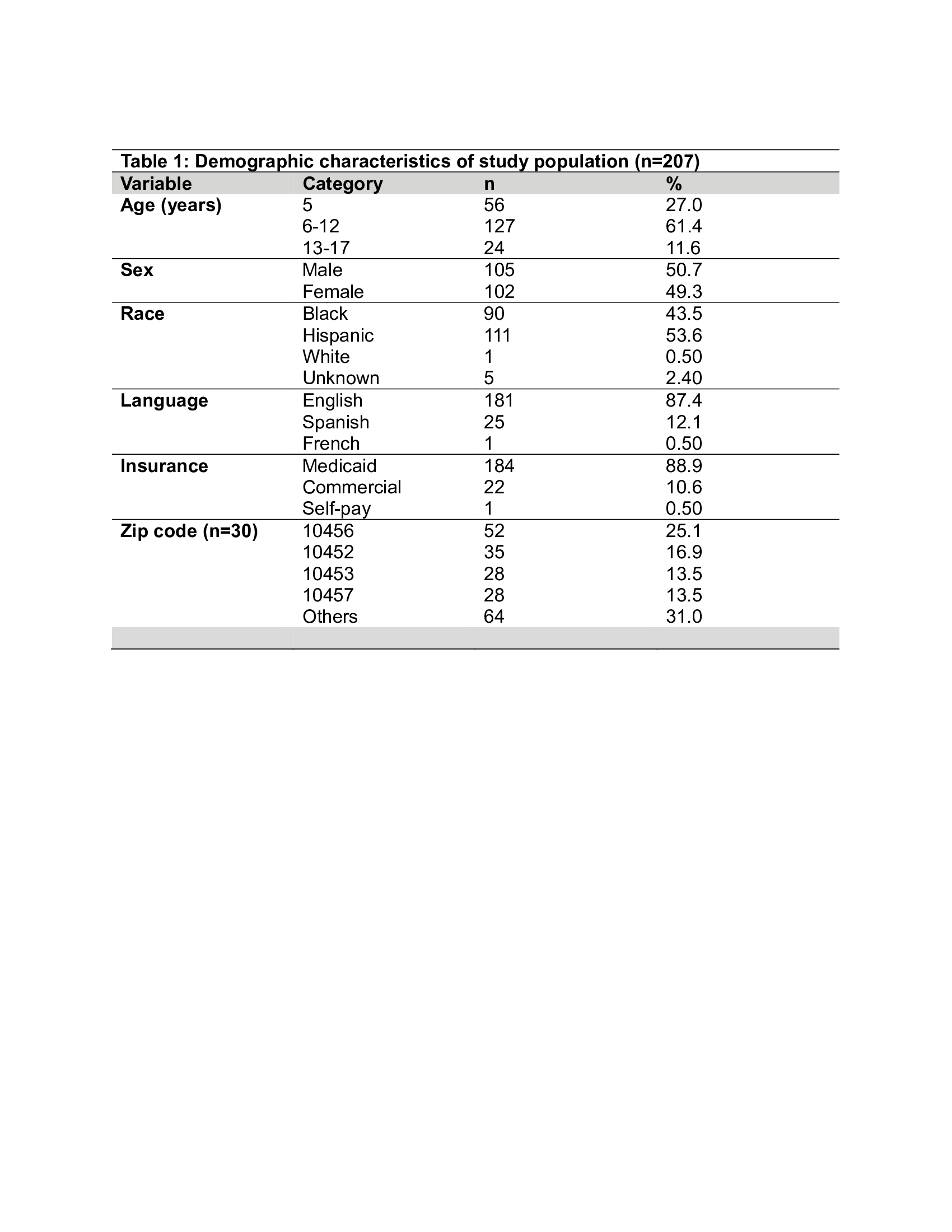
Background: The Bronx has the highest prevalence and burden of childhood asthma among all five New York City boroughs. The Bronx also faces significant challenges related to poor Social Determinants of Health (SDoH). Examining the intersection between recurrent asthma-related hospitalizations and SDoH can help policymakers identify key factors influencing asthma management and inform targeted interventions for marginalized Bronx communities. Objective: To investigate the association between social determinants of health and recurrent asthma hospitalizations among children living in the south Bronx Design/Methods: A cross-sectional methodology to review charts of pediatric patients with more than one asthma-related hospital admission between January 2015 and December 2024 was adopted at a single teaching hospital in the Bronx, New York. Demographic data and neighborhood socioeconomic characteristics were collected and analyzed. Neighborhood socioeconomic status was measured using the Childhood Opportunity Index (COI). The primary outcome was the frequency of asthma admissions. A Poisson regression model was applied to assess associations between asthma readmissions and SDoH variables. Results: A total of 1,229 recurrent childhood asthma admissions involving 207 patients were identified (Table 1). Gender distribution was nearly equal (50.7% male, 49.3% female). Majority of patients (88.4%) were aged 5-12 years, with age 5 being the most common (n = 56). 43.5% of the patients identify as Black, while 53.6% of the patients identify as Latino. English was the predominant spoken language (87.4%). Most patients (88.9%) were Medicaid beneficiaries (n = 184). The highest concentration of cases was observed in the Morrisania (zip code: 10456) and Highbridge (zip Code: 10452) neighborhoods with 25.1% and 16.9%, respectively. Regression analysis demonstrated a significant association between the frequency of asthma admissions and COI (p = 0.047). Among the SDoH studied variables, housing resources, specifically overcrowding, showed the strongest correlation (p = 0.046).) Education, employment, air pollution, environment, health literacy, income and social support did not influence recurrent asthma admissions among children in the Bronx.
Conclusion(s): Recurrent childhood asthma hospitalizations in the Bronx are strongly associated with certain zip codes, housing overcrowding, and childhood opportunity index. Clinicians should consider these factors when developing asthma management plans and connect families with community and housing resources to reduce readmissions and improve long-term control.
Table 1: Demographic characteristics of study population