240 - Socio-contextual stressors for Black and Latino families after child sexual abuse
Saturday, April 25, 2026
3:30pm - 5:45pm ET
Publication Number: 2231.240
Hiu-fai Fong, Boston Children's Hospital, Boston, MA, United States; Ora A. Nakash, Smith College, Newton, MA, United States; Megan Bair-Merritt, Boston Medical Center, Boston, MA, United States; Yamile Lugo Rodriguez, Boston Children's Hospital, Boston, MA, United States; Adolfo Caldas, Boston Children's Hospital, Boston, MA, United States; Michael Lindsey, NYU, New York, NY, United States; William Beardslee, Boston Children's Hospital, cambridge, MA, United States; Mary McKay, Washington University in St. Louis, St. Louis, MO, United States; Margarita Alegria, Massachusetts General Hospital; Harvard Medical School, Boston, MA, United States
Research Assistant Boston Children's Hospital Boston, Massachusetts, United States
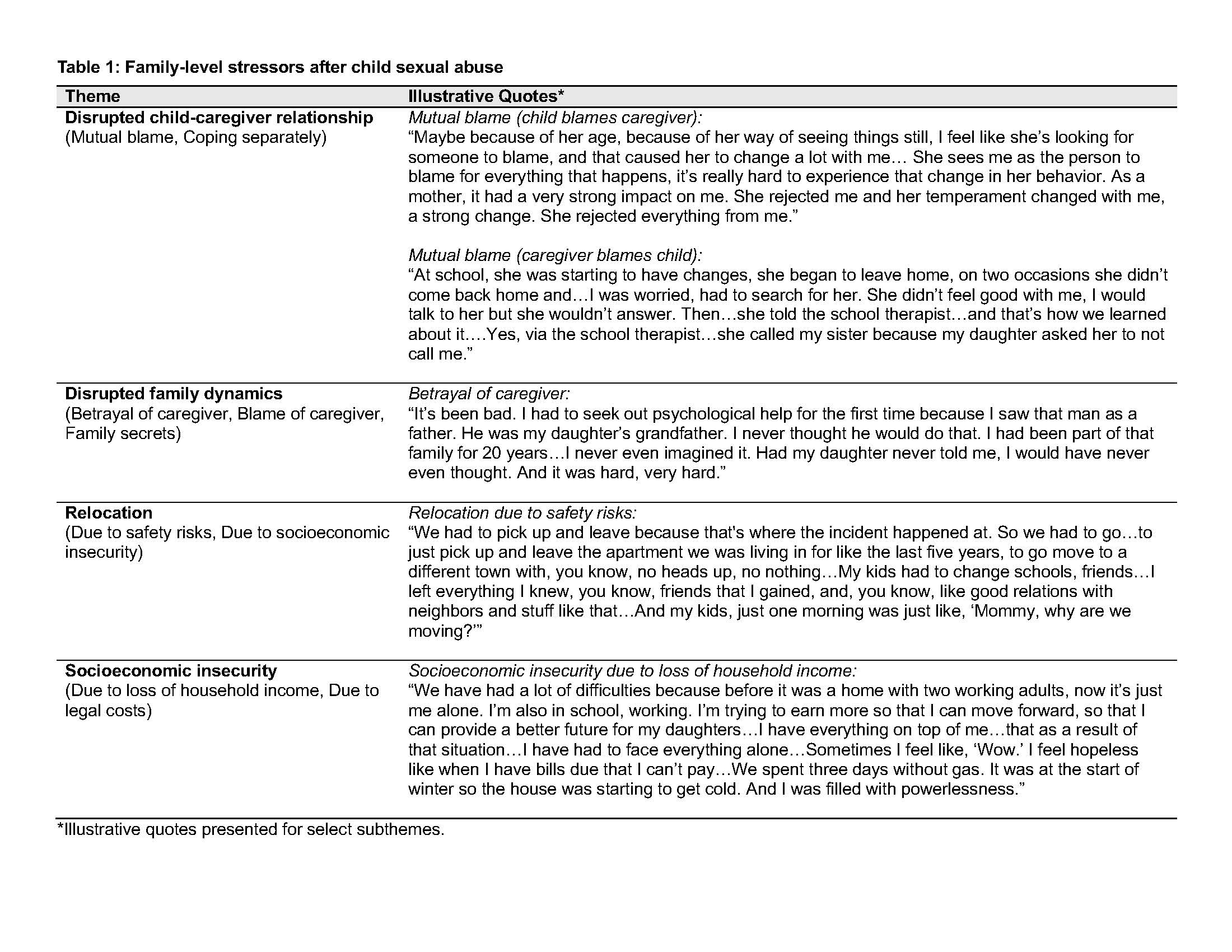
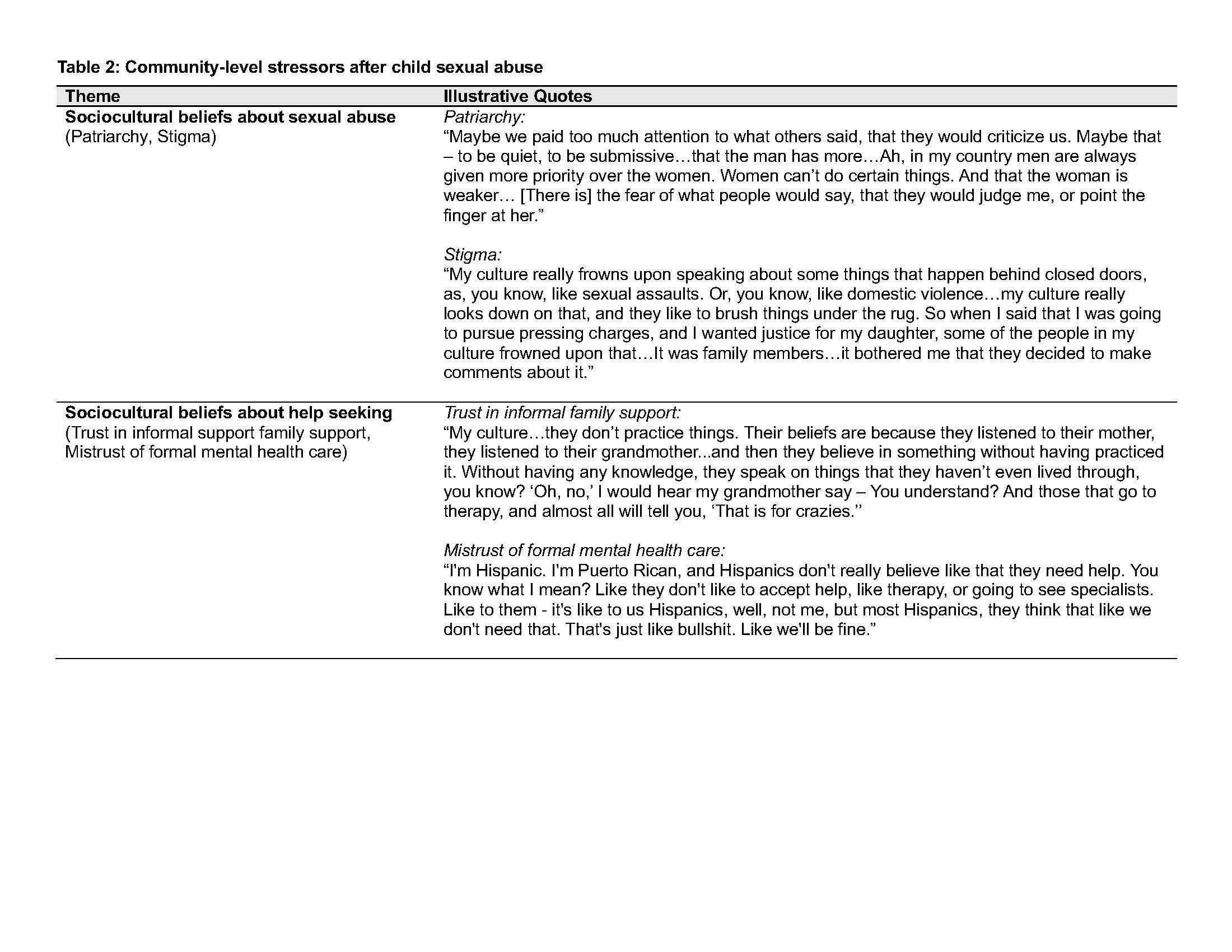
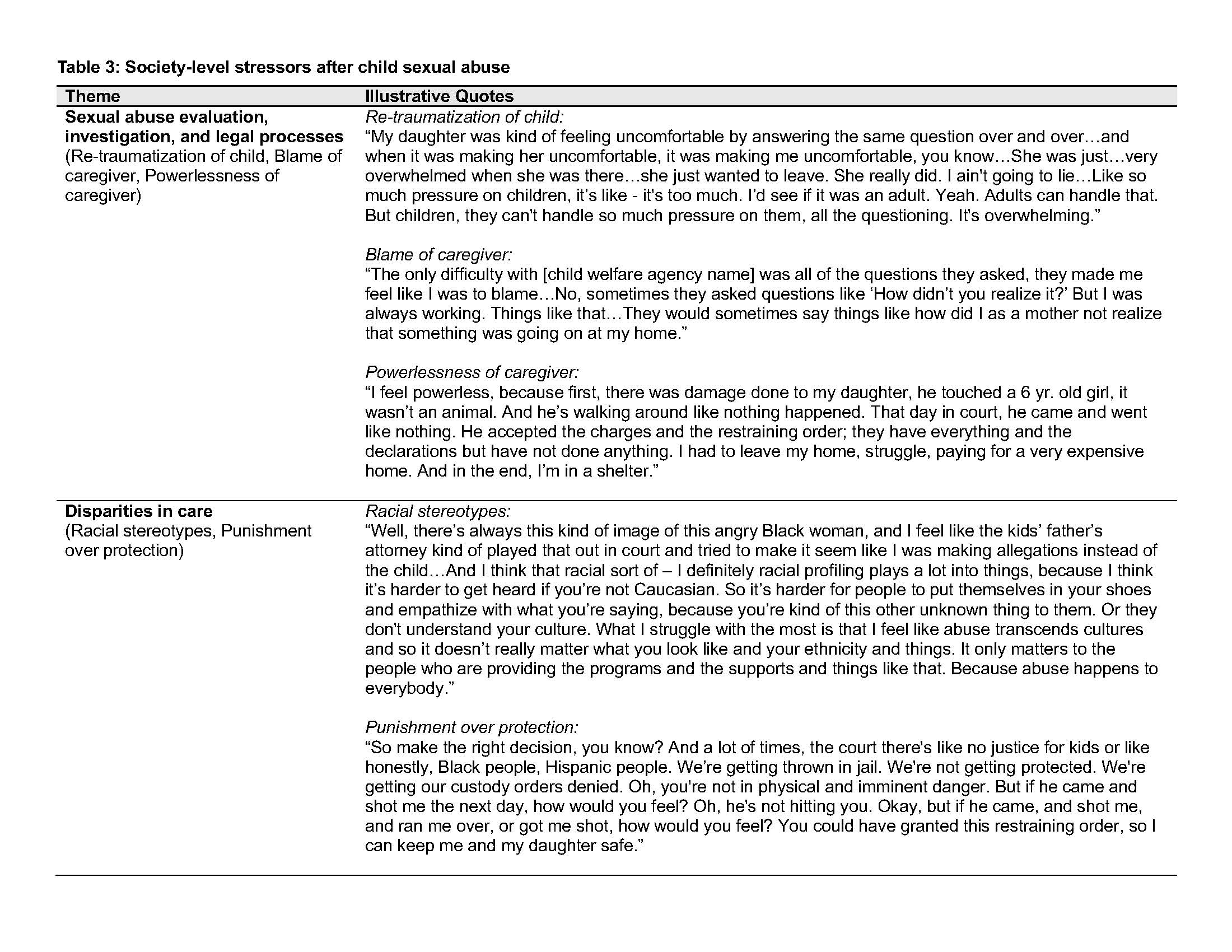
Background: Child sexual abuse is a significant public health problem that affects over 1 in 10 children worldwide. Black and Latino children may be more likely to experience sexual abuse than children of other races and ethnicities. Little is known about the socio-contextual stressors that impact Black and Latino families after child sexual abuse. Objective: To describe socio-contextual stressors related to the family, community, and society for Black and Latino families after child sexual abuse. Design/Methods: We conducted in-depth interviews with 30 Black and Latino, English and Spanish-speaking caregivers of children (aged 3-17 years old) who experienced sexual abuse. Caregivers were recruited from sexual assault and domestic violence centers, child advocacy centers, emergency departments, and outpatient medical and behavioral health centers. Interviews were conducted by phone, video conferencing, or in person, and assessed caregivers' perspectives about coping with stressors after child sexual abuse. Interviews were audio-recorded, transcribed, and analyzed using a team-based thematic analysis approach. Results: Caregivers (27% Black, 47% Latino, 27% Black and Latino) mainly were mothers (87%) whose children experienced intrafamilial sexual abuse (60%). Half of the caregivers preferred Spanish as their language (47%) and were born outside the U.S. (50%). First, caregivers described four family-level stressors: disrupted child-caregiver relationship (e.g., mutual blame), disrupted family dynamics (e.g., betrayal of caregiver), relocation (e.g., due to safety risks), and socioeconomic insecurity (e.g., due to loss of household income) (Table 1). Second, caregivers reported two community-level stressors: sociocultural beliefs about sexual abuse (e.g., patriarchy that prevents protective responses by female survivors and mothers) and sociocultural beliefs about help seeking (e.g., trust in informal family support over formal mental health care) (Table 2). Third, caregivers identified two society-level stressors: sexual abuse evaluation, investigation, and legal processes (e.g., causing child re-traumatization) and disparities in care (e.g., punishment over protection due to background) (Table 3).
Conclusion(s): Beyond the sexual abuse, children and caregivers experience many stressors related to the family, community, and societal response to sexual abuse. Knowledge of these stressors can help guide clinicians and systems in providing trauma-informed, family-centered care that addresses the most salient needs and promotes healing for families impacted by sexual abuse.
Family-level stressors after child sexual abuse
Community-level stressors after child sexual abuse