350 - Impact of Increased CPAP Use in the NICU on Device Related Pressure Injury and Association with Respiratory Outcomes in Extremely Low Gestational Age Infants
Saturday, April 25, 2026
3:30pm - 5:45pm ET
Publication Number: 2339.350
Deepak Jain, Rutgers, Robert Wood Johnson Medical School, Maywood, NJ, United States; Manan Shah, Rutgers, Robert Wood Johnson Medical School, Moorestown, PA, United States
Professor of Pediatrics Rutgers, Robert Wood Johnson Medical School Maywood, New Jersey, United States
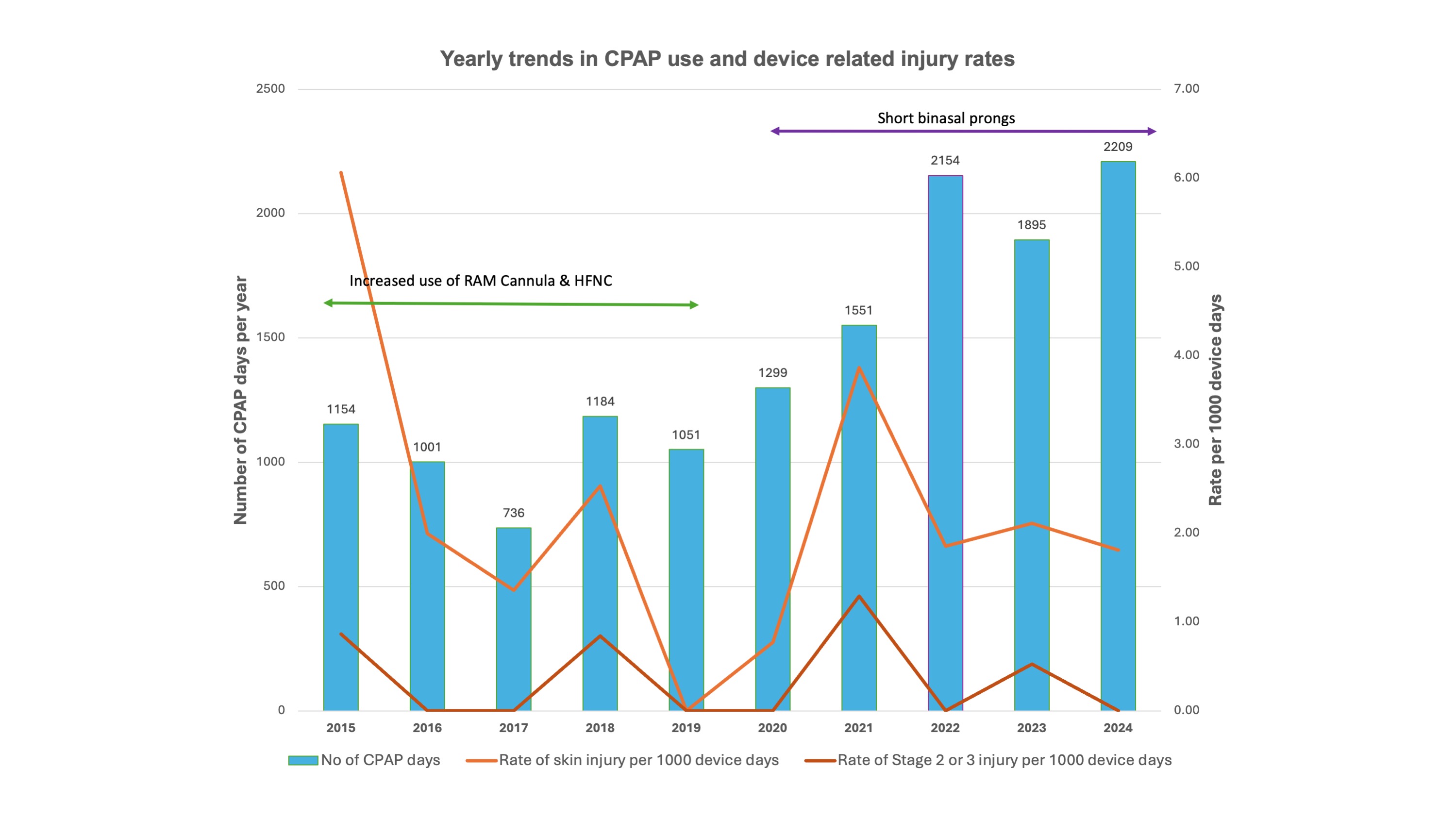
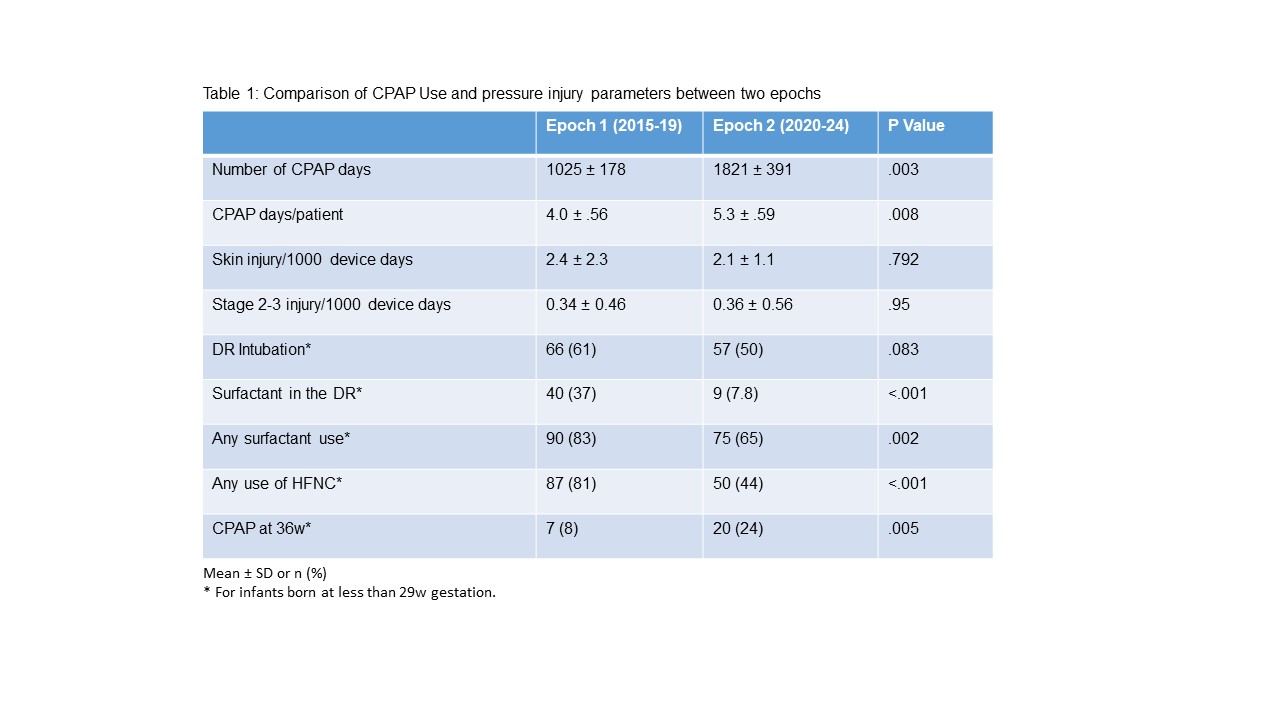
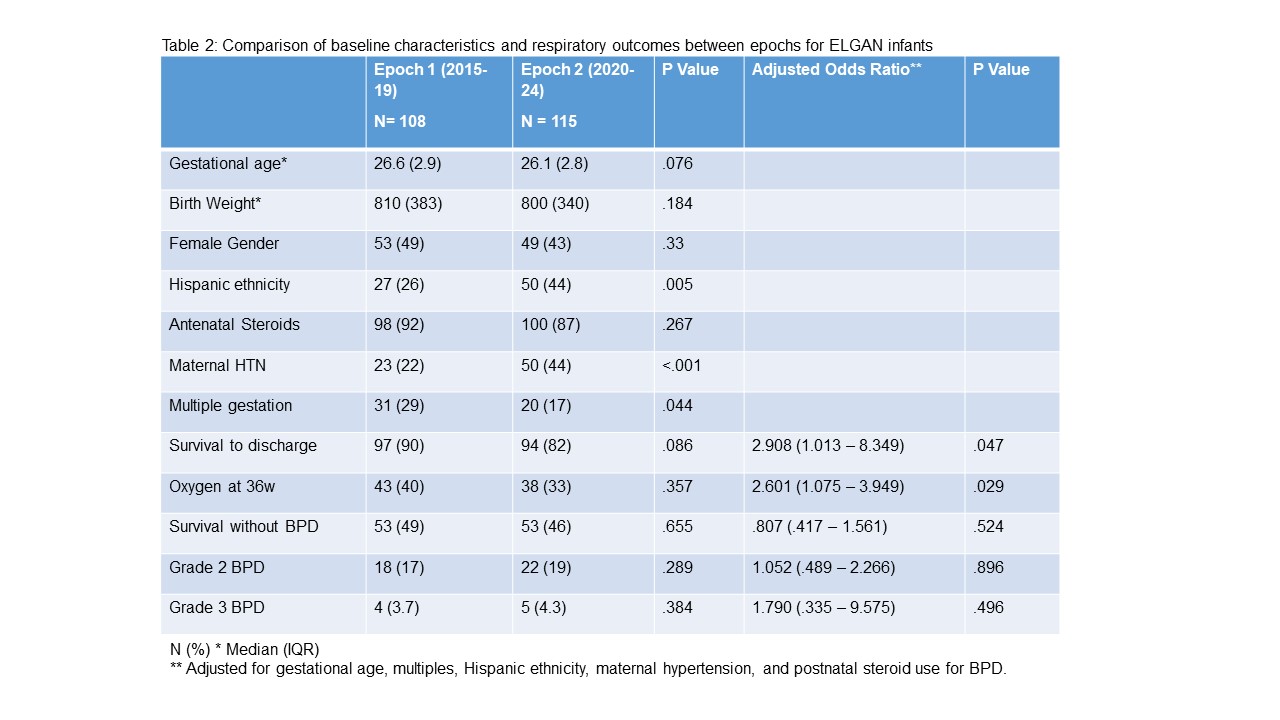
Background: While early and prolonged continuous positive airway pressure (CPAP) use is associated with improved respiratory outcomes, the risk of device related pressure injury (DPI) is a significant challenge. The impact of increased CPAP use on DPI and respiratory outcomes in the contemporary population of extremely low gestational age neonates (ELGANs) has not been well studied. Objective: To evaluate the effect of increased CPAP use on the incidence of DPI and association with respiratory outcomes in ELGANs. Design/Methods: This is a retrospective analysis of prospectively collected data for the infants admitted to the NICU at Bristol Myers Squibs Children's Hospital from 2015-24. Daily CPAP use and DPI incidence data were collected for all admitted patients for ongoing quality improvement to reduce pressure injury. The respiratory outcomes and clinical practices data for were extracted from the data submitted to Vermont oxford network. In 2020, our respiratory support strategies changed to increased use of nasal CPAP while limiting the use of nasal cannula oxygen. We compared the two epochs of 5y each (2015-19 and 2020-24) before and after the practice change for overall CPAP use and DPI incidence, and respiratory outcomes in infants born at less than 29w gestation (ELGANs). Results: Overall, NICU CPAP days increased from 1025 ± 178 in epoch 1 to 1821 ± 391 in epoch 2 (p.003) with no change in the incidence of skin injury (2.4 ± 2.3 vs 2.1 ± 1.1; p .792) or Stage 2-3 skin injury (0.34 ± 0.46 vs 0.36 ± 0.56; p .95) per 1000 CPAP days. (Figure) In the ELGAN subgroup, there was reduced DR intubation, surfactant use, any high flow nasal cannula oxygen use, and increased use of CPAP at 36w in epoch 2 as compared to epoch 1 (Table 1) For baseline population characteristics in the ELGAN subgroup, GA (26.6±2.9w vs 26.1±2.8w (median ± IQR), birth weight, and gender did not differ between the epochs but higher proportion of infants were of Hispanic ethnicity, and born to mothers with hypertensive disorders in the epoch 2 when compared to epoch 1. While on univariate analysis. there was no significant difference in survival to discharge, BPD, or survival without BPD between the two epochs, on logistic regression 2015-19 epoch was associated with higher odds of survival and the need for oxygen at 36w. (Table 2)
Conclusion(s): In this cohort, increased CPAP use during the second epoch did not result in increased incidence of DPI. These data support earlier and prolonged use of CPAP as an effective alternative but potential beneficial effect on neonatal outcomes in ELGANs needs to be evaluated in further studies.
Figure: Yearly trends in CPAP use and device related skin injury
Table 1: Comparison of CPAP use and pressure injury parameters between two epochs Mean ± SD or n (%) * For infants born at less than 29w gestation.
Table 2: Comparison of baseline characteristics and respiratory outcomes between epochs for ELGANs N (%) * Median (IQR) ** Adjusted for gestational age, multiples, Hispanic ethnicity, maternal hypertension, and postnatal steroid use for BPD.










 Mean ± SD or n (%)
 N (%) * Median (IQR)