High School Student Needham High School needham, Massachusetts, United States
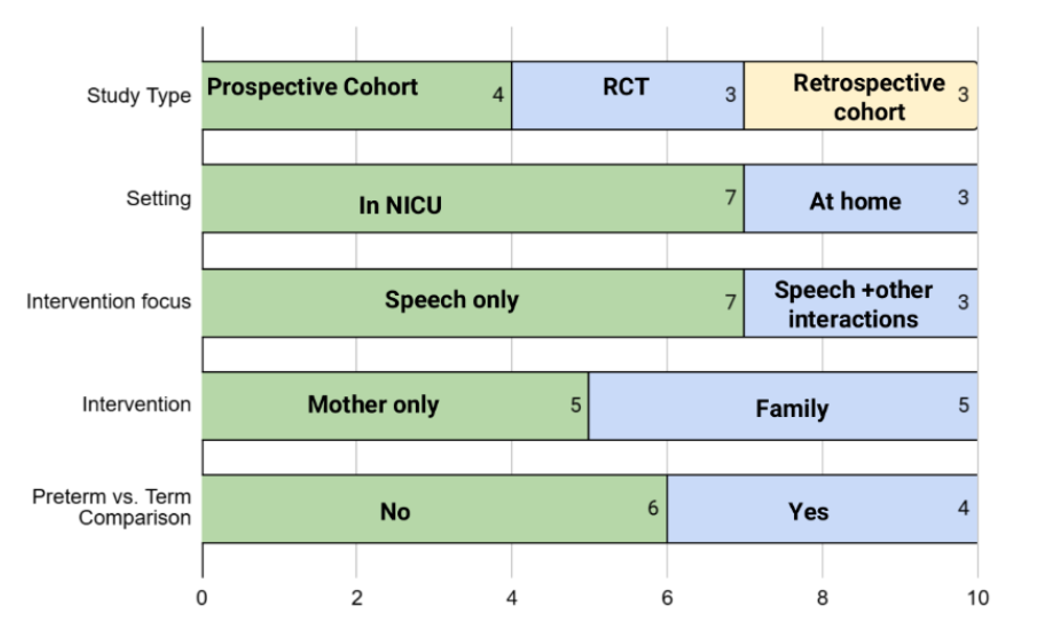
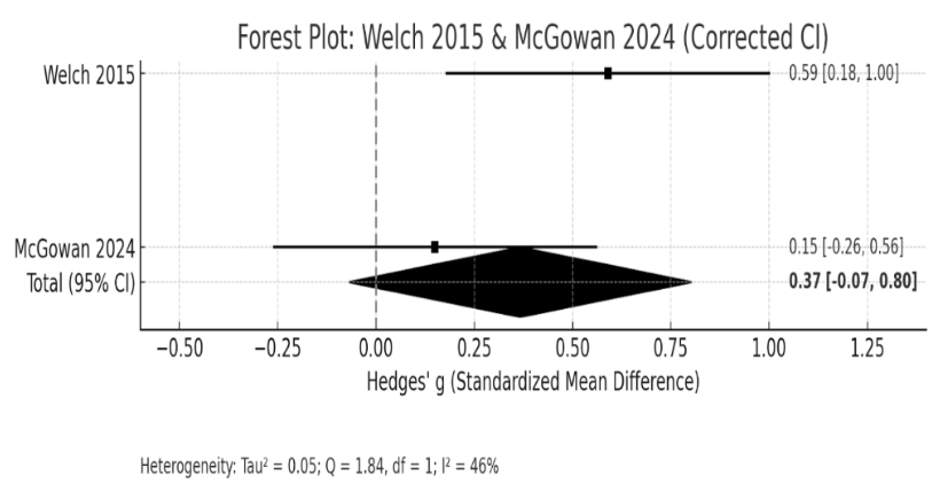
Background: Preterm infants are at heightened risk for speech and communication delays. Family-centered speech interventions show promise in improving outcomes; yet, because of varied designs and outcomes, the overall effectiveness is unclear. Objective: To determine how family based speech exposure supports language outcomes in preterm infants. Design/Methods: We searched pubmed, MEDLINE and Scopus for studies using search terms: (Speech OR speech impairment OR speech disorder) AND (Family OR parent OR caregiver) AND (communication) AND (child OR baby OR infant OR toddler OR adolescent OR pediatric) AND (preterm OR premature). Identified studies (n=94) were imported into Covidence for screening. Study titles and abstracts were first screened by one reviewer. Full texts (n=30) were then screened by two independent reviewers. Ten studies were included in the final analysis. Study characteristics were tabulated, a narrative review conducted, and a meta analysis performed on randomized control trials (RCTs) with similar outcomes. PRISMA 2020 standards were followed. Results: Figure 1 summarizes the characteristics of the ten included studies. Sample sizes ranged from n=13 to n=120. Observational studies (Caskey 2014, Sullivan 2014, Aija 2025) reported that more adult vocalizations in the NICU were associated with more infant vocalization and better speech and communication outcomes. Studies comparing term and preterm infants (Donahue 1995, Younesian 2021, Reissland 1999, Carvalho 2019) showed that term infants may be more responsive to parental vocalization, and reported differences in how parents of preterm infants approached speech, reinforcing the importance of parental education. Three RCTs were identified. Welch (2025) tested a multisensory intervention, Mcgowan (2024) a family education program about speech, and Travis (2024) increased maternal speech exposure. The primary outcome of all three studies was Bayley-III verbal scores between 18 and 24 months. Pooled findings of Welch and McGowan showed that the intervention improved speech outcomes, but pooled results did not achieve statistical significance (Figure 2). Bayley scores from Travis' study are forthcoming, and will be included when available. Travis' MRI data show that more maternal speech exposure improved development of the language centers of the preterm infants' brains at hospital discharge.
Conclusion(s): Observational data, RCTs, and neuroimaging data support exposure to familial speech as a way to improve speech outcomes for preterm infants. However, larger and more generalizable RCTs are needed to confirm findings.
Figure 1. Characteristics of Included Studies
Figure 2. Pooled results from Randomized Controlled Trials of NICU-based Family Speech Interventions on Language Outcomes