132 - Validation of Mentzer Index for Iron Deficiency Anemia Screening in Pediatrics: A cross sectional study
Saturday, April 25, 2026
3:30pm - 5:45pm ET
Publication Number: 2127.132
Samar Elassar, Flushing Hospital Medical Center, New york, NY, United States; Muhammad Abdullah, Bahria university health Sciences Campus Karachi, Karachi, Sindh, Pakistan; Rida Shakeel, Dow Medical College, Karachi, Karachi, Sindh, Pakistan; Dalia Atef Abouda, Faculty of medicine Alexandria University Egypt, Beheria, Abu Matamir, Al Buhayrah, Egypt; Aleena Ihtasham, King Edward Medical University, Lahore, Punjab, Pakistan; Sana Munir, Mohtarma Benazir Bhutto Shaheed Medical College Mirpur AJK Pakistan, Mirpur, Azad Kashmir, Pakistan; Wissal Fatih, caddi ayad university, Marrakech, Marrakech-Tensift-Al Haouz, Morocco; Hassan Amin, Bahria University Health Sciences Campus Karachi, Bahawalpur, Punjab, Pakistan
Resident Alexandria university faculty of medicine New york, New York, United States
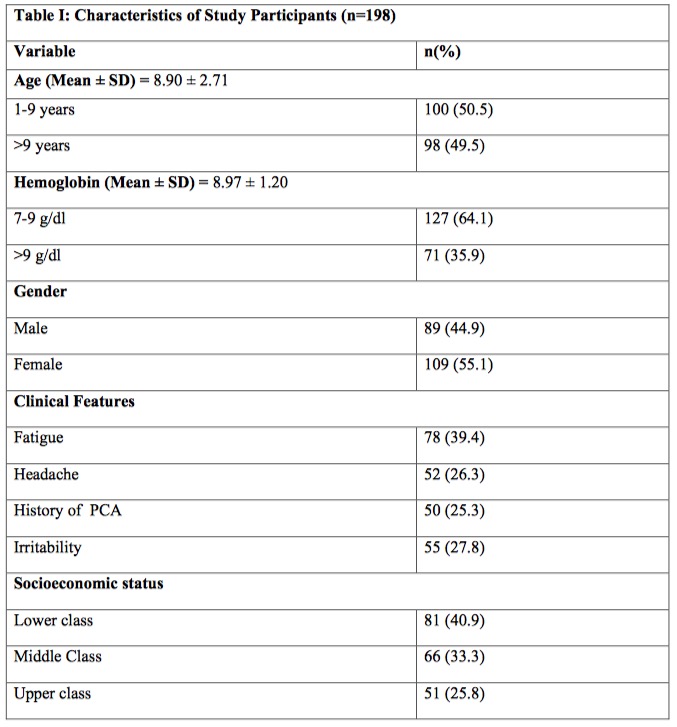
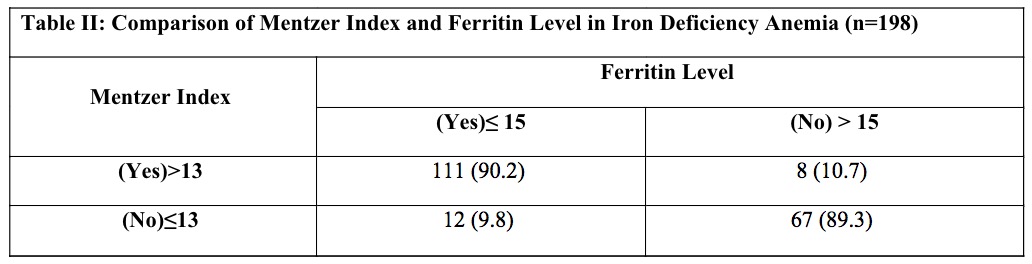
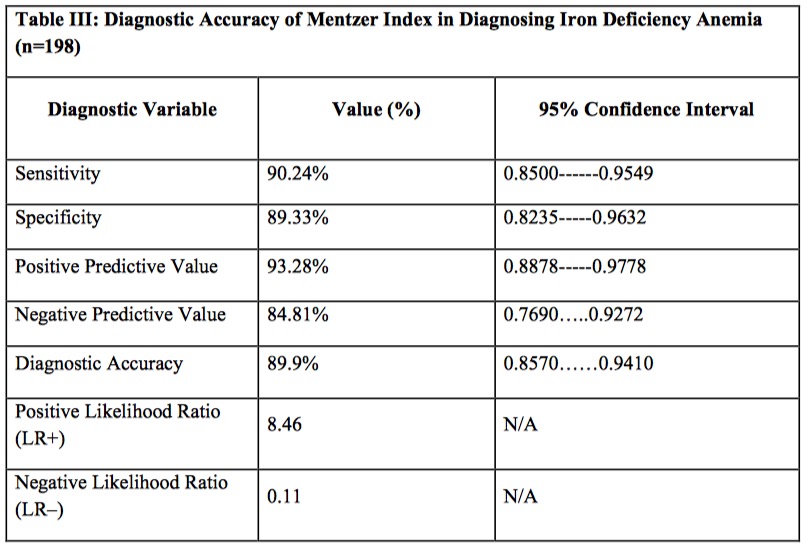
Background: Iron deficiency anemia (IDA) is the most common nutritional deficiency in children and contributes to significant morbidity, particularly in low-resource settings. The Mentzer Index is a simple, cost-effective index used to differentiate IDA from thalassemia trait; however, its diagnostic accuracy varies across populations. Objective: To assess the diagnostic accuracy of the Mentzer Index for identifying IDA in pediatric patients, using serum ferritin levels as the gold standard. Design/Methods: This cross-sectional study was conducted in March 2025 at the Pediatric Department of Lyari General Hospital, Karachi. After receiving ethical approval and parental consent, Children aged 6 months to 12 years with anemia (Hb ≤11 g/dL; Hct ≤32%) were enrolled through consecutive sampling. Those with prior transfusion, infection, malignancy, or renal disease were excluded. Mentzer Index ≥13 indicated IDA; ferritin < 12 ng/mL served as the reference. Statistical analysis was performed using SPSS v26 at a 95% confidence interval. Results: A total of 198 children were included (mean age 8.9 ± 2.7 years; 55.1% female). Mean hemoglobin was 8.97 g/dL, with 64.1% having Hb 7-9 g/dL. A Mentzer Index ≥13 correctly identified 90.2% of IDA cases, while ≤13 accurately classified 89.3% as non-IDA. Sensitivity, specificity, and diagnostic accuracy were 90.24%, 89.33%, and 89.90%, respectively.
Conclusion(s): The Mentzer Index demonstrated high diagnostic accuracy, consistent with previously reported sensitivity and specificity ranges in pediatric populations. Given its simplicity and reliance on routine CBC parameters, it serves as a practical screening tool in resource-limited settings where ferritin testing may not be accessible. However, accuracy may be affected by co-existing nutritional deficiencies or inflammatory states. Results are limited to a single-center cohort, indicating a need for multicenter validation and comparison with other RBC indices.
The Mentzer Index is a reliable, low-cost, and non-invasive screening tool for pediatric IDA and is particularly useful in low-resource environments. Multi-center studies with diverse populations are recommended to further refine cutoff values and validate clinical applicability.
Table I: Characteristics of Study Participants (n=198)
Table II: Comparison of Mentzer Index and Ferritin Level in Iron Deficiency Anemia (n=198)
Table III: Diagnostic Accuracy of Mentzer Index in Diagnosing Iron Deficiency Anemia (n=198)