51 - The association between weight growth and the risk of bronchopulmonary dysplasia (BPD) using the 2023 Postnatal Growth Charts for Preterm Infants for growth assessment: A subgroup analysis.
Saturday, April 25, 2026
3:30pm - 5:45pm ET
Publication Number: 2048.51
Daniel B. Villosis, Baylor University, Burbank, CA, United States; Maria Fe Villosis, Kaiser Permanente Bernard J. Tyson School of Medicine; Southern California Permanente Medical Group (SCPMG), Panorama City, CA, United States; Reese H.. Clark, Duke University School of Medicine, Marietta, SC, United States; Veeral Tolia, Pediatrix, Dallas, TX, United States; Fu-Sheng Chou, Southern California Permanente Medical Group, Riverside, CA, United States
research student Baylor University Burbank, California, United States
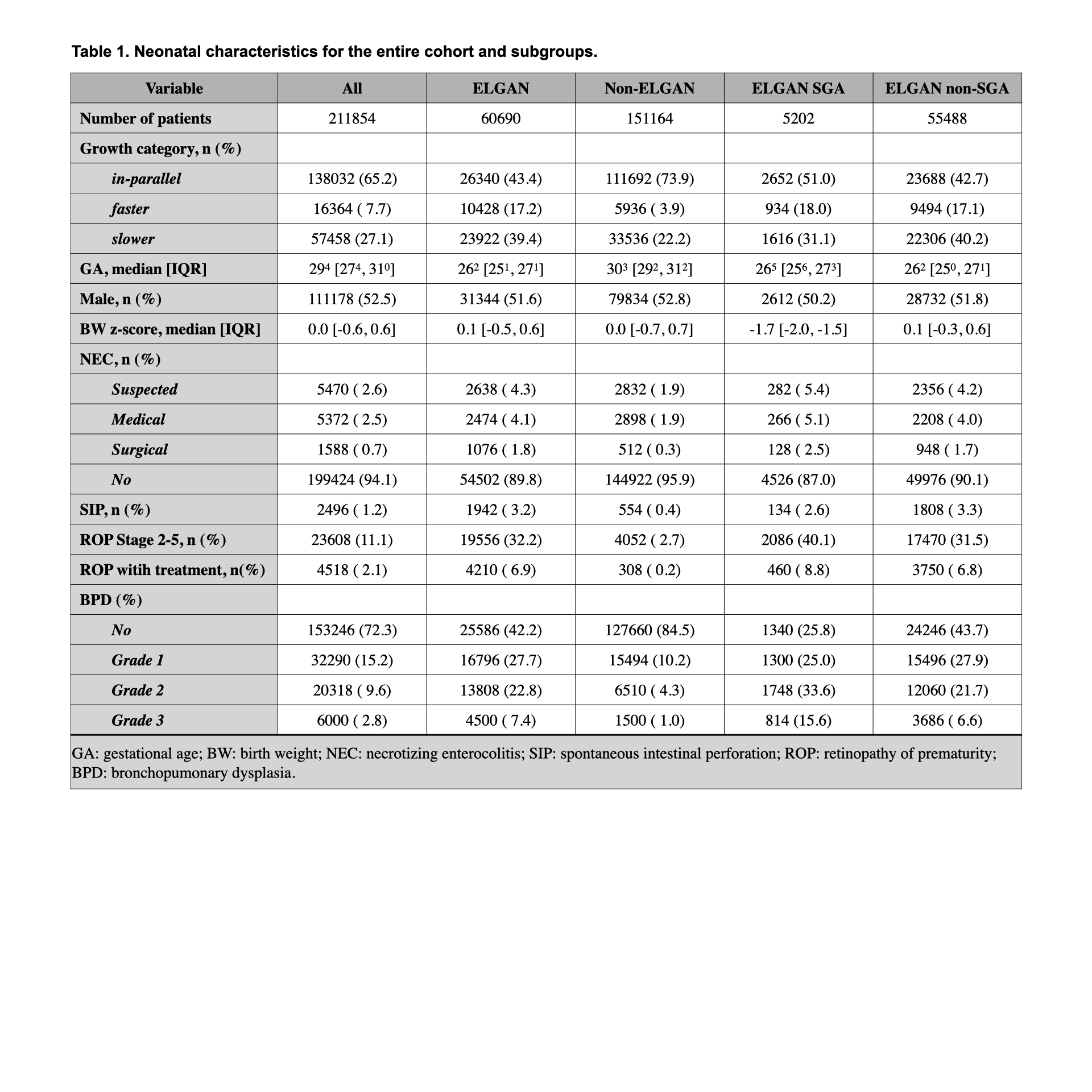
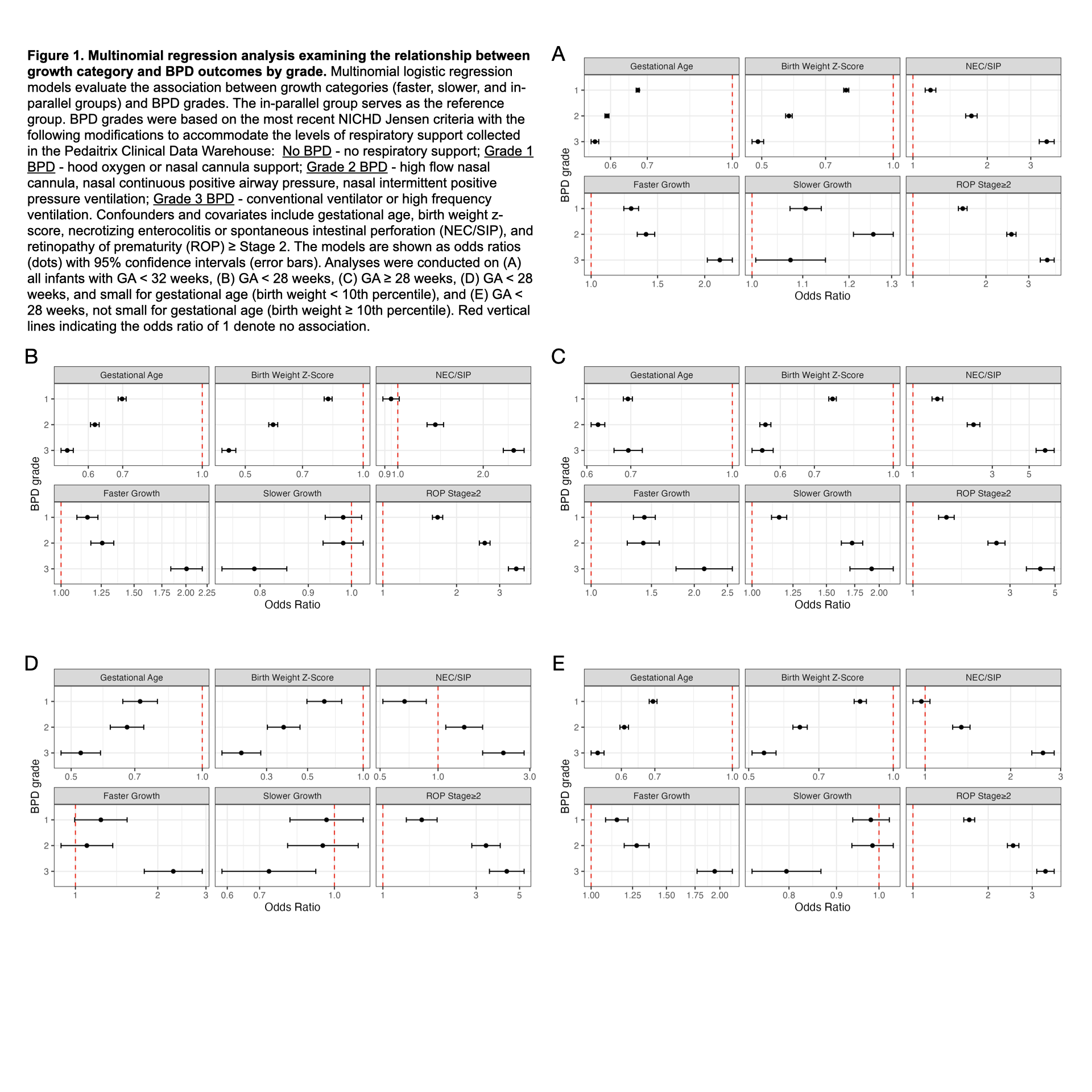
Background: Clinical BPD is diagnosed based on respiratory support needs at 36 weeks PMA and remains a leading morbidity among preterm infants. Evidence suggests that postnatal growth contributes to BPD development. Understanding the relationship between early weight gain and the severity of BPD is crucial for optimizing neonatal care. We previously modeled postnatal growth (PMID: 37726287) and described three weight growth categories (PMID: 40797023). We showed that both slower and faster growth (compared to in-parallel growth) are associated with an overall increased risk of BPD. Objective: In this follow-up study, our goal was to understand the relationship between weight growth categories and the risk of BPD within different infant subgroups. Design/Methods: We used a previously established cohort of infants < 32 weeks GA for this study. Subgroup analyses included GA < 28, GA ≥ 28 weeks, SGA, and non-SGA. Weight growth was categorized using a published method based on the 2023 Postnatal Growth Charts for Preterm Infants. BPD was graded based on the respiratory support mode. Multinomial regression models were developed, adjusting for GA, BW z-scores, sex, NEC/SIP, and ROP. Results: The neonatal characteristics are shown in Table 1. With all infants included in the analysis, infants in either faster or slower growth categories were associated with higher odds of BPD across all three grades compared to infants in the in-parallel category (Fig 1A). Faster growth was associated with higher odds of all grades of BPD in infants < 28 weeks, while slower growth was associated with lower odds of Grade 3 BPD and showed no association with Grade 1 & 2 BPD (Fig 1B). Slower growth was associated with higher risks of BPD in infants ≥ 28 weeks (Fig 1C). Among infants < 28 weeks, faster growth was associated with higher odds of Grade 1 and 2 BPD in non-SGA (Fig 1D), but not in SGA (Fig 1E) infants. Faster growth was associated with Grade 3 BPD in SGA and non-SGA infants. In all models, GA and BW z-scores were negatively associated, and NEC/SIP and ROP were positively associated with BPD. For all these covariates, the associations were stronger as the BPD grades increased.
Conclusion(s): Using the 2023 Postnatal Growth Charts for Preterm Infants to assess weight growth, faster, rather than slower growth, is associated with Grade 1/2 BPD in infants < 28 weeks, especially non-SGA infants. This study is limited by its retrospective design and the lack of nutrition and medication data for adjustment. The Postnatal Growth Charts for Preterm Infants may be used as an additional tool for BPD prevention.
Table 1: Neonatal characteristics for the entire cohort and subgroups
Figure 1: Multinomial regression analysis examine the relationship between growth category and BPD outcomes by grade.









.jpg "Daniel B. Villosis, B.S. (he/him/his) photo")