48 - Impact of Implementing a Cue-Based Feeding Protocol on Feeding Outcomes in Preterm Infants
Saturday, April 25, 2026
3:30pm - 5:45pm ET
Publication Number: 2045.48
Gabrielle Woods, St. Bernards Medical Center, Jonesboro, AR, United States; Audra Stewart, St Bernards medical center, Jonesboro, AR, United States; Enrique Gomez Pomar, University of Arkansas for Medical Sciences College of Medicine, Jonesboro, AR, United States
Assistant Professor of Pediatrics University of Arkansas for Medical Sciences College of Medicine Jonesboro, Arkansas, United States
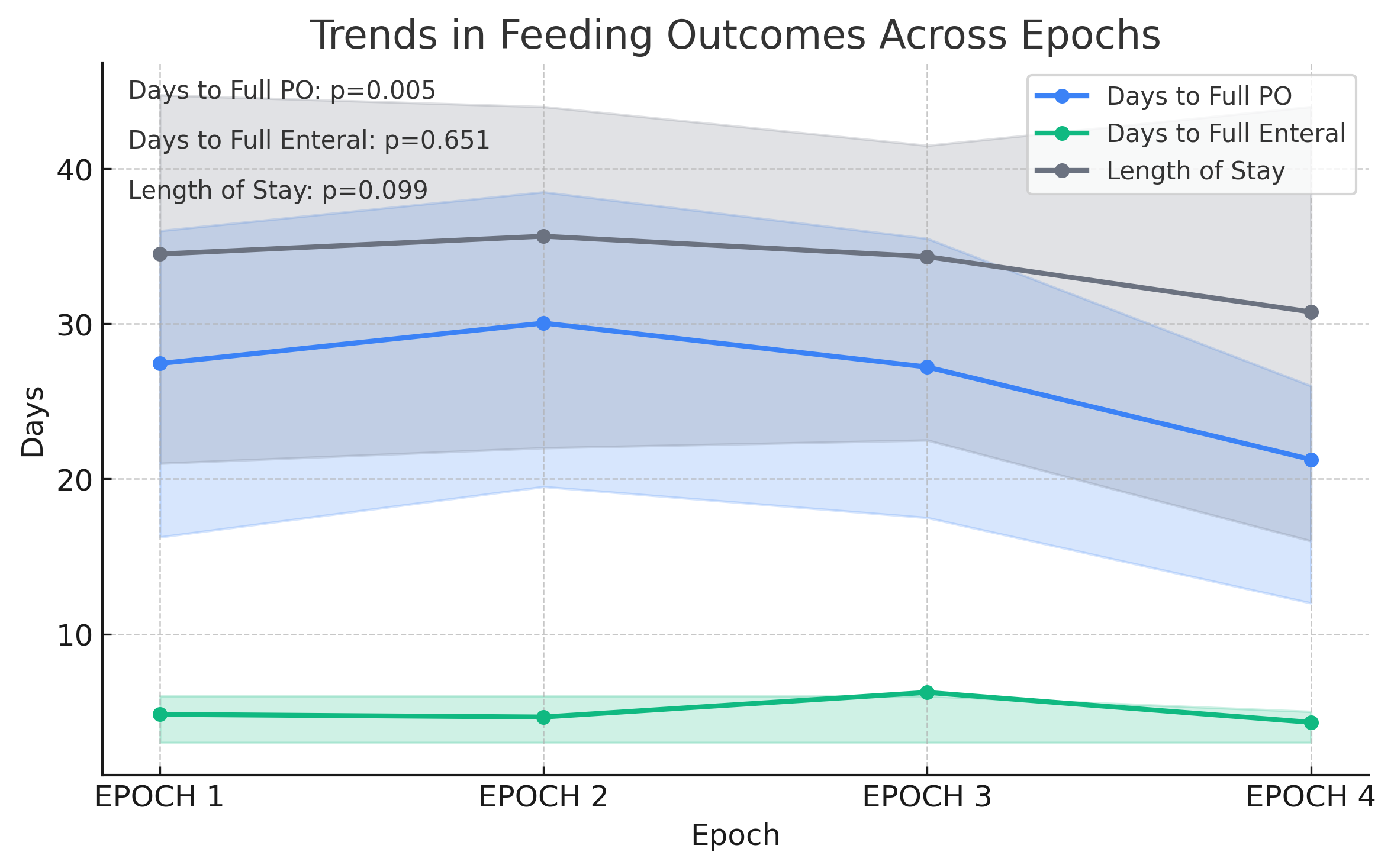
Background: Oral feeding readiness and progression remain key challenges for preterm infants. The transition from gavage to full oral feeding depends on neurological maturity, respiratory stability, and supportive caregiving. Cue-based feeding approaches-guided by infant readiness rather than predetermined schedules-have been associated with reduced time to full oral feeding and shorter hospitalization. Adjunctive neurodevelopmental practices such as milk drops have been proposed to enhance sensory exposure and feeding maturation. Objective: To evaluate whether the use of milk drops and cue-based feeding practices improve feeding outcomes-specifically, days from first to full oral feeding, days to full enteral feeds, and length of stay (LOS)-while accounting for gestational age and respiratory support. Design/Methods: This retrospective cohort study included 203 preterm infants ( < 34 weeks gestation) admitted over four epochs during implementation of a cue-based feeding guideline in a level III NICU. Demographics, respiratory support, feeding milestones, growth z-scores, and milk drop use were abstracted. Primary outcomes were days from first to full oral feeding, days to full enteral feeds, and LOS. Multivariable regression adjusted for gestational age and respiratory support type. Subgroup analyses stratified infants as < 30, 30-32, and >32 weeks gestation. Results: Baseline characteristics, including GA, sex, and birth weight, were similar across epochs, though the prevalence of SGA increased significantly in later epochs (p = 0.002). Over time, infants demonstrated progressive improvement in feeding outcomes-earlier initiation of oral feeds, fewer days from first to full PO, and reduced LOS. Mean LOS decreased from 35 to 31 days across epochs. Use of milk drops increased steadily but was not independently associated with faster attainment of full oral feeds or shorter LOS after adjusting for gestational age. Respiratory support duration (particularly prolonged CPAP or HFNC use) correlated with delayed attainment of full enteral and oral feeding. The association persisted across gestational age subgroups. Infants who achieved full enteral feeds earlier had shorter LOS and faster progression to full oral feeds (p < 0.01).
Conclusion(s): Implementation of a cue-based feeding protocol coincided with improved feeding outcomes and shorter hospitalizations, despite an increasing proportion of SGA infants in later epochs. These findings suggest that structured, cue-based, neurodevelopmentally supportive feeding care enhances feeding progression independent of baseline growth differences and gestational maturity.









.png)