610 - Using Quality Improvement to Decrease Chest Radiograph Use in Children Hospitalized with Bronchiolitis
Saturday, April 25, 2026
3:30pm - 5:45pm ET
Publication Number: 2595.610
Skyler Patterson, Cincinnati Children's Hospital Medical Center, Southgate, KY, United States; Brittany B. Hubbell, Cincinnati Children's Hospital Medical Center, Cincinnati, OH, United States; Sabrina Shalash, Cincinnati Children's Hospital, Dayton, OH, United States; Katherine Auger, Cincinnati Children's Hospital Medical Center, Cincinnati, OH, United States
Clinical Research Coordinator III Cincinnati Children's Hospital Medical Center Southgate, Kentucky, United States
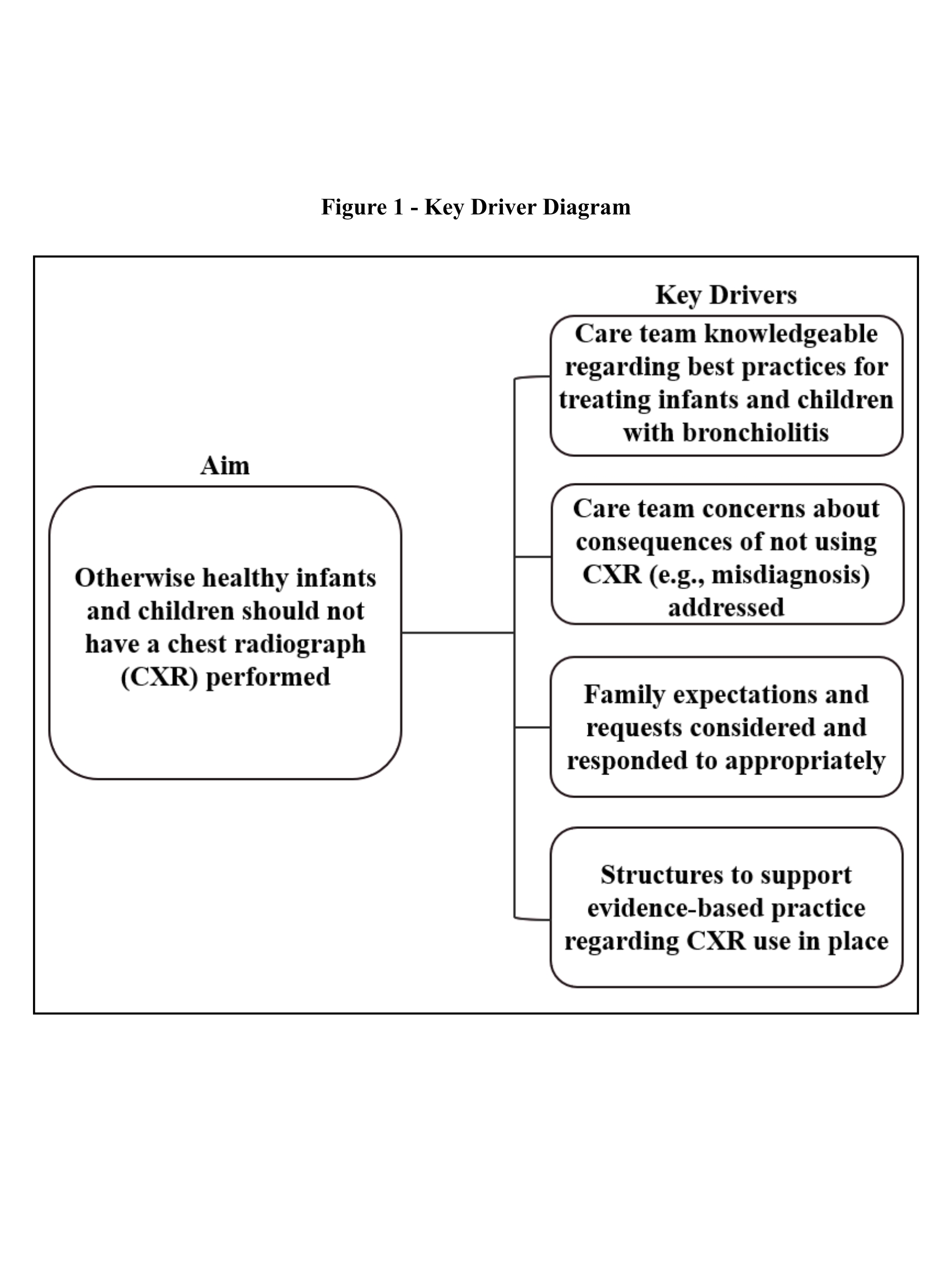
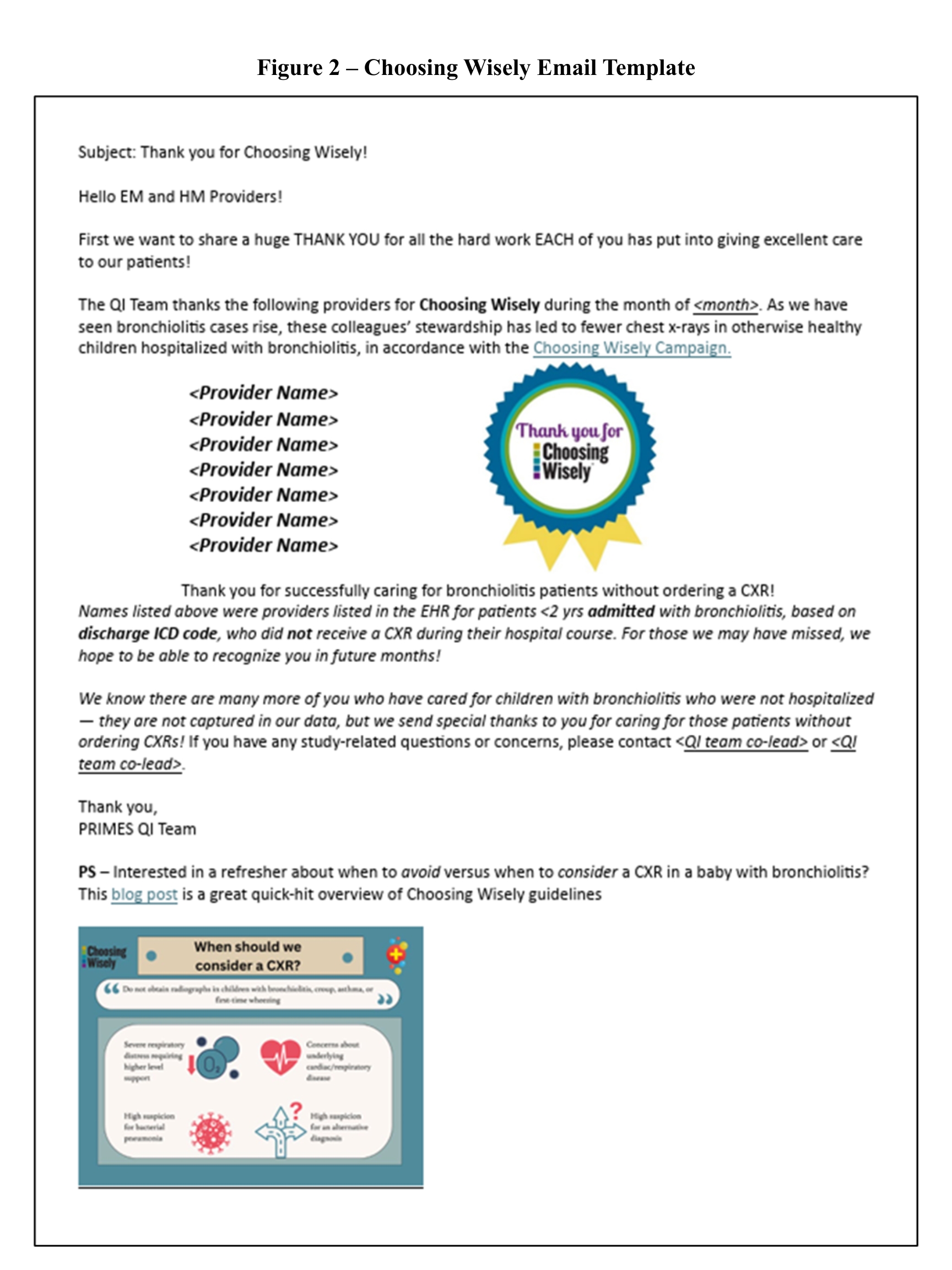
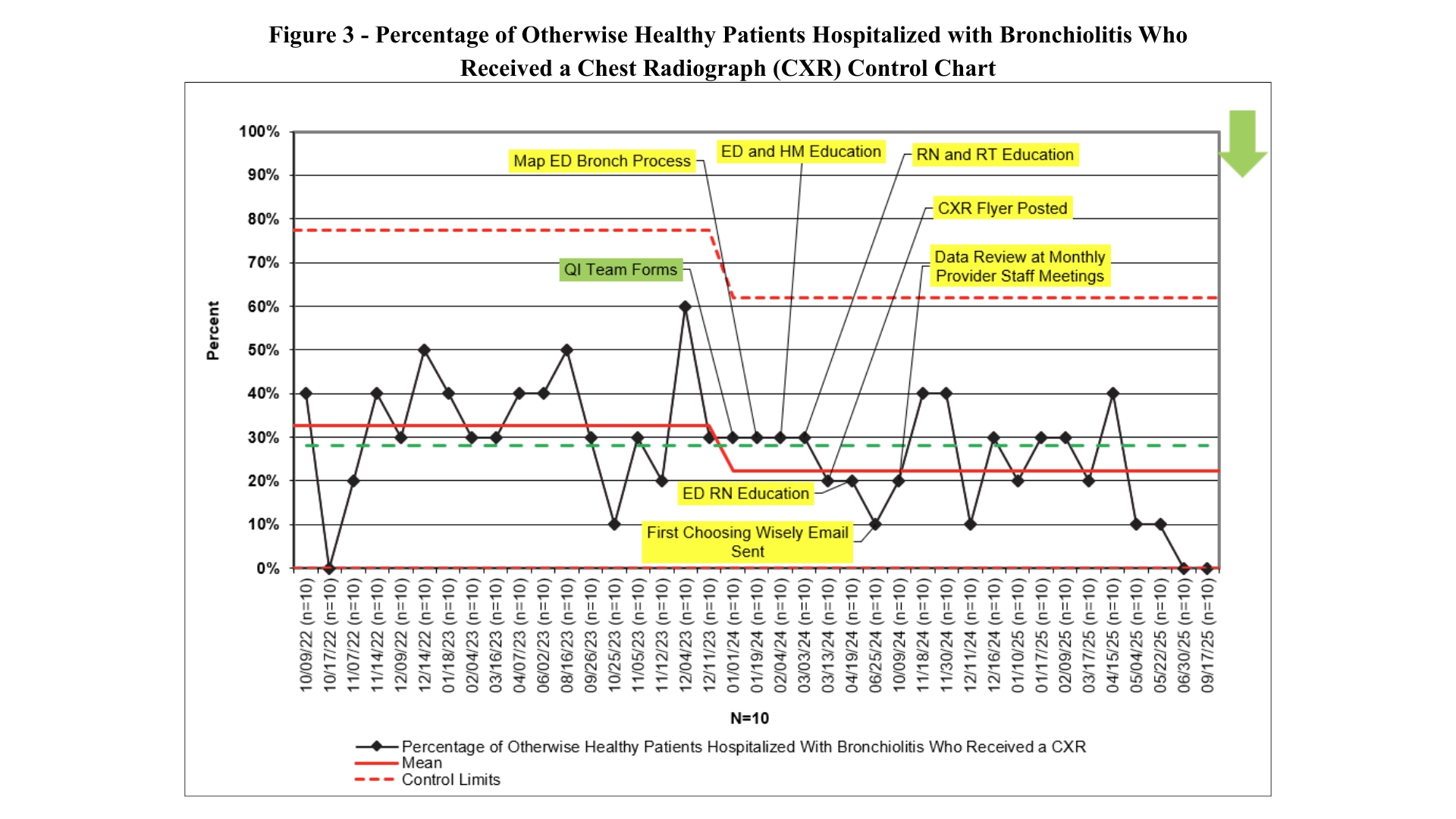
Background: Children who are hospitalized with uncomplicated bronchiolitis often undergo chest radiographs (CXR), despite recommendations that CXR should not be routinely obtained. At one satellite children's hospital, which was part of a multi-site collaborative to improve care, we worked to eliminate unnecessary CXRs. Objective: Our aim was to decrease CXR utilization in otherwise healthy patients hospitalized with bronchiolitis from 33% to 28% by October 2024. Design/Methods: Using the Model for Improvement, our quality improvement (QI) team - co-led by a research coordinator, pediatric hospitalist, a nurse, and two respiratory therapists - developed key drivers (Figure 1) and implemented tests of change to reduce the number of CXRs obtained in patients admitted with bronchiolitis. We conducted biweekly meetings with ~30 Emergency Medicine (EM) and Hospital Medicine (HM) providers to review control charts, evaluate targeted feedback tests of change, and increase study awareness among providers who then served as front-line advocates for our study in conjunction with the Choosing Wisely campaign - a national initiative whose goal is to mitigate ordering unnecessary medical tests. Our QI team provided education meetings for EM and HM providers, nurses, and respiratory therapists to promote positive study engagement and provider buy-in. Education included evidence-based guidelines and talking points for patients and families, which were incorporated into annual bronchiolitis education materials for nurses and residents. Additionally, we created flyers to display in clinical areas to discourage ordering CXRs. Audit and feedback, a well-established tool in the clinical setting, is often used as a corrective action for poor performance; in contrast, our team converted this tool into an opportunity to highlight excellent performance by our clinicians. We abstracted monthly CXR ordering provider data and sent "shoutout"-style team emails (Figure 2) to EM and HM divisions, commending providers who appropriately did not obtain a CXR. Results: The mean percentage of otherwise healthy patients hospitalized with bronchiolitis who had a CXR performed decreased from 33% in October 2022 to 22% in January 2024 (Figure 3). Educational meetings, flyers displayed in clinical areas, and positive reinforcement emails all contributed to the special cause shift.
Conclusion(s): Positive reinforcement, as a motivational technique celebrating high performers in a group setting, coupled with education, successfully reduced unnecessary CXR utilization in concordance with evidence-based practices.
Key Driver Diagram
Choosing Wisely Email Template
Percentage of Otherwise Healthy Patients Hospitalized with Bronchiolitis Who Received a Chest Radiograph (CXR) Control Chart