Session: Infectious Diseases 2: Antimicrobial and Diagnostic Stewardship
412 - Patterns of Antibiotic Use among Pediatric Outpatient Pneumonia Patients, 2016-2023
Saturday, April 25, 2026
3:30pm - 5:45pm ET
Publication Number: 2400.412
Nirma Khatri Vadlamudi, University of Florida College of Pharmacy, Gainesville, FL, United States; Lilliam Ambroggio, Children's Hospital Colorado, Aurora, CO, United States
Assistant Professor University of Florida College of Pharmacy Gainesville, Florida, United States
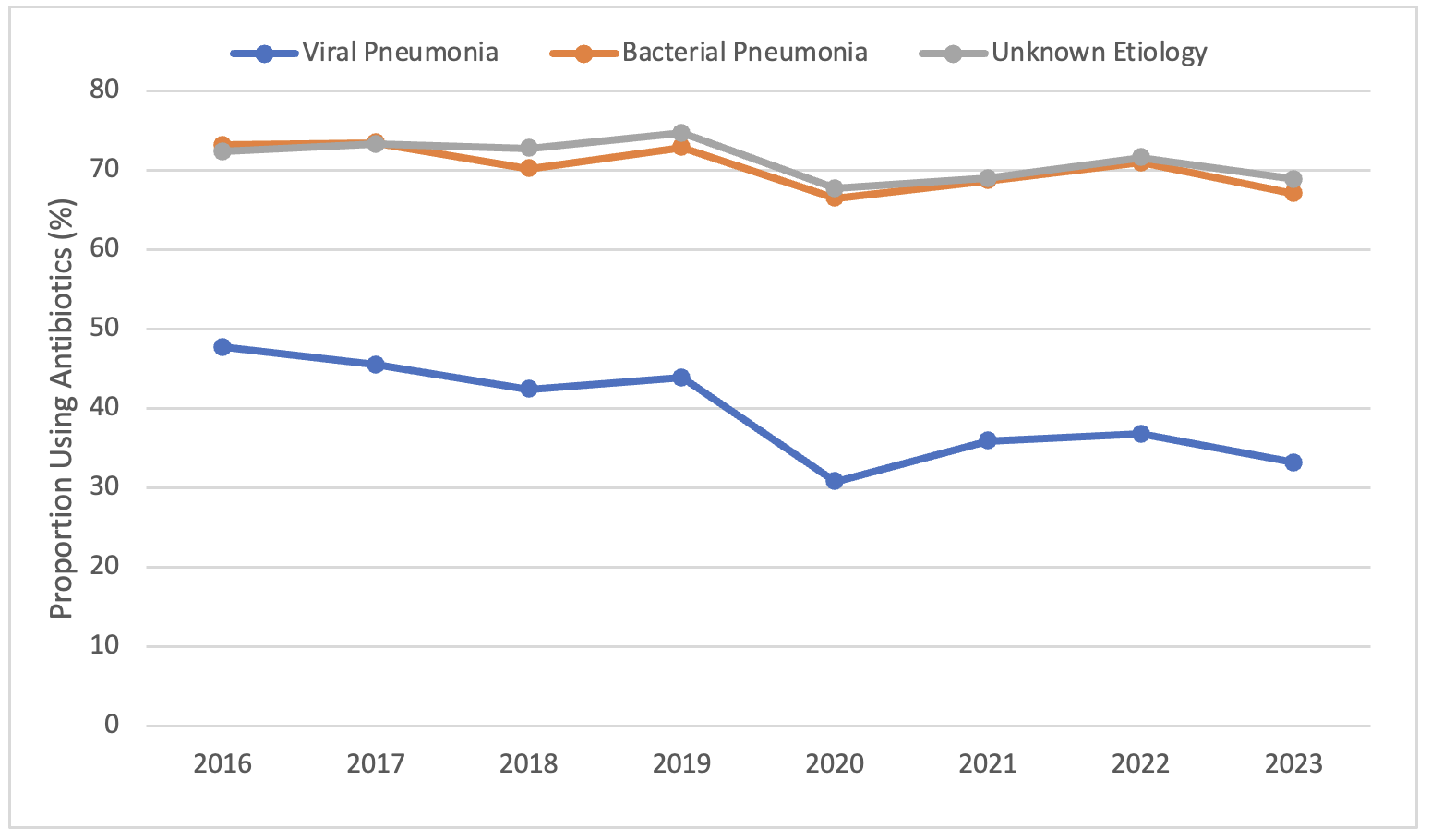
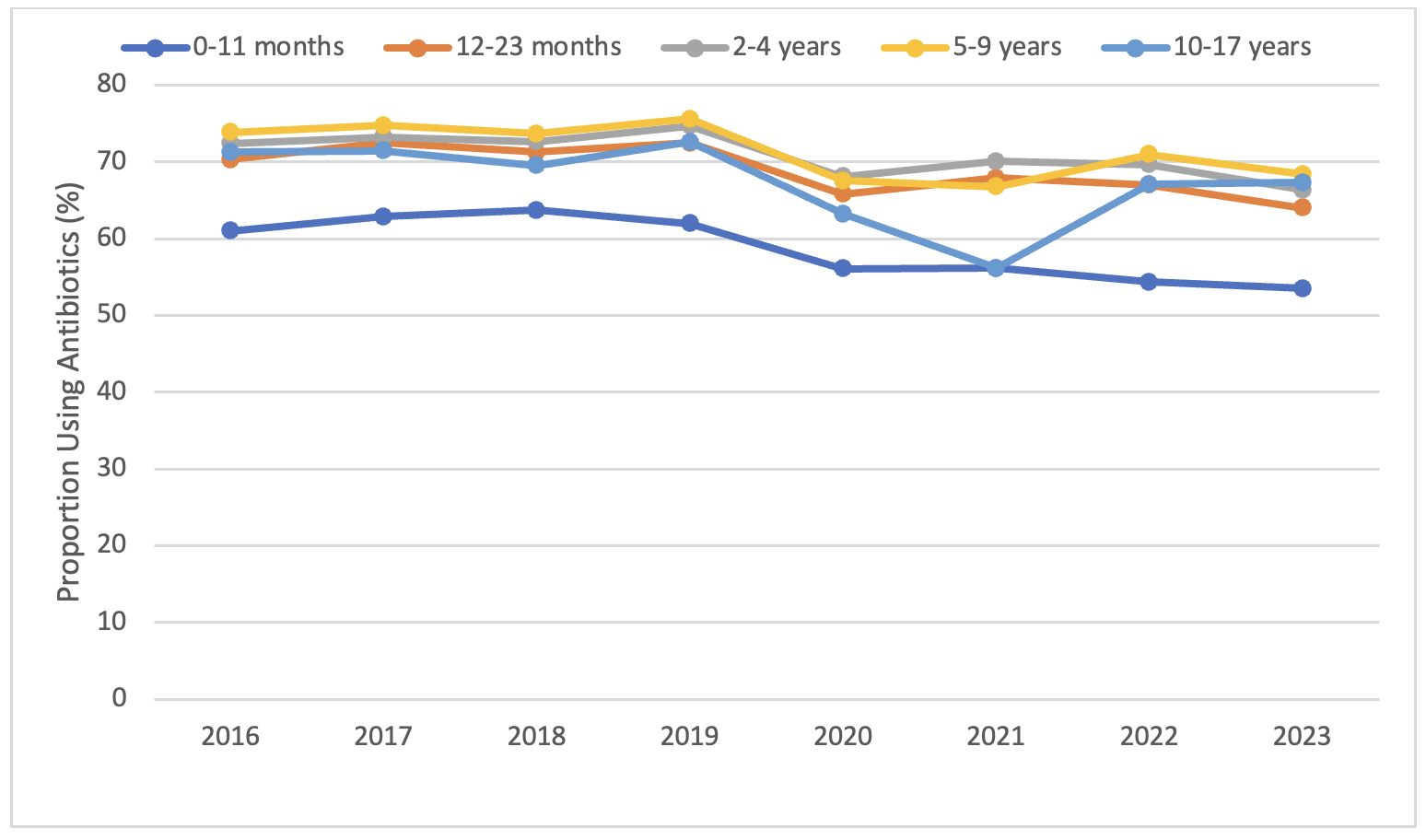
Background: Pneumonia is a leading cause of pediatric antibiotic use in outpatient setting. However, antibiotic use in children with viral pneumonia is unnecessary and may contribute to the increasing rates of antimicrobial resistance. Objective: To examine patterns of antibiotic use among commercially insured pediatric patients with suspected pneumonia from2016 - 2023. Design/Methods: This retrospective cohort study included all outpatient visits and pharmacy records from Merative MarketScan databases for pediatric pneumonia, identified using International Classification of Diseases-10 codes: suspected viral pneumonia (J12.x), suspected bacterial pneumonia (J13.x-J15.x), and pneumonia of other or unspecified causes (J16.x, J18.0, J18.1, J18.8, J18.9) in patients aged 0-17 years from January 1, 2016, to December 31, 2023. The proportion of antibiotic use associated with suspected pneumonia was calculated for overall cases, and by suspected pneumonia type and age group (0-11 months, 12-23 months, 2-4 years,5-9 years, 10-17 years). Annual trends in the proportion of pneumonia- associated antibiotic use from 2016 to 2023 were analyzed by suspected etiology and age group using linear regression. Results: Among 900,109 pneumonia encounters, 635,740 (70.6%) used antibiotics. In encounters with ICD-10 codes of unspecified pneumonia (72.2%), followed by bacterial pneumonia (71.5%), and viral pneumonia (39.4%). Highest antibiotics utilization was in 5-9 years (72.8%), y 2-4 years (71.7%), 12-23 months (69.9%), 10-17 years (69.4%), and 0-11 months (59.9%). Overall antibiotic use for pneumonia declined from 71.8% in 2016 to 66.4% in 2023 (p=0.04). Notably, antibiotic use associated with viral pneumonia decreased by 14.6 % from 47.7% in 2016 to 33.2% in 2023 (p < 0.01)(Figure 1). In contrast, antibiotic use associated with suspected bacterial (6.1%) and unknown pneumonia (3.5%) etiology did not statistically change. Statistical declines in antibiotic use were observed across age groups (Figure 2). In contrast, a non-statistical decline was noted in children 10-17 years (4%).
Conclusion(s): Antibiotic use remains high among children with suspected viral or unknown pneumonia in the outpatient settings. These findings highlight a need for enhanced stewardship efforts for reducing unnecessary use of antibiotics for suspected pneumonia.
Figure 1: Change in Antibiotic Use by Suspected Pneumonia Etiology, 2016-2023
Figure 2: Change in Antibiotic Use by Age Group for Suspected Pneumonia, 2016-2023