487 - Severe Presentations of Post-infectious Glomerulonephritis in Children: A Single Tertiary Center Case Series.
Saturday, April 25, 2026
3:30pm - 5:45pm ET
Publication Number: 2474.487
Anh-Dao Cheng, Boston Children's Hospital, Boston, MA, United States; Adriana Gordon de Jesus, Boston Children's Hospital, Boston, MA, United States; Haneen Shahin, Boston Children's Hospital, Medford, MA, United States; Ankana Daga, Boston Children's Hospital, Boston, MA, United States
Clinical Fellow Boston Children's Hospital Boston, Massachusetts, United States
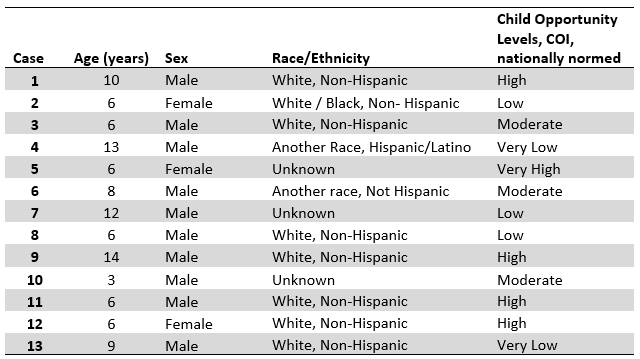
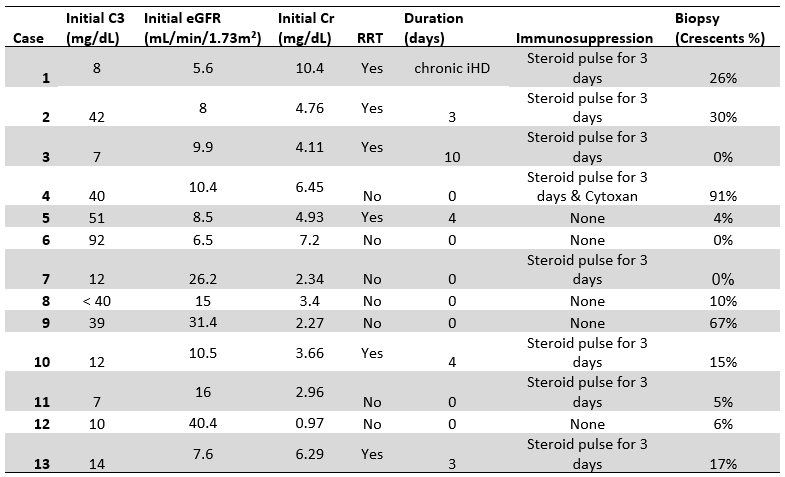
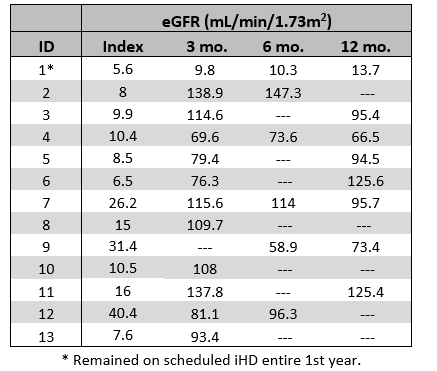
Background: Post-infectious glomerulonephritis (PIGN) is one of the most common causes of glomerulonephritis in children worldwide and is often considered to be a self-limiting disease. However, several retrospective studies have described patients who present with severe disease requiring a kidney biopsy and/or renal replacement therapy. Objective: We characterized the clinical and demographic profiles, treatment, and short-term outcomes of children with severe PIGN. Design/Methods: Retrospective chart review was completed of children diagnosed with PIGN from 2014 to 2024 at a tertiary center. Severe PIGN was defined as requiring kidney biopsy and/or initiation of renal replacement therapy. Results: Thirteen pediatric patients were identified. The mean age was 8.1 ± 3.3 years old, with 76.9% being male. See other demographic details in table 1. Patients were evenly distributed among neighborhood opportunity levels. At time of initial presentation, average eGFR was 15.1± 10.8 mL/min/1.73 m2. All the patients underwent renal biopsy and six (46%) required intermittent hemodialysis. Ten (76.9%) had crescentic disease on biopsy, with 2 (15.3%) displaying severe injury, defined as greater than 50% crescents. Initial management included pulse dose steroids in eight patients (61.5%) and one patient received both pulse steroids and cyclophosphamide (Table 2) Only one patient remained on a steroid taper at the 3-month mark and all patients were off from immunosuppression by the 6-month mark. Hypertension was common; eight (61.5%) patients were discharged on antihypertensive medications. By the 6-month mark, four (30.7%) still required antihypertensives. One patient was started on ACE-I for proteinuria, not hypertension. Regarding renal function, seven patients (53.8%) achieved full recovery by three months and by twelve months, the majority (76.9%) had regained normal renal function (Table 3). Two patients developed chronic kidney disease, although one had a baseline congenital heart condition. One patient progressed to End Stage Renal Disease.
Conclusion(s): Severe PIGN remains uncommon but is an important cause of acute kidney injury in children. Even in severe cases of PIGN, renal recovery is favorable although not definitive.
Demographic Profile of Included Patients
Summary of Initial Clinical Presentation of 13 Biopsy Confirmed PIGN Patients.
Estimated Glomerular Filtration Rates (eGFR) in 1st Year After Diagnosis