295 - Regional Differences in US Parents' Concerns about Natural Disasters and Children's Health
Saturday, April 25, 2026
3:30pm - 5:45pm ET
Publication Number: 2285.295
Marie Heffernan, Ann & Robert H. Lurie Children's Hospital of Chicago, Chicago, IL, United States; Brigitte Glines, UCSF Benioff Children's Hospital Oakland, Vacaville, CA, United States; Larry Kociolek, Northwestern University The Feinberg School of Medicine, Chicago, IL, United States; MIchelle Macy, Ann & Robert H. Lurie Children's Hospital of Chicago, Chicago, IL, United States
Assistant Professor Ann & Robert H. Lurie Children's Hospital of Chicago Chicago, Illinois, United States
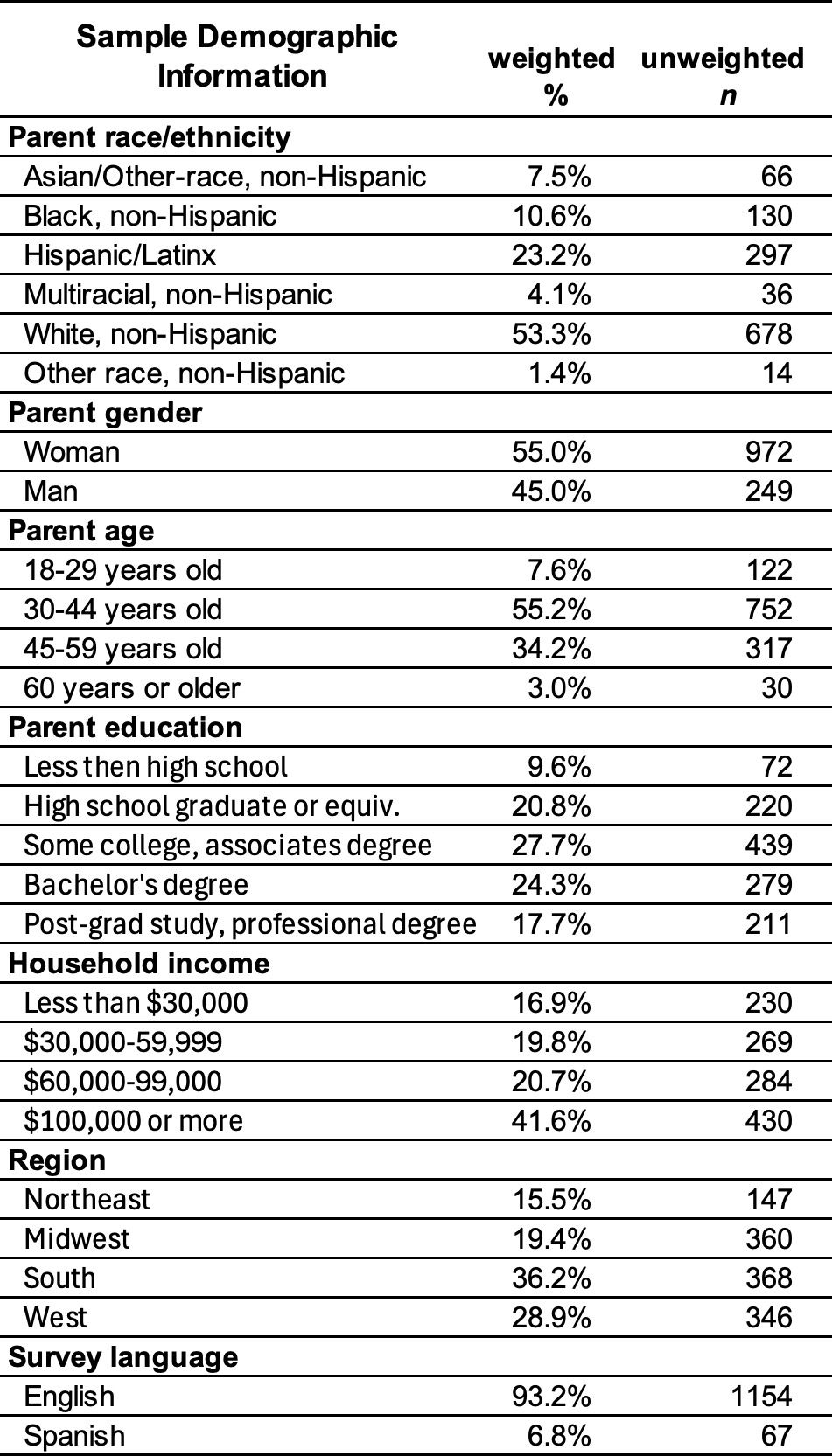
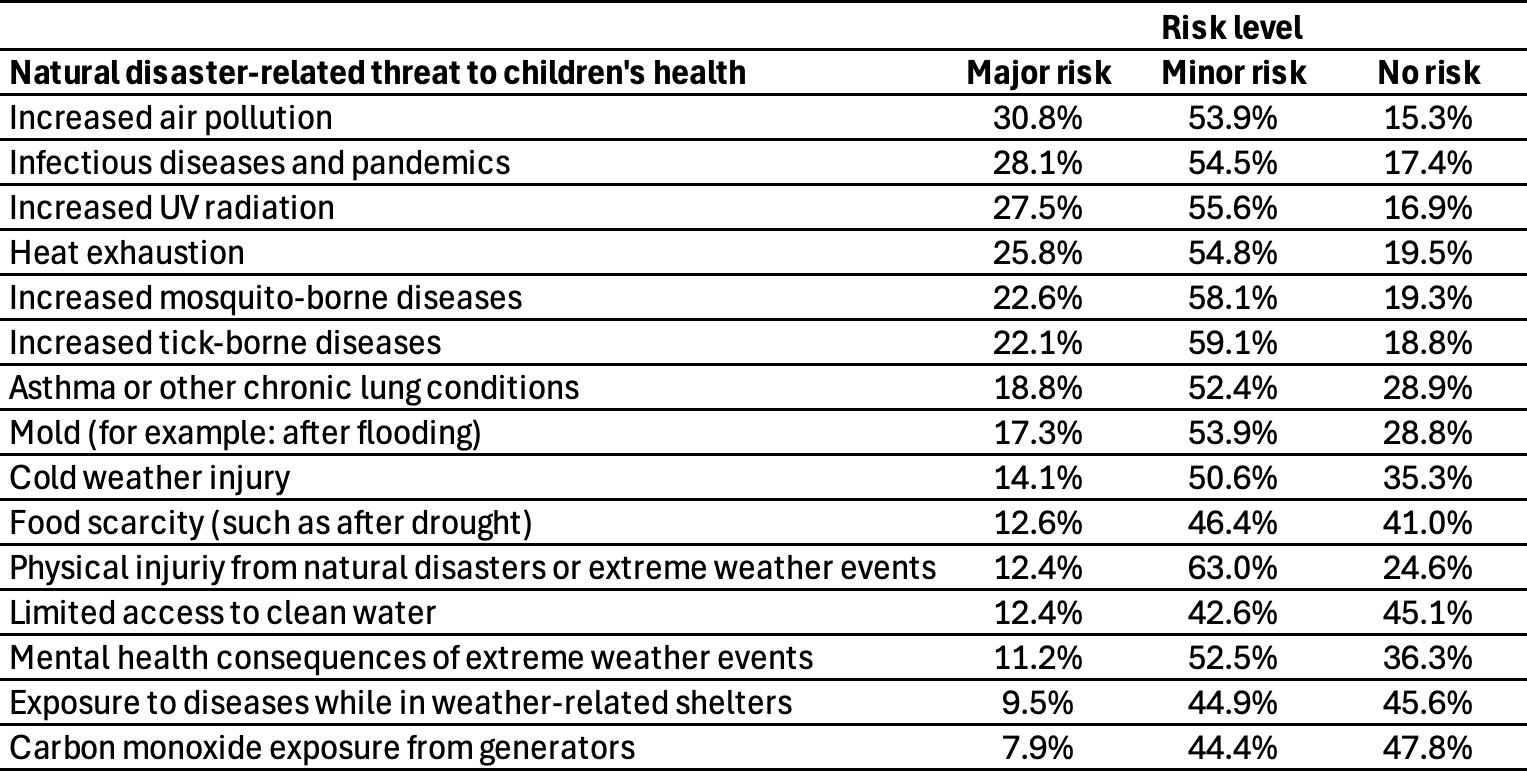
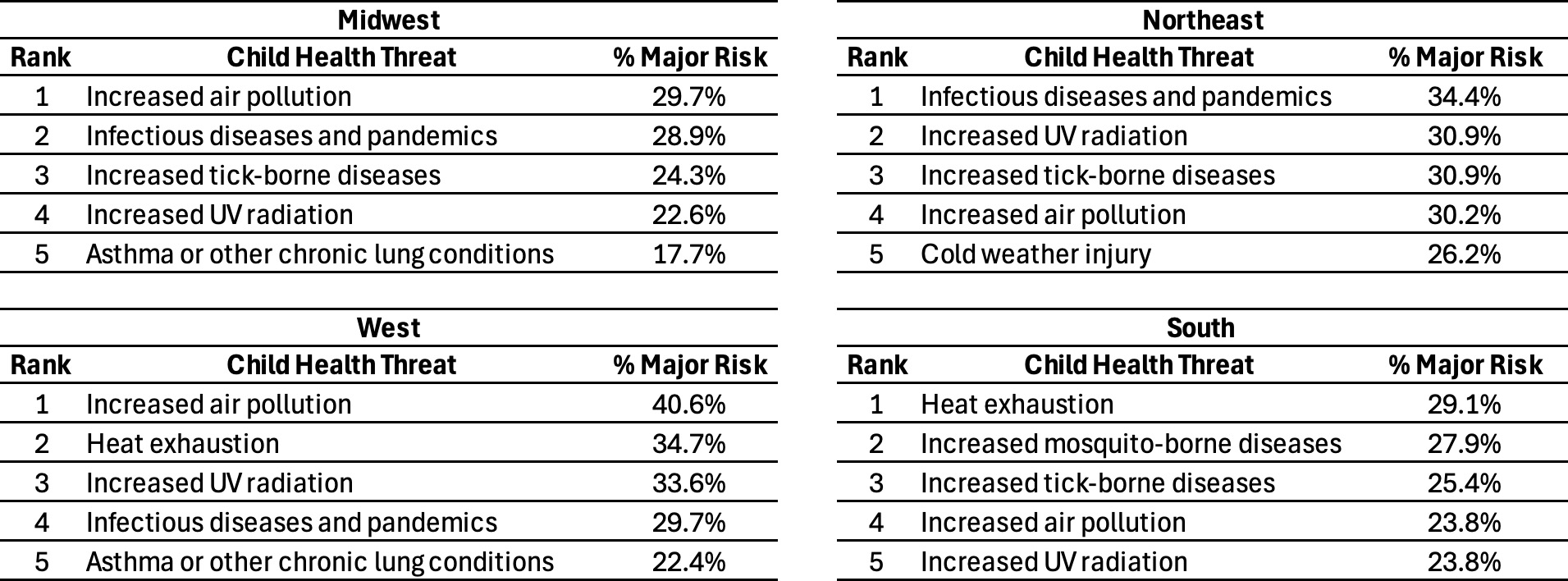
Background: Children are particularly susceptible to the negative health effects of natural disasters, and the frequency of major natural disasters has steadily increased over the last 40 years in the United States. Past research has shown that parents are concerned about the potential health effects of natural disasters on their children, but research has not explored how these concerns vary by US geographical region. Objective: 1) To characterize US parents' risk perceptions for their children's health related to natural disasters, and 2) to identify differences in risk perceptions across US regions. Design/Methods: Survey data were collected from US parents in October 2025 through the AmeriSpeak Panel, a nationally representative panel, administered via web and phone in English or Spanish by the National Opinion Research Center (NORC) at the University of Chicago. Parents were eligible if they had at least one child < 18 years old. Parents read a predefined list of natural disaster effects of children's health (e.g., asthma, infectious diseases) and indicated whether each effect posed a major, minor, or no risk to their own children's health. Data were weighted on population benchmarks. We used proportional analyses and chi-square tests to explore overall risk perceptions and risk perceptions by region of the US. Demographic characteristics also were collected. Results: Responses were obtained from 1,221 US parents, 55% were mothers (Table 1). The survey completion rate was 23%. Increased air pollution was the child health effect with the highest perceived risk, with 30.8% of parents considering this a major risk (Table 2). Infectious diseases/pandemics was the effect with the second highest risk (28.1% major risk). There were similarities and differences in the top perceived risks across US regions (Table 3). For instance, increased air pollution had the highest perceived risk among parents in the Midwest (29.7% major risk) and West (40.6%), however the perceived risk was significantly higher among parents in the West (p <.01). The top risk in the Northeast was infectious diseases/pandemics (34.4% major risk). Cold weather injury was among the top five risks among parents in the Northeast only (26.2% major risk). In the South, heat exhaustion (29.1% major risk) and mosquito-borne illnesses (27.9% major risk) were the top risks.
Conclusion(s): US parents' perceptions of child health risks from natural disasters varied by geographical region. Future work should explore whether messaging targeted toward region-specific concerns is more effective at promoting engaging in preventive actions such as preparedness measures.
Table 1. Sample Demographics
Table 2. Proportion of US Parents who Reported Each was a Major, Minor, or No Threat to their Children's Health
Table 3. Top Natural Disaster-Related Threats to Children's Health, by US Region









.jpeg.jpg "Marie E. Heffernan, PhD (she/her/hers) photo")