474 - Acquired Kidney Cysts After Pediatric Liver Transplantation: A Single Center Cohort
Saturday, April 25, 2026
3:30pm - 5:45pm ET
Publication Number: 2462.474
Chris K. Fan, Emory University School of Medicine, Atlanta, GA, United States; Esther A. Miah, University of North Carolina at Chapel Hill School of Medicine, Durham, NC, United States; Azhar Nizam, Emory University, Atlanta, GA, United States; Chrissy Lopez, Emory University School of Medicine, Atlanta, GA, United States; Margret Kamel, Emory University, Health Sciences Research Building, Atlanta, GA, United States; Larry A. Greenbaum, Children's Healthcare of Atlanta, Decatur, GA, United States; Loretta Reyes, University of New Mexico School of Medicine, Albuquerque, NM, United States
Clinical Research Coordinator I Emory University School of Medicine Atlanta, Georgia, United States
Background:
Background: Acquired cystic kidney disease (ACKD) has been observed in children with pre-dialysis chronic kidney disease (CKD) and becomes more prevalent as CKD progresses. Pediatric liver transplant recipients are at increased risk for CKD due to their underlying primary disease and exposure to nephrotoxic medications. Two studies to date have studied ACKD in pediatric liver transplant patients. The first study reported an ACKD prevalence of 30% ten years post-transplantation. In the second study, 11% of patients followed for at least 1 year post-transplant developed kidney cysts. In both studies, ACKD was associated with kidney dysfunction. This study aims to provide an update on ACKD prevalence in pediatric liver transplant patients and identify risk factors for ACKD development. Objective:
Objective: To describe the prevalence of ACKD in a cohort of pediatric liver transplant recipients. Design/Methods: Methods: We conducted a retrospective cohort study of pediatric patients who received a liver transplant between January 2000 and December 2019 at Children's Healthcare of Atlanta. Patients included were less than 21 years old at transplantation, had follow-up for at least 1 year post-transplant and no kidney cysts pre-transplant. We excluded patients predisposed to developing kidney cysts. Results:
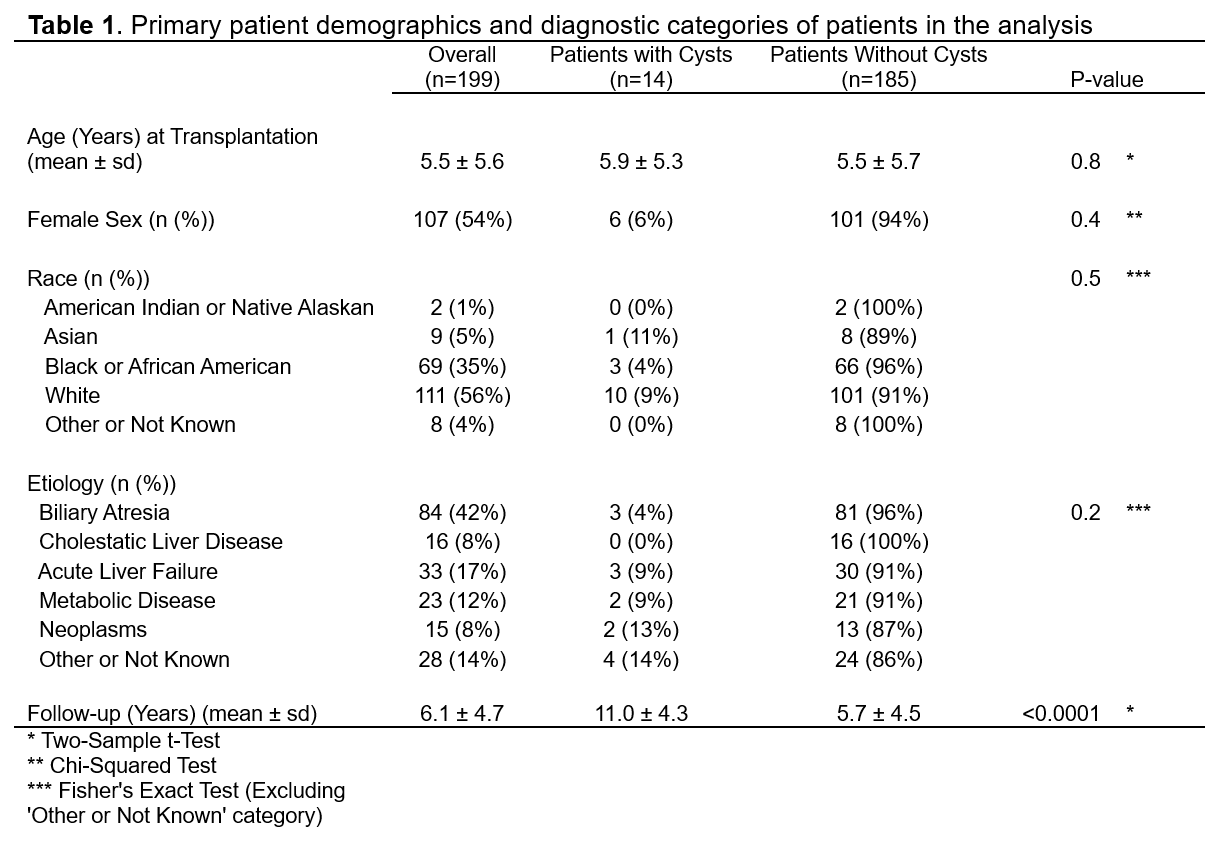
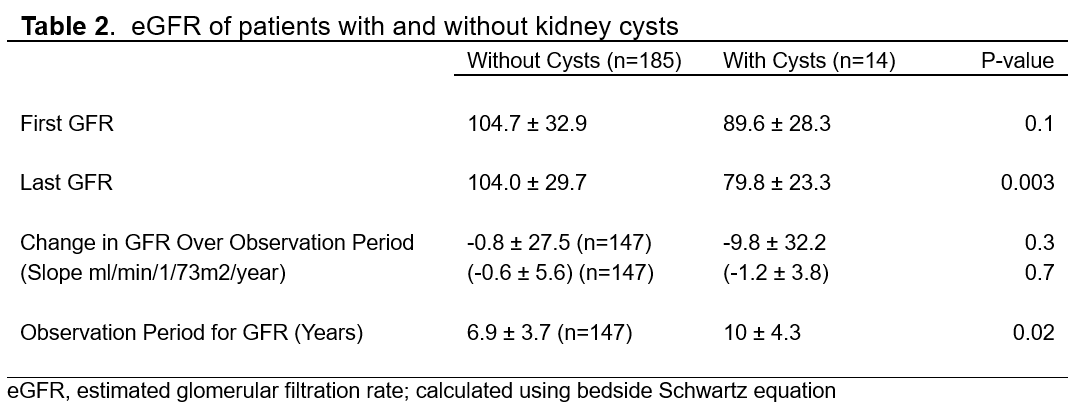
Results: Of the 199 patients in this study, 14 (7%) developed one or more kidney cysts after liver transplantation. A majority of patients (13; 93%) had only simple cysts; a single patient (7%) had a complex cyst with internal septations. Patients with ACKD had almost two times longer follow-up (11.0 ± 4.3 years) compared to patients who did not have cysts (5.7 ± 4.5 years; [p < 0.0001]). The last available eGFR was significantly lower (p=0.003) in patients with kidney cysts (eGFR 79.8 ± 23.3 mL/min/1.73m²) compared to patients without kidney cysts (104 ± 29.7 mL/min/1.73m²). Tacrolimus was the primary maintenance immunosuppressant utilized in this study.
Conclusion(s):
Conclusions: This study demonstrated a lower prevalence of ACKD compared to prior studies. The two factors that appeared predictive of ACKD in this population were the duration of follow-up and eGFR. Pediatric liver transplant patients receiving long-term immunosuppression with calcineurin inhibitors (e.g. tacrolimus) are at risk for progressive CKD and lower eGFR. Based on the findings of this study, patients who are multiple years post-liver transplantation with kidney dysfunction would benefit from screening for ACKD.
Table 1. Primary patient demographics and diagnostic categories of patients in the analysis
Table 2. eGFR of patients with and without kidney cysts
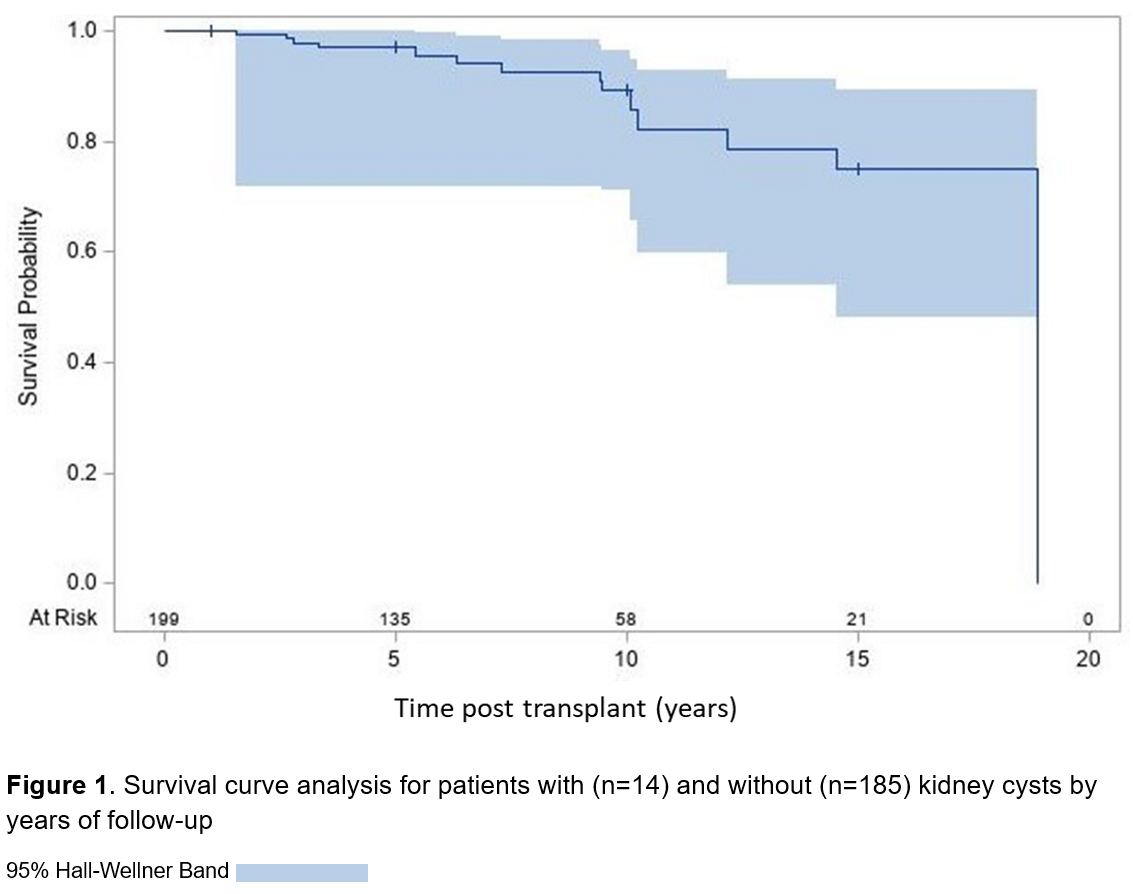
Figure 1. Survival curve analysis for patients with (n=14) and without (n=185) kidney cysts by years of follow-up