21 - Parent Mental Health, Quality of Life, Work Productivity, and Infant Health Care Utilization After False-Positive Newborn Screening Results
Sunday, April 26, 2026
9:30am - 11:30am ET
Publication Number: 3018.21
Tara Lavelle, Tufts Medical Center, Boston, MA, United States; Anne Atkins, Children’s National Hospital, Madison, WI, United States; Kelly Christensen, Children's National Hospital, Gaithersburg, MD, United States; Tia Tyson, Children's National Health System, Hyattsville, MD, United States; Thevaa Chandereng, Children's National Health System, Washington, DC, United States; Knute Carter, University of Iowa College of Public Health, Iowa City, IA, United States; Beth A. Tarini, Co-Director, Silver Spring, MD, United States
Assistant Professor Tufts Medical Center Boston, Massachusetts, United States
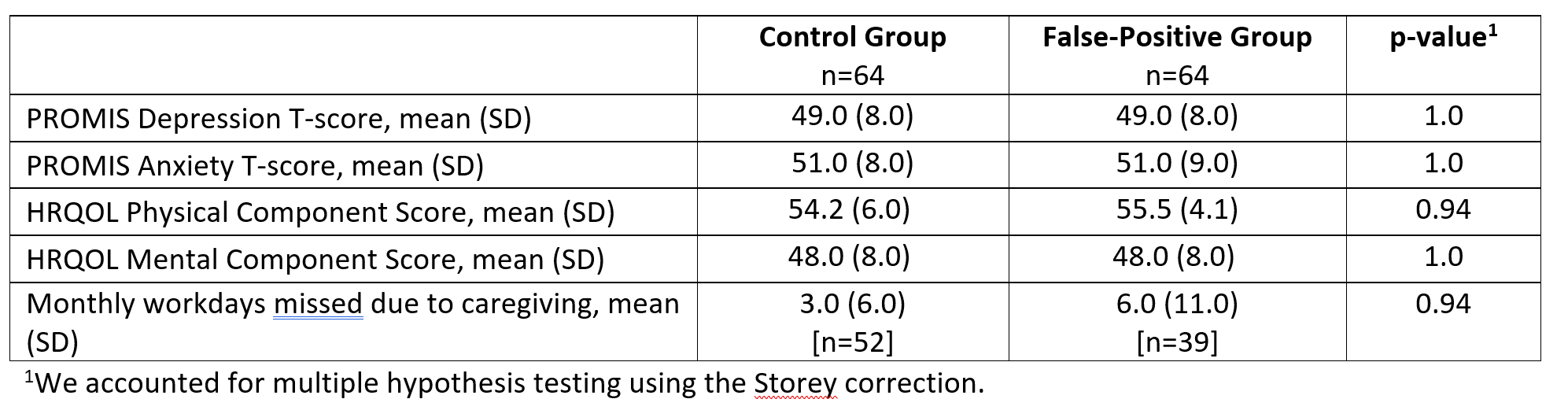
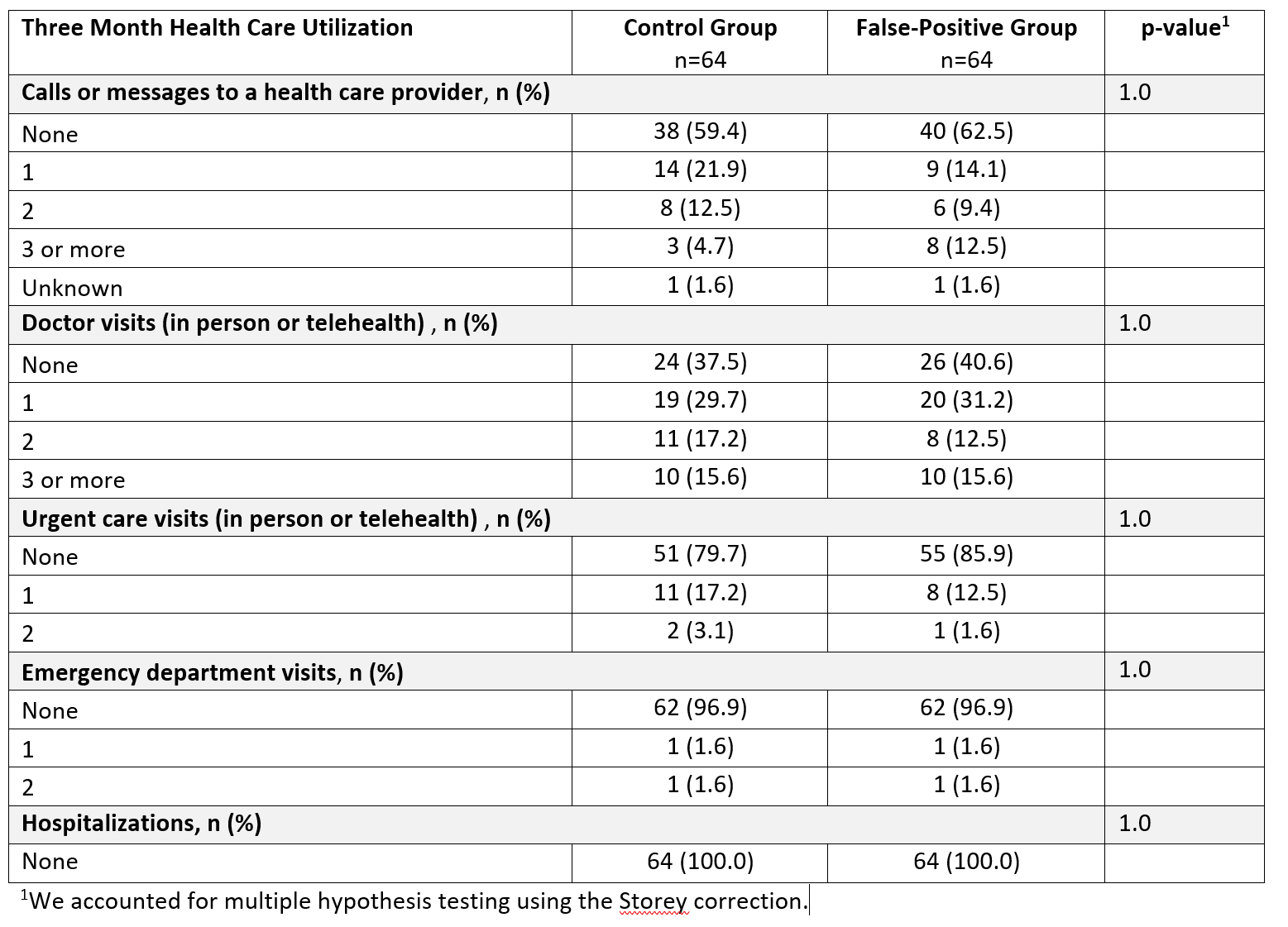
Background: False-positive (FP) newborn screening (NBS) results can cause parental distress, potentially leading to increased infant health care use and reduced parental work productivity. However, empirical evidence on these potential effects remains limited. Objective: To compare parent depression, anxiety, health-related quality of life (HRQOL), work productivity, and infant health care utilization between parents of infants with FP NBS results and those of infants with normal results. Design/Methods: Families were identified through the Iowa and Virginia state NBS programs. Parents were contacted monthly via email or phone for three consecutive months and invited to complete a 10-minute survey. The survey included validated measures of parent depression and anxiety (PROMIS 8-question Short Forms), HRQOL (12-Item Short Form Survey), work absenteeism due to caregiving (Caregiver Work Limitations Questionnaire), and customized questions assessing infant health care utilization. We compared total health care utilization, mean PROMIS and HRQOL scores, and mean days of work missed over three months. We compared categorical outcomes using Pearson's Chi-squared test and continuous outcomes using Welch's two-sample t-test. We accounted for multiple hypothesis testing using the Storey correction. Results: In August 2023, 299 parents were invited to participate, and197 (65.9%) consented. Of these, 191 completed at least one survey and 161 completed all three. When responses were received from both parents, we included the parent who reported making more health care decisions. If both were equally involved, one was randomly selected. The final analytic sample included 128 parents, 64 in each group. Ninety one percent of the final sample were female, 78% White, non-Hispanic, and 65% had a Bachelor's degree or higher. All infants had insurance coverage, mostly (72%) through a parent's employer. There were no statistically significant differences between groups in terms of parent depression, anxiety, HRQOL, work absenteeism due to caregiving (Table 1), or infant health care utilization (Table 2).
Conclusion(s): Parent-reported mental health, HRQOL, work productivity, and infant health care utilization did not differ between parents of infants with FP and normal NBS results.
Table 1. Parent Depression, Anxiety, Health-Related Quality of Life, and Work Productivity
Table 2. Infant Three Month Health Care Utilization