








Neonatal Pulmonology
Session: Neonatal Pulmonology - Clinical Science 5: Surfactant, Apnea, Intermittent Hypoxia, Lung Growth

Ann Chacko, DO (she/her/hers)
Neonatologist
Tufts University School of Medicine
Boston, Massachusetts, United States
.png)
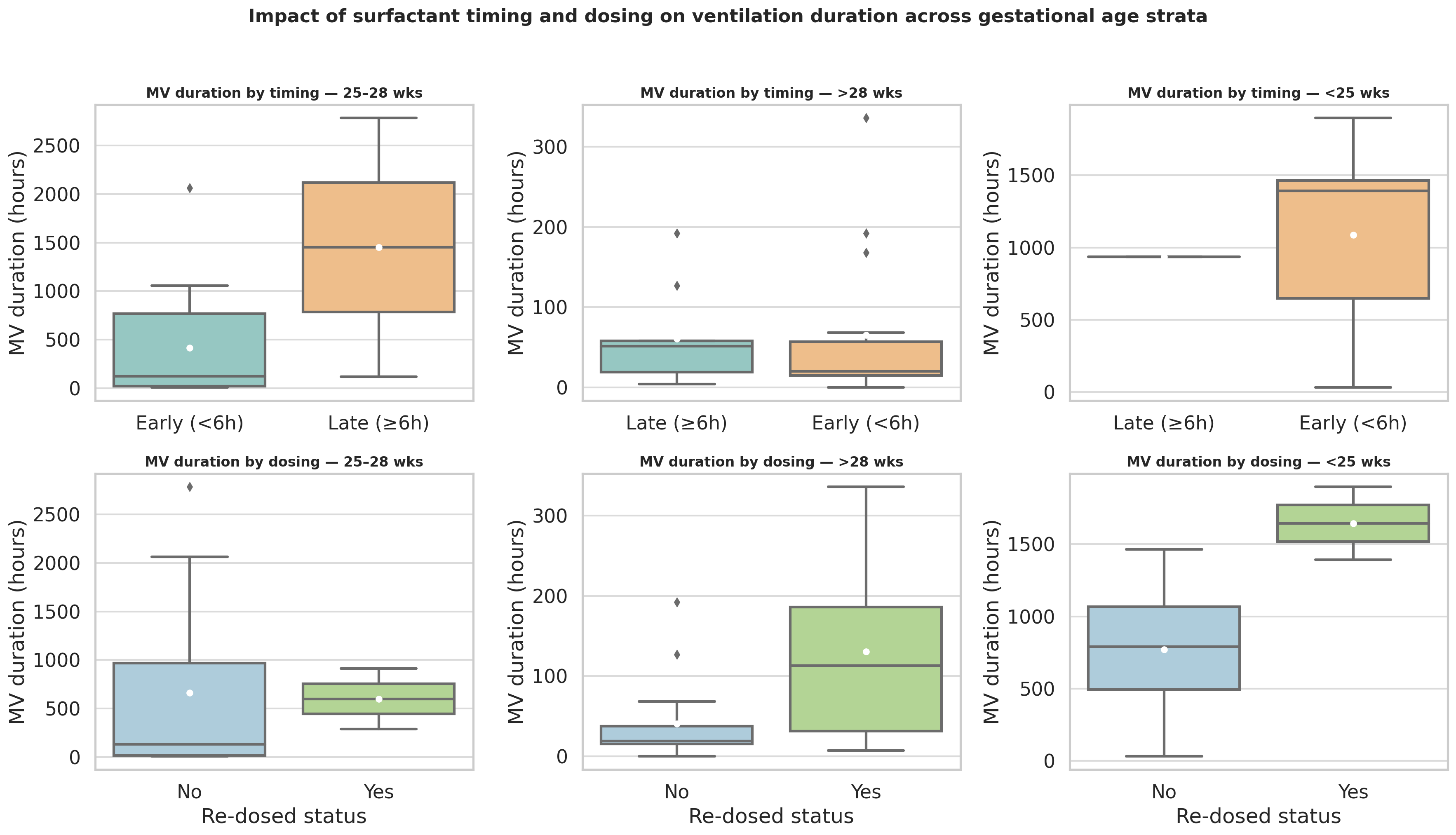 Earlier surfactant administration ( <6 h) and single-dose response were associated with shorter durations of mechanical ventilation across all gestational age strata ( <25, 25-28, >28 weeks). These findings suggest that treatment timing and re-dosing, rather than maturity alone, are key modifiable determinants of respiratory outcomes in preterm infants.
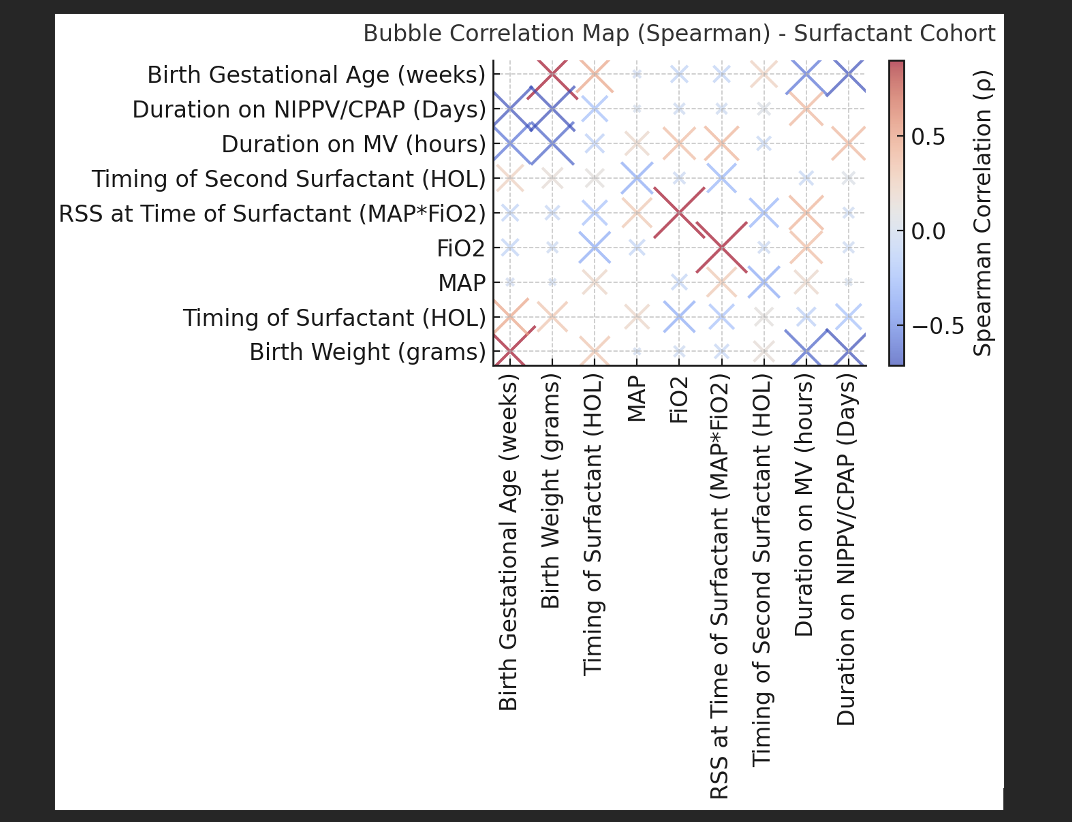 Spearman correlation coefficients (ρ) are displayed as a bubble matrix for infants who received surfactant (n = 58). Bubble color indicates direction of association (red = positive, blue = negative) and bubble size reflects correlation strength. Birth gestational age and birth weight were strongly negatively correlated with duration of mechanical ventilation and NIPPV/CPAP, indicating that more premature, smaller infants required prolonged support. RSS at the time of surfactant administration correlated positively with FiO₂ and MAP, validating RSS as an index of respiratory severity. Later timing of surfactant and second dosing showed weak positive correlations with longer ventilation durations.