








Neonatal Hemodynamics and Cardiovascular Medicine
Session: Neonatal Hemodynamics and Cardiovascular Medicine 2

Maram Sati, MD
Cardiology Fellow
Boston Children's Hospital
Boston, Massachusetts, United States
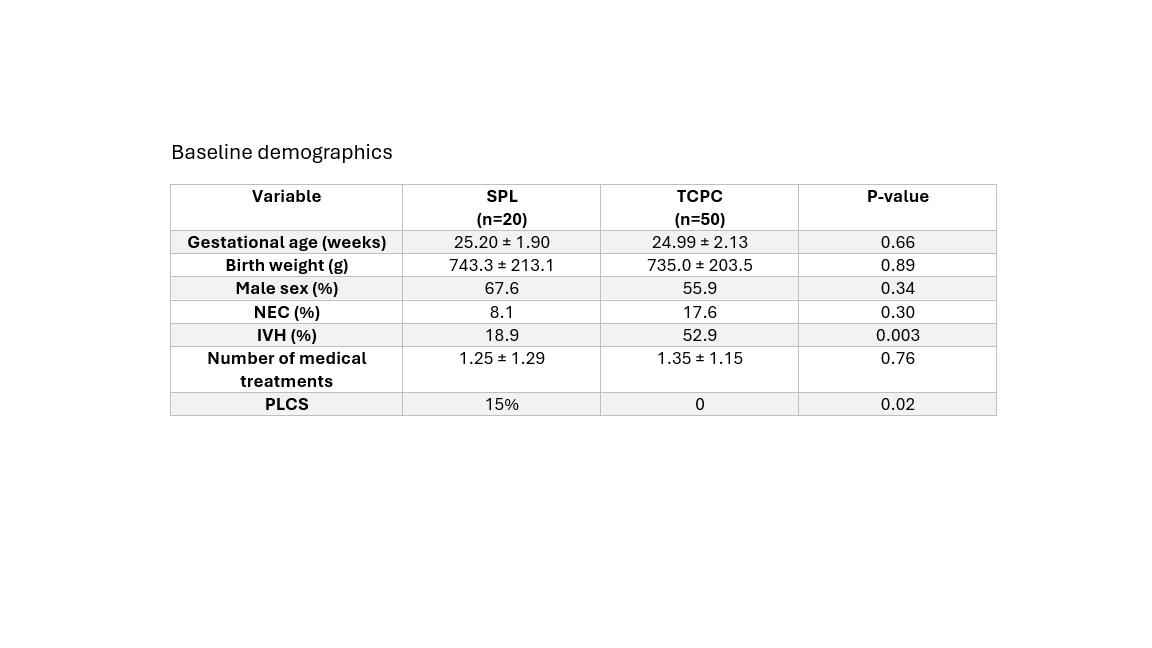 Baseline demographics of preterm infants undergoing surgical ligation (SPL) or transcatheter Piccolo device closure (TCPC). Both groups were comparable in gestational age, birth weight, sex distribution, and incidence of necrotizing enterocolitis (NEC) (p > 0.05). However, intraventricular hemorrhage (IVH) was more frequent in the TCPC group (p = 0.003), and post-ligation cardiac syndrome (PLCS) occurred exclusively in the SPL group (15% vs 0%, p = 0.02)
.png) Boxplot comparing pre- and post-intervention left ventricular ejection fraction (LVEF) in infants underwent transcatheter Piccolo device closure. Each box represents the interquartile range with the median line inside, and whiskers indicating the data range. Pre-intervention values are shown in light gray, and post-intervention values in dark gray.
Boxplot comparing pre- and post-intervention left ventricular ejection fraction (LVEF) in infants underwent transcatheter Piccolo device closure. Each box represents the interquartile range with the median line inside, and whiskers indicating the data range. Pre-intervention values are shown in light gray, and post-intervention values in dark gray.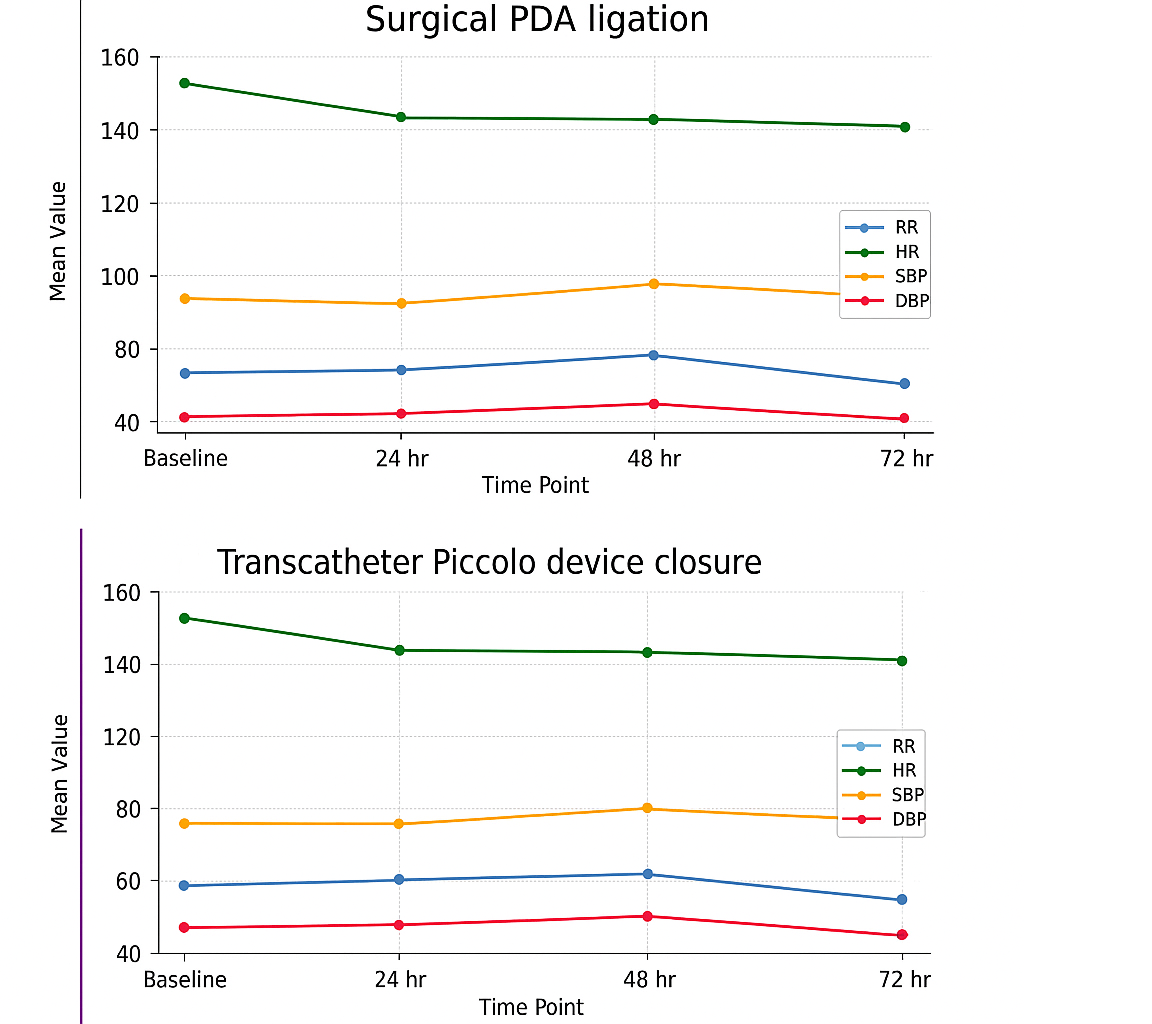 Line graph illustrates the trends in mean respiratory rate (RR), heart rate (HR), systolic blood pressure (SBP), and diastolic blood pressure (DBP) following PDA closure. In the surgical ligation group, RR and HR transiently decreased at 24-48 hours before returning toward baseline, whereas SBP and DBP remained relatively stable. In contrast, the Piccolo device group showed no significant early hemodynamic decline, with SBP demonstrating a modest rise by 48 hours (p < 0.05 vs baseline), indicating overall circulatory stability