








Neonatal General
Session: Neonatal General 7: Cardiology and Hemodynamics

Teahyen Cha, Assistant Professor, Neonatology (he/him/his)
Clinical Assistant Professor
Gangnam Severance Hospital
Seongdong-gu, Seoul-t'ukpyolsi, Republic of Korea
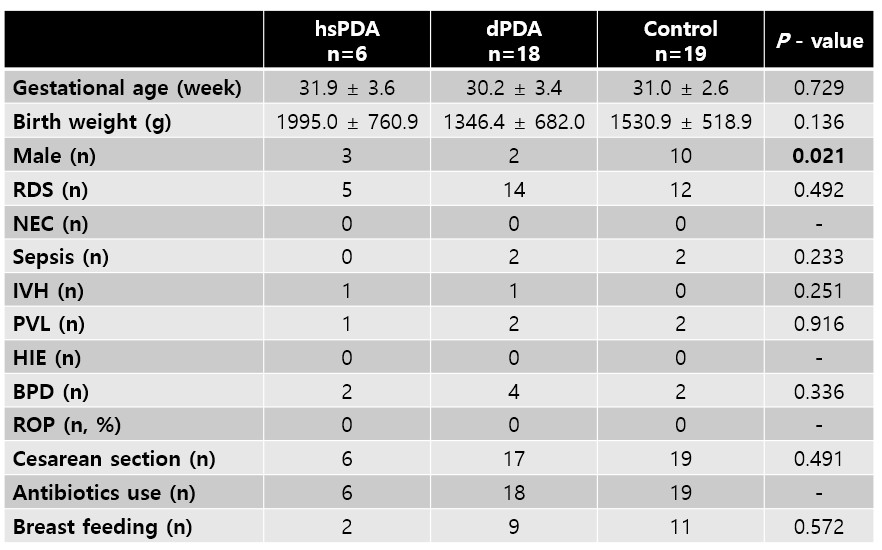 A total of 44 preterm infants were included: hsPDA (n = 6), dPDA (n = 18), and control (n = 19). No significant differences were observed among groups in gestational age, birth weight, or major morbidities, except for sex distribution (p = 0.021).
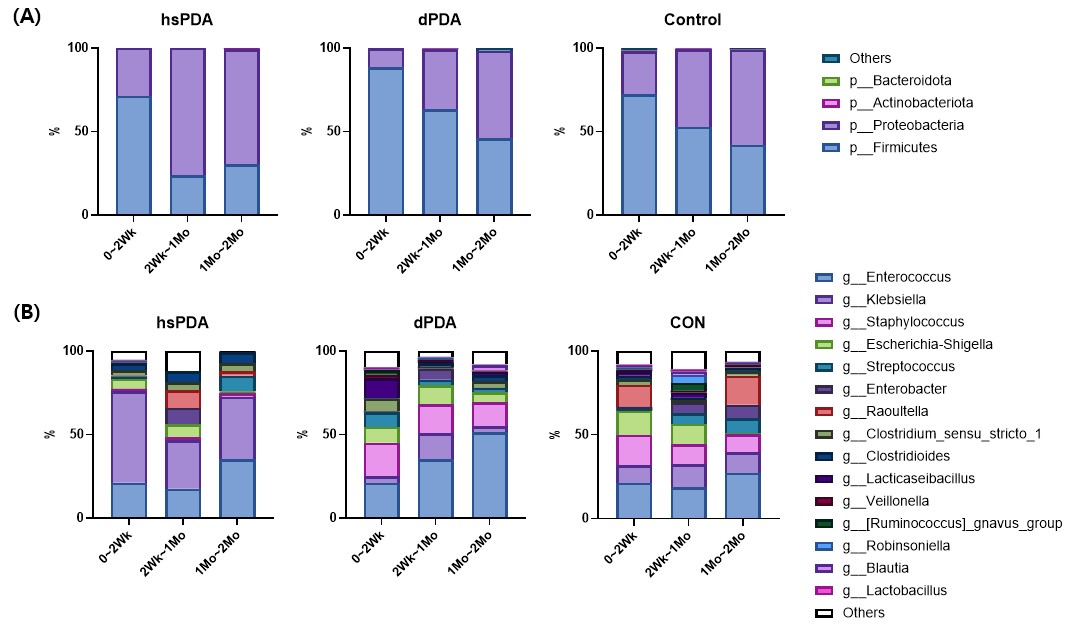 (A) Relative abundance of bacterial taxa at the phylum level in infants with hsPDA, dPDA, and control groups. hsPDA infants showed early enrichment of Proteobacteria and depletion of Firmicutes compared with other groups.
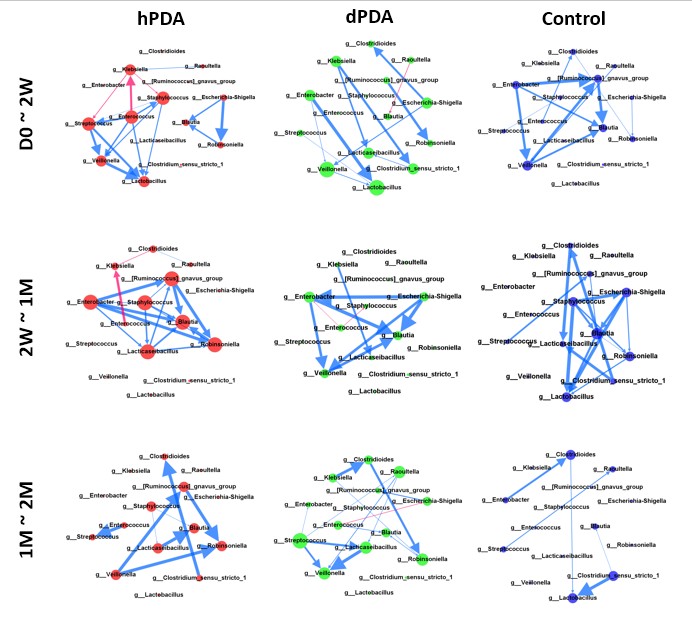 Microbial association networks were constructed at the genus level for infants with hsPDA, dPDA, and control groups during three postnatal periods (D0-2 W, 2 W-1 M, and 1 M-2 M). Each node represents a bacterial genus, and edges indicate significant correlations between taxa. hsPDA infants exhibited a simpler and more centralized network, indicating reduced microbial diversity and resilience, whereas dPDA and control groups maintained more complex, interconnected, and balanced microbial networks over time.