28 - Mental Health Diagnoses Among Children Entering Foster Care Compared to Matched Medicaid Peers in Two States
Sunday, April 26, 2026
9:30am - 11:30am ET
Publication Number: 3025.28
James G. Kaferly, University of Colorado School of Medicine, Denver, CO, United States; Liza M. Creel, University of Colorado Anschutz Medical Campus, Aurora, CO, United States; Sara Byers, University of Colorado School of Medicine, Aurora, CO, United States
Associate Professor University of Colorado School of Medicine Denver, Colorado, United States
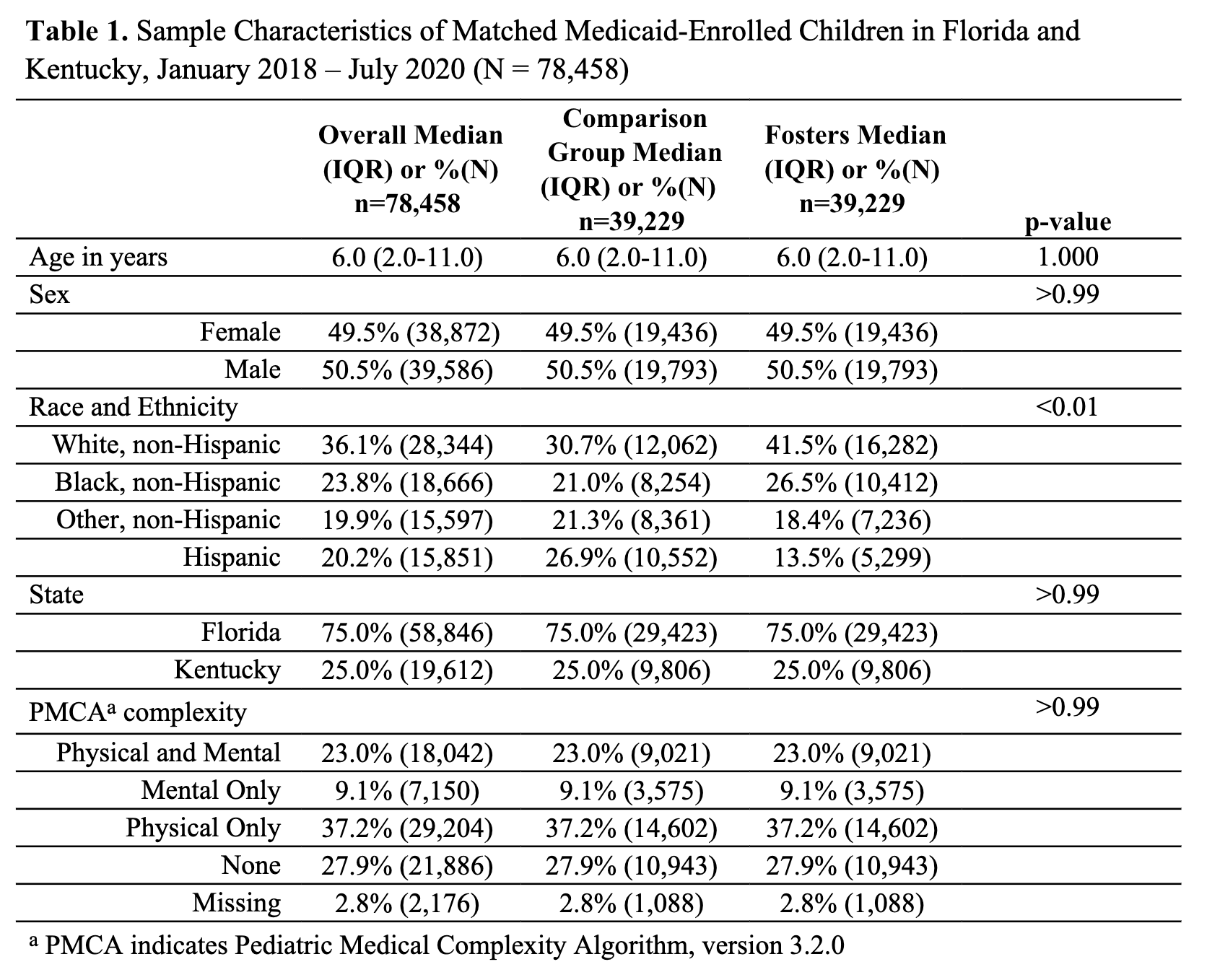
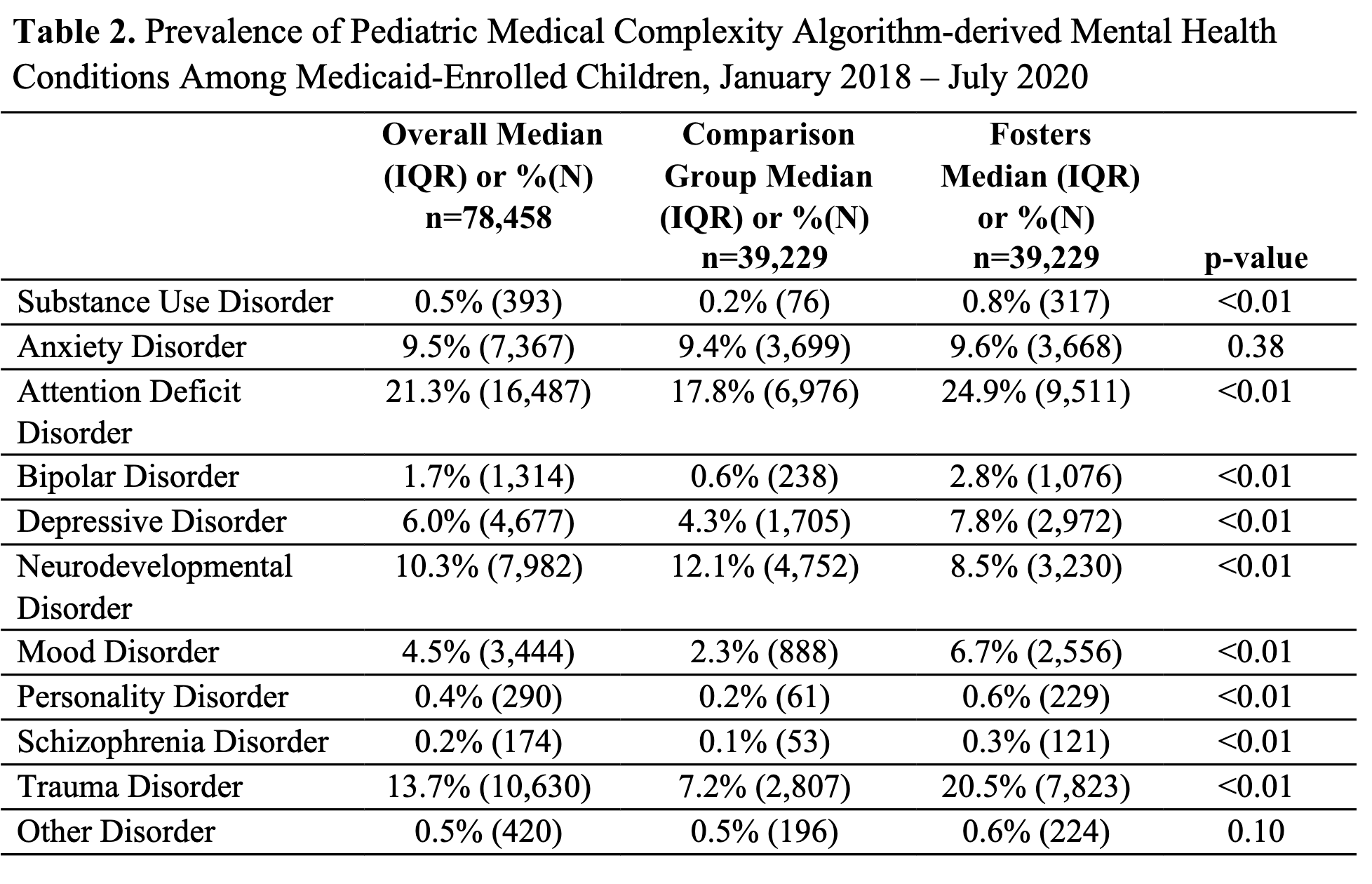
Background: While prior studies describe an increased prevalence of mental health conditions among children who experience foster care, few studies have examined the specific mental health needs among children at the time of initial foster care placement. Using linked Medicaid and child welfare administrative data may provide a broader understanding of mental health needs among children who enter foster care and facilitate coordinated strategies to improve outcomes across child health, welfare, and policy systems. Objective: To determine the prevalence of chronic mental health diagnoses, derived from the Pediatric Medical Complexity Algorithm version 3.2.0 (PMCA) and using their most conservative algorithm, among Medicaid-enrolled children with an initial entry into foster care compared to a matched peer group without any history in foster care. Design/Methods: We used the Child and Caregiver Outcomes Using Linked Data (CCOULD) dataset, which includes detailed Medicaid claims data for children with and without a history of child welfare involvement in Florida and Kentucky. We identified 50,933 children under 19 years old with an initial foster care removal from January 2018 to July 2020 and at least one month of Medicaid enrollment in the preceding six-month period. We were able to match 39,229 children to Medicaid-enrolled, non-foster peers based on age, sex, state of residence, six-month Medicaid enrollment patterns, and PMCA-derived complexity including the presence of a chronic mental health diagnosis (Table 1). We categorized chronic mental health diagnoses at foster care entry and compared the prevalence of mental health needs in the foster and peer groups. Results: Although we matched a comparison, peer group on the presence of chronic mental health needs, the prevalence of diagnoses present in the foster care group are significantly different than their matched peers (Table 2). We observe a higher prevalence of substance use, attention deficit, bipolar, depressive, mood, personality, schizophrenia, and trauma disorders among the foster care group. The peer group had a higher prevalence of neurodevelopmental disorders.
Conclusion(s): Individuals entering foster care have chronic and complex mental health needs. Even compared to peers with similar PMCA-derived mental health needs, the types of needs among those children who entered foster care are different. Clinical and policy interventions should be responsive to the diversity of mental and behavioral health diagnoses among those in foster care.
Table 1. Sample Characteristics of Matched Medicaid-Enrolled Children in Florida and Kentucky, January 2018 - July 2020 (N = 78,458)
Table 2. Prevalence of Pediatric Medical Complexity Algorithm-derived Mental Health Conditions Among Medicaid-Enrolled Children, January 2018 - July 2020