658 - The correlation between bone health, vitamin D and pain in children with hypermobile Ehlers-Danlos Syndrome
Monday, April 27, 2026
8:00am - 10:00am ET
Publication Number: 4644.658
Nupur Khattri, Kansas City University College of Osteopathic Medicine, Kansas City, MO, United States; Ashley M. Lytch, Children's Mercy Hospital Kansas City, Kansas City, MO, United States; Emily Cramer, Children's Mercy Kansas City, Kansas City, MO, United States; William R. Black, Nationwide Children's Hospital, Grandview Heights, OH, United States; Jordan T. Jones, Children's Mercy Kansas City, Kansas City, MO, United States
Medical Student Kansas City University College of Osteopathic Medicine Kansas City, Missouri, United States
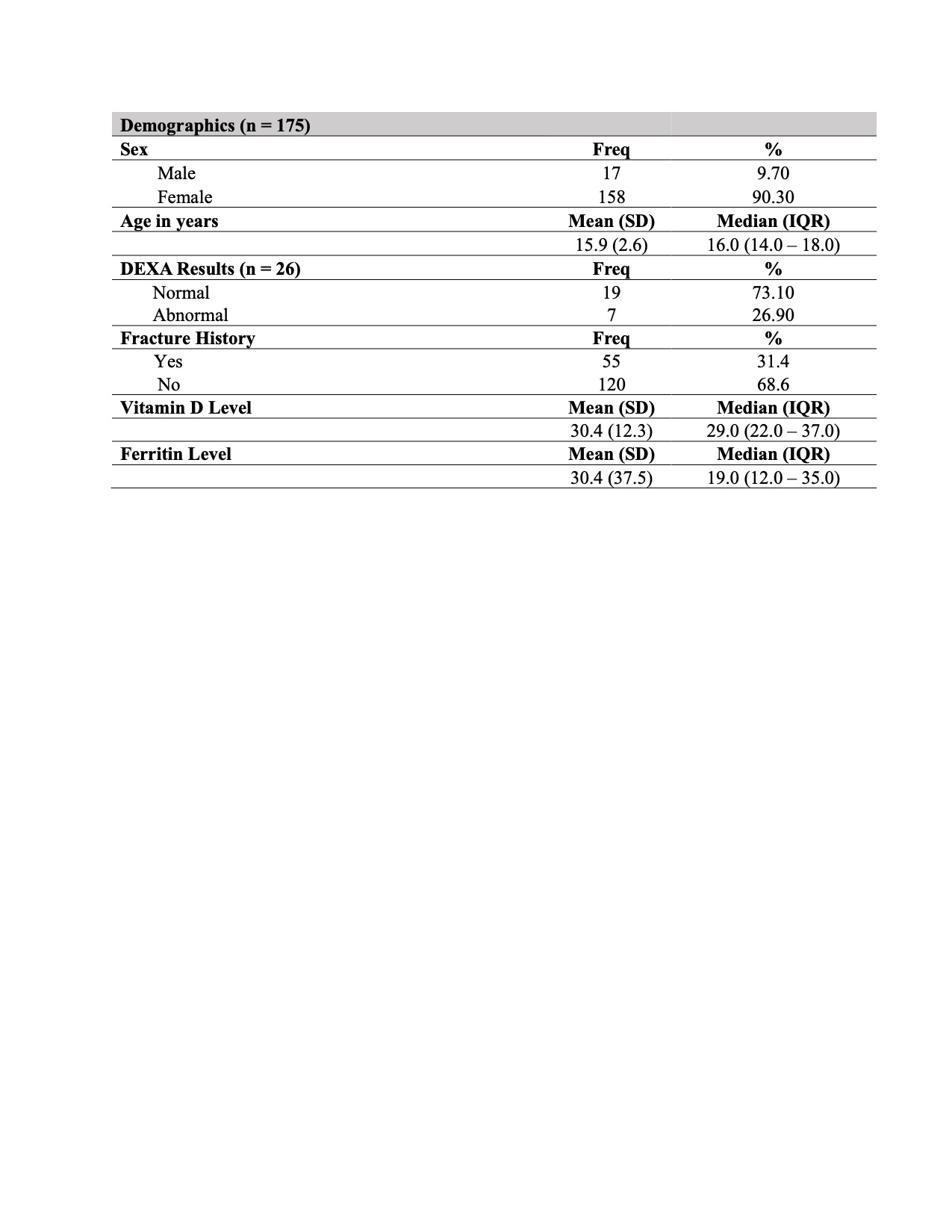
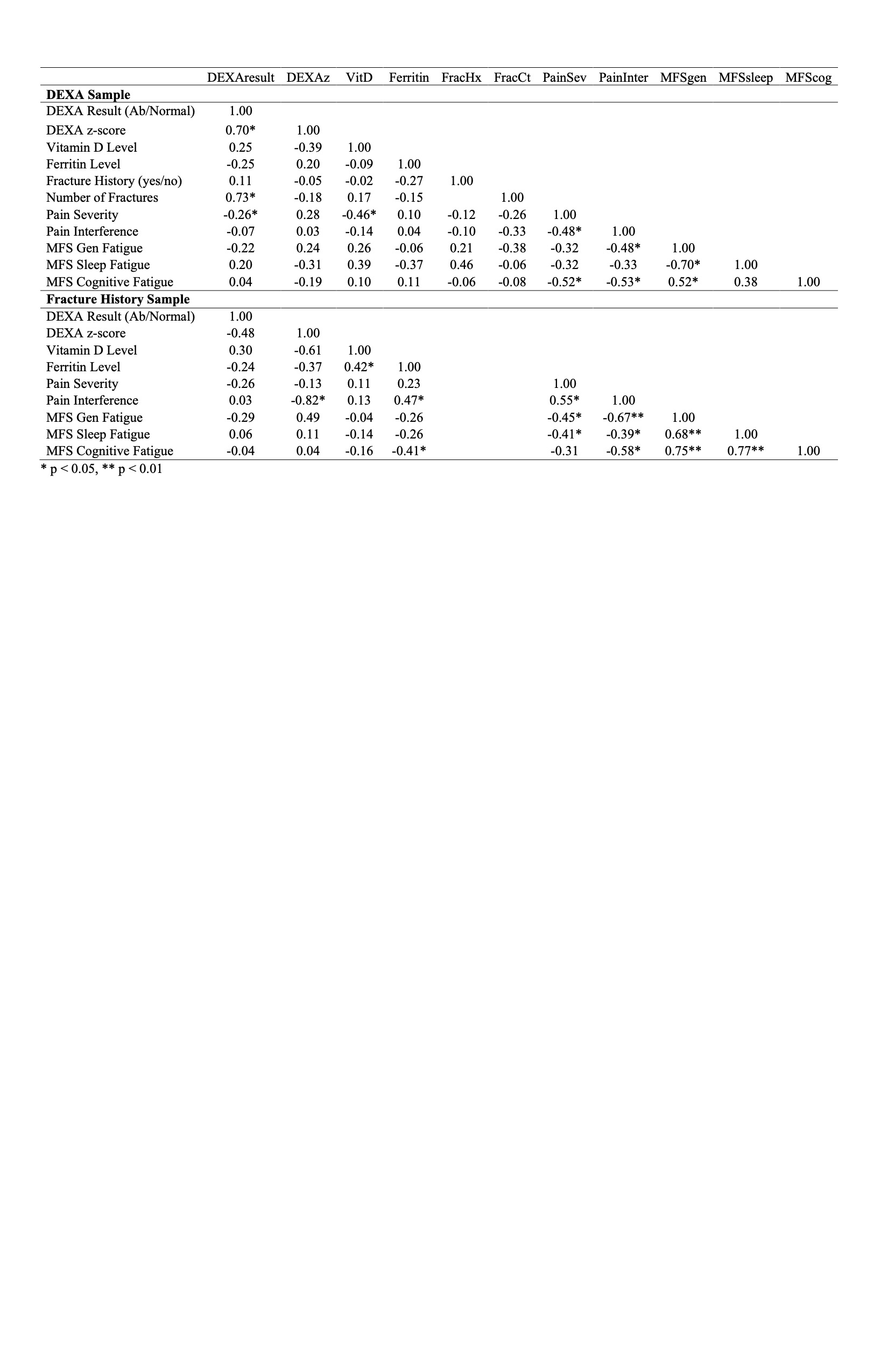
Background: Hypermobile Ehler-Danlos Syndrome (hEDS) is the most common autosomal dominant connective tissue disorder classified by joint hypermobility, joint subluxations/dislocations, and soft tissue manifestations. Vitamin D has been proven crucial for bone health, and vitamin D deficiency can lead to numerous adverse consequences. One effect of vitamin D deficiency includes premature aging of bones, which increases the risk of bone fractures. Iron has also been shown to play a role in vitamin D metabolism. Decreased iron can lead to imbalances in bone homeostasis and bone loss. Previous studies have found that adult patients with hEDS have reduced bone mineral density and an increased prevalence of vertebral fractures. Currently, no studies have evaluated bone health in pediatric patients with hEDS. Objective: To describe bone health, vitamin D and ferritin levels, and impact on pain and fatigue in pediatric patients with hEDS. Design/Methods: 175 pediatric patients with hEDS were recruited from a hEDS multidisciplinary clinic to participate in a longitudinal study from May 2022 to December 2022. Demographics, Vitamin D and ferritin levels, DEXA results, Brief Pain Scale, and PedQL Multidimensional Fatigue Scale were collected through patient surveys and chart reviews. Descriptive statistics and Pearson correlations were calculated. The IRB approved this study (ID: 00001628). Results: Most participants were female (90.3%) with a mean age of 15.9 years (SD = 2.6). Of the participants, 14.9% had a DEXA scan completed and 26.9% had an abnormal DEXA, while 31.4% had a history of at least one fracture (Table 1). Correlations were noted for DEXA results and number of fractures (r = 0.73, p = 0.02), pain and vitamin D level (r = -0.46, p = 0.05), and pain and DEXA Z-scores (r = -0.82, p = 0.05). Ferritin level and Cognitive Fatigue (r = -0.41, p = 0.04) were also correlated (Table 2).
Conclusion(s): Abnormal DEXA results correlated with increased risk of fractures and increased pain interference, while increased vitamin D levels correlated with decreased pain severity. Increased ferritin levels correlated with decreased cognitive fatigue. So, for children with hEDS, a DEXA scan may be warranted when there is a history of fractures and pain. Additionally, ferritin levels may be helpful in the evaluation of fatigue in this population. Larger studies with more participants are needed to confirm these results.
Table 1. Demographics and Bone Health History
Table 2. Correlations between DEXA, Fracture History, Vitamin D, Ferritin, Pain and Fatigue.