454 - Post-Pandemic Telehealth Sustainability in California High-Risk Infant Follow-Up Programs
Monday, April 27, 2026
8:00am - 10:00am ET
Publication Number: 4445.454
Elix Colon, Stanford University School of Medicine, Mountain View, CA, United States; Tianyao Lu, Stanford University School of Medicine, Alamo, CA, United States; Erika Gray, Stanford University School of Medicine, Palo Alto, CA, United States; Jochen Profit, Stanford University, Palo Alto, CA, United States; Susan R.. Hintz, Stanford University School of Medicine, Palo Alto, CA, United States
Postdoctoral Scholar Stanford University School of Medicine Mountain View, California, United States
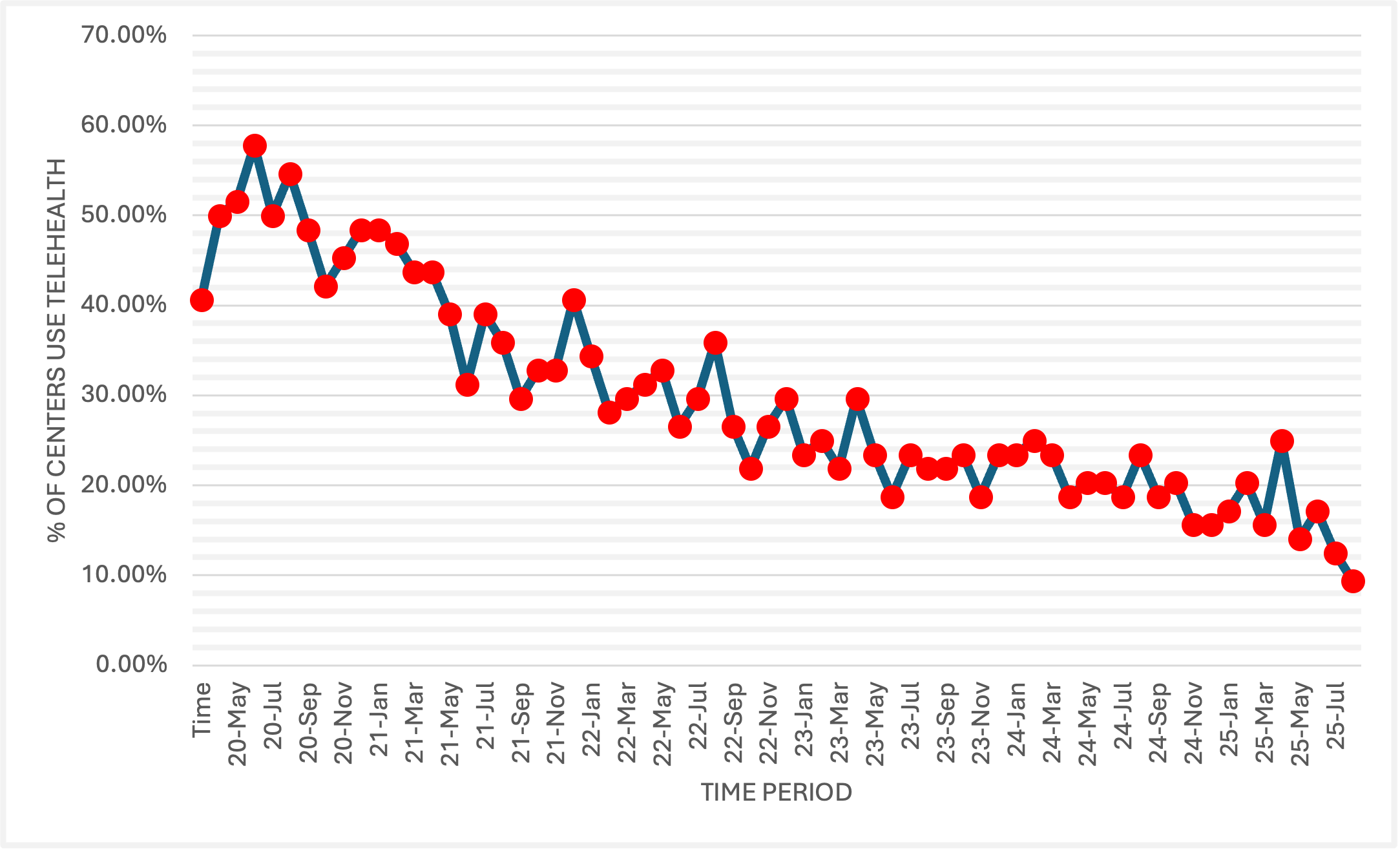
Background: During the COVID-19 pandemic, California's High-Risk Infant Follow-Up (HRIF) programs rapidly adopted telehealth to preserve care for medically fragile infants. As programs transition into the post-pandemic era, attention has shifted from implementation to sustainability, quality of developmental assessments, equity, family preferences and institutional support. This is the first study to examine telehealth in HRIF at this statewide scale using visit-level utilization data and post-pandemic survey findings. Objective: To describe how telehealth evolved from emergency adoption to post-pandemic use and identify factors associated with sustained, discontinued or never-implemented telehealth. Design/Methods: The California Perinatal Quality Care Collaborative (CPQCC) and California Children's Services (CCS) support 67 HRIF programs statewide. Surveys in 2020 captured early adoption. A follow-up survey (July-October 2025) assessed post-pandemic use and included open-ended responses. We analyzed all HRIF visits from April 1, 2020 to current to evaluate telehealth utilization. Patient-level visit data from March 2020 to September 2025 were analyzed by site and region. Proportions are reported as percentages; qualitative responses were thematically coded. Ongoing qualitative interviews may reveal perspectives not fully captured in initial survey data. Results: Forty-nine of 67 clinics (73.1 percent) completed the 2025 survey. Telehealth use increased rapidly in early 2020 following CPQCC telepractice guidance, peaked at 50.8 percent of visits between April and September 2020, and declined to 9.4 percent by September 2025. Use declined among all HRIF clinics (Fig 1) but varied by region (Fig 2). Sustaining clinics reported improved attendance, caregiver participation, scheduling flexibility and better observation of infant-family interaction at home. Clinics that discontinued telehealth cited challenges with full developmental assessments, broadband or device limitations, staffing constraints, reimbursement uncertainty and preference for in-person care. Clinics that never implemented telehealth cited limited resources, institutional preference or concerns about appropriateness for HRIF patients (Table 1).
Conclusion(s): Telehealth in HRIF shifted from widespread emergency adoption to selective post-pandemic use. Sustained use reduced access barriers for some families, while discontinuation reflected differences in clinic structure, assessment needs, technology access and institutional policy. These findings support continued evaluation of hybrid telehealth models for high-risk infant populations.










.png)
.png)
