Session: Technology 3: Telemedicine and Virtual Health
183 - Caregiver Perspectives on Pediatric Hospital-at-Home Care Models
Monday, April 27, 2026
8:00am - 10:00am ET
Publication Number: 4180.183
Emma Gerstenzang, Children's Hospital of Philadelphia, Philadelphia, PA, United States; Elizabeth Odunaiya, Children's Hospital of Philadelphia, Philadelphia, PA, United States; John Chuo, University of Pennsylvania Perelman School of Medicine, doylestown, PA, United States; Aditi Vasan, Children's Hospital of Philadelphia, Philadelphia, PA, United States
Pediatric Hospital Medicine Fellow Children's Hospital of Philadelphia Philadelphia, Pennsylvania, United States
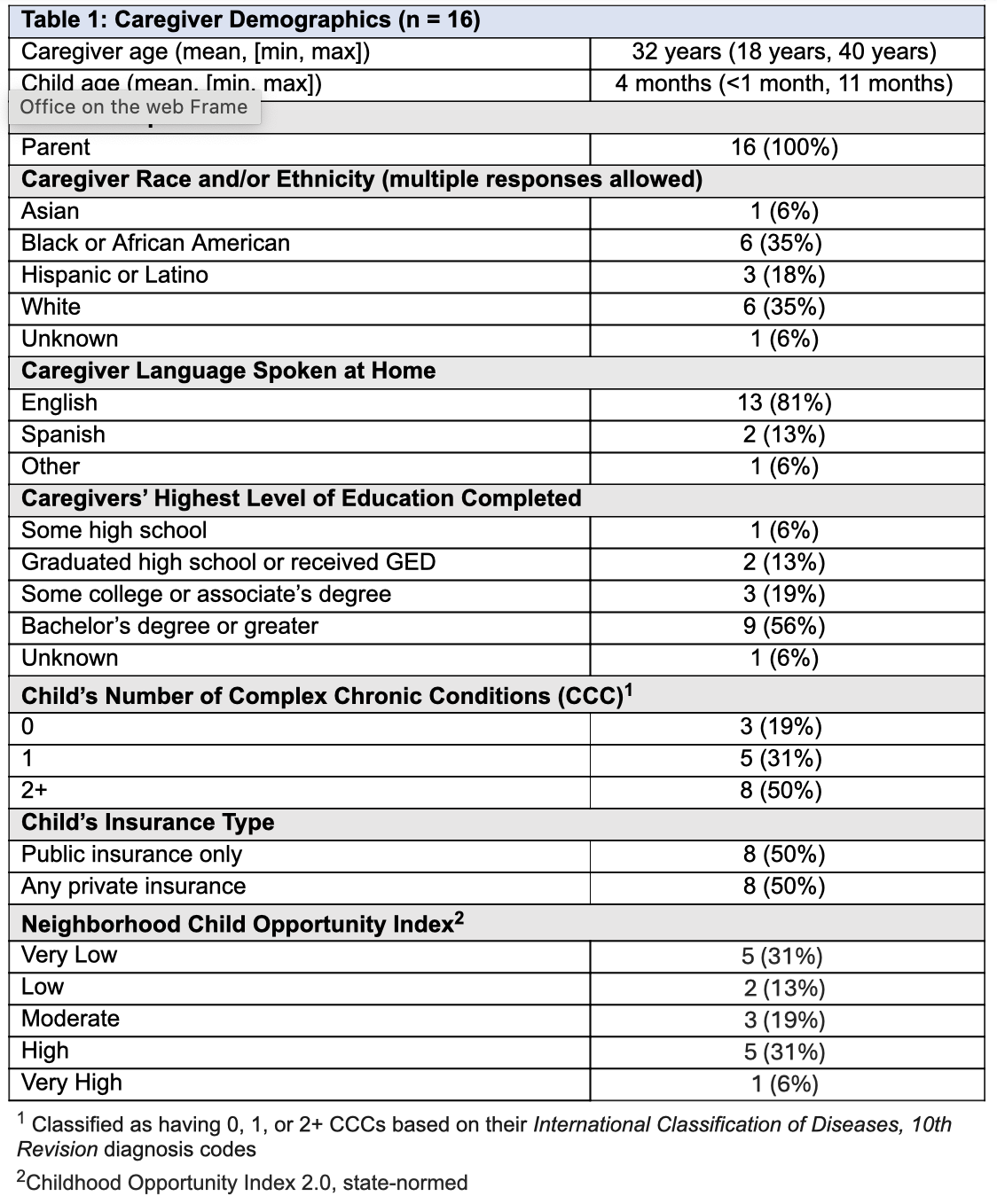
Background: Hospital at Home (HaH) is an emerging model of acute care delivery. Prior studies suggest HaH has the potential to improve family-centered care delivery and reduce readmissions. Infants discharged from the NICU, particularly those with feeding tube dependence and/or medical complexity, may benefit from HaH given their prolonged hospitalizations and high risk of readmission. However, no prior studies have examined caregiver perspectives on HaH among this population. Objective: We aimed to understand caregiver perspectives on pediatric HaH programs, including perceived benefits, barriers, and desired program characteristics, with specific attention to caregivers of children with medical complexity, minoritized patients, publicly insured patients, and patients with social needs. Design/Methods: We conducted semi-structured interviews with caregivers of infants with feeding tube dependence who were enrolled in a post-NICU discharge Remote Patient Management program at a large urban academic pediatric quaternary care center. Interviews were recorded, transcribed, and coded by 2 independent coders using content analysis, resolving discrepancies by consensus. Interviews continued until thematic saturation was reached. Results: We interviewed 16 caregivers (Table 1). We identified 4 themes regarding perceived benefits and barriers (Table 2): 1) HaH may lessen financial and logistical burdens of conventional hospitalization; 2) HaH may positively support infant development and recovery from illness; 3) HaH may be less accessible to caregivers who need to retain full-time employment; 4) HaH may not appropriately address some medical needs. We identified 3 themes regarding desired program characteristics (Table 3): 1) Real-time monitoring and response is a desired component of HaH; 2) HaH models should ideally combine telehealth and in-person visits, based on the needs and preferences of each patient and their caregiver; 3) HaH care models should be designed to alleviate and avoid exacerbating unmet social needs.
Conclusion(s): Pediatric HaH models should meet the needs of infants at risk for prolonged and recurrent hospitalization. Well-designed models could lessen the logistical and financial burdens of conventional hospitalization and optimize children's medical recovery and developmental outcomes. Pediatric health systems designing and implementing HaH programs should ideally co-design programs with families, prioritize tailored models of care to include real-time monitoring and response, include telehealth and in-person visits, and explicitly focus on identifying and addressing unmet social needs.
Table 1: Caregiver Demographics
Table 2: Themes and Representative Quotes: Benefits and Barriers to Hospital at Home
Table 3: Themes and Representative Quotes: Desired Program Characteristics










.png)
.png)
