529 - A Best Practices Toolkit to Integrate Early Relational Health Interventions in Pediatric Primary Care
Monday, April 27, 2026
8:00am - 10:00am ET
Publication Number: 4517.529
Caitlin F. Canfield, NYU Grossman School of Medicine, New York, NY, United States; Victoria Guevara, NYU Langone Grossman School of Medicine, Sunnyside, NY, United States; Janae Kuttamperoor, George Washington University School of Medicine and Health Sciences, New York, NY, United States; Yu Chen, New York University Grossman School of Medicine, New York, NY, United States; Diana Walther, NYU Grossman School of Medicine, New York, NY, United States; Hollyce Tyrrell, Academic Pediatric Association, McLean, VA, United States; H. Shonna Yin, NYU Grossman School of Medicine, New York, NY, United States; Alan L. Mendelsohn, New York University Grossman School of Medicine, New York, NY, United States; Elizabeth B. Miller, New York University Grossman School of Medicine, New Rochelle, NY, United States
Assistant Professor NYU Grossman School of Medicine New York, New York, United States
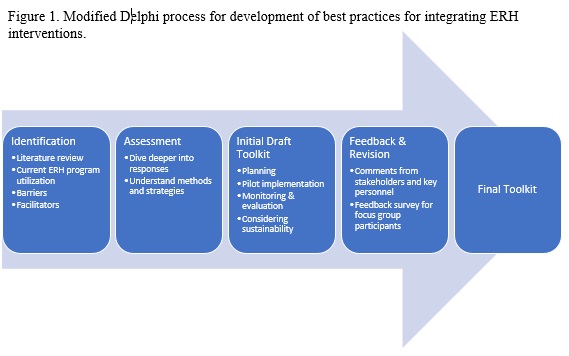
Background: Early relational health (ERH)-safe, stable, nurturing relationships between children and caregivers-is considered critical for optimal child development. Pediatric primary care (PPC) has been identified as a key platform for effective promotion of ERH given its broad reach (>90% of families), existing infrastructure, and family trust. AAP and other guidelines have called for a public health approach to ERH that layers programs within PPC to address different levels of family need. However, little is known about strategies and barriers to employing multiple ERH programs in PPC. Objective: To develop a best practices toolkit to provide guidance and useful tools for clinicians and staff to implement and integrate multiple ERH programs in PPC clinics. Design/Methods: A modified Delphi procedure (Fig 1) was used, including: 1) Identification: national survey (n=131) through APA Continuity Research Network, HealthySteps Connect, Reach Out and Read, and AAP Council on Early Childhood. Instruments included Evidence-Based Practices in Pediatric Care and Organizational Social Context Scale (clinic needs, resources, climate); 2)
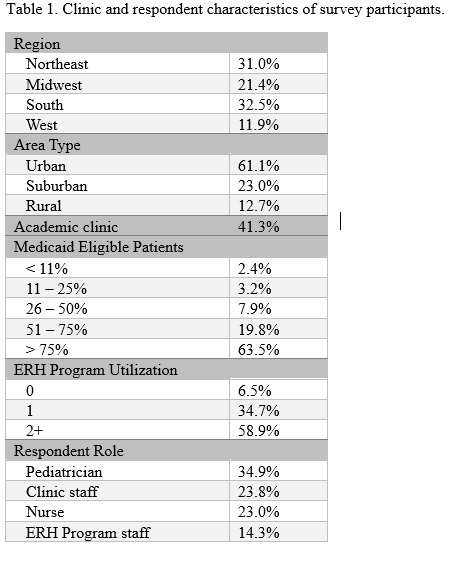
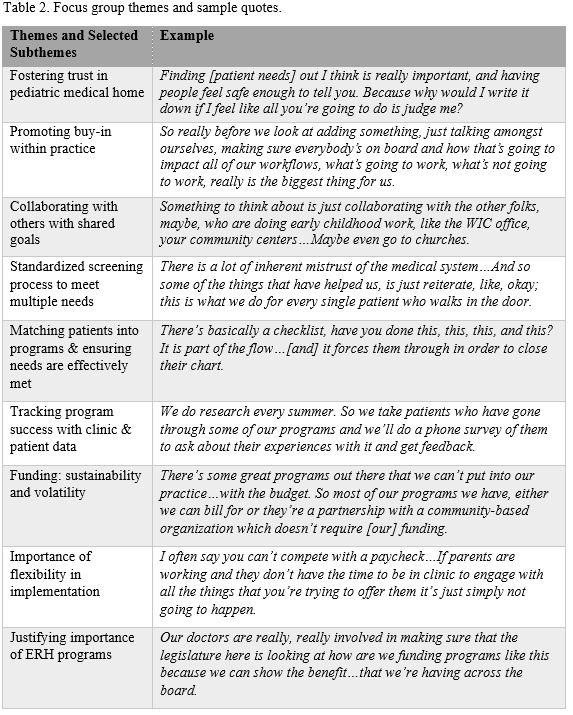
Assessment: 5 focus groups (n=18) with purposive sampling for role, clinic characteristics, and current ERH programs to probe for understanding of and reaction to survey findings; 3) Initial Draft Toolkit; 4) Feedback & Revision: feedback from experts and key stakeholders, surveys of focus group participants (total n=11) related to importance and feasibility of each best practice; and 5) Final Toolkit. Results: Survey results indicated diverse pediatric care roles and geographic areas (Table 1). 93% of respondents reported having at least 1 ERH program at their clinic; 58% reported 2+. Notable strategies included leadership support, awareness of ERH resources, and clinic readiness for adopting new practices. Most common barriers related to staff and space limitations. Focus group themes expanded upon strategies reported in the survey (Table 2), including ways to promote participation, getting buy-in, funding, and removing barriers.
Based on these findings, the initial best practice toolkit was developed focusing on: 1) planning; 2) piloting; 3) monitoring and evaluation; and 4) sustainability of integrated programs. Feedback indicated broad agreement on the importance of practices identified, but concerns related to feasibility. Subsequent revisions added more tools to increase feasibility.
Conclusion(s): Best practices are needed to successfully integrate multiple ERH programs in PPC, and this modified delphi procedure provides a toolkit to guide clinic providers and staff in this process.
Table 1. Clinic and respondent characteristics of survey participants.
Table 2. Focus group themes and sample quotes.
Figure 1. Modified Delphi process for development of best practices for integrating ERH interventions.