500 - Kinder Ready Coaching in Primary Care: Evaluation of Parent and Child Outcomes
Monday, April 27, 2026
8:00am - 10:00am ET
Publication Number: 4491.500
Jaime Peterson, Oregon Health & Science University School of Medicine, Portland, OR, United States; Maya Postigo, Oregon Health and Science University, Portland, OR, United States; Marlo Mcilraith, Oregon Health & Science University School of Medicine, Portland, OR, United States; Miriam Escobar, OHSU, Forest Grove, OR, United States; Sandra Silva, Oregon Health & Science University School of Medicine, Hillsboro, OR, United States; Isha Sylla, Oregon Health & Science University, Portland, OR, United States; Dawn N. Warddrip, Hillsboro Pediatric Clinic, LLC, Hillsboro, OR, United States; Ellen Stevenson, Doernbecher Children's Hospital at Oregon Health & Science University, Portland, OR, United States; Katharine E. Zuckerman, Oregon Health & Science University School of Medicine, Portland, OR, United States; Barbara H.. Brumbach, OHSU, McMinnville, OR, United States
Associate Professor Oregon Health & Science University School of Medicine Portland, Oregon, United States
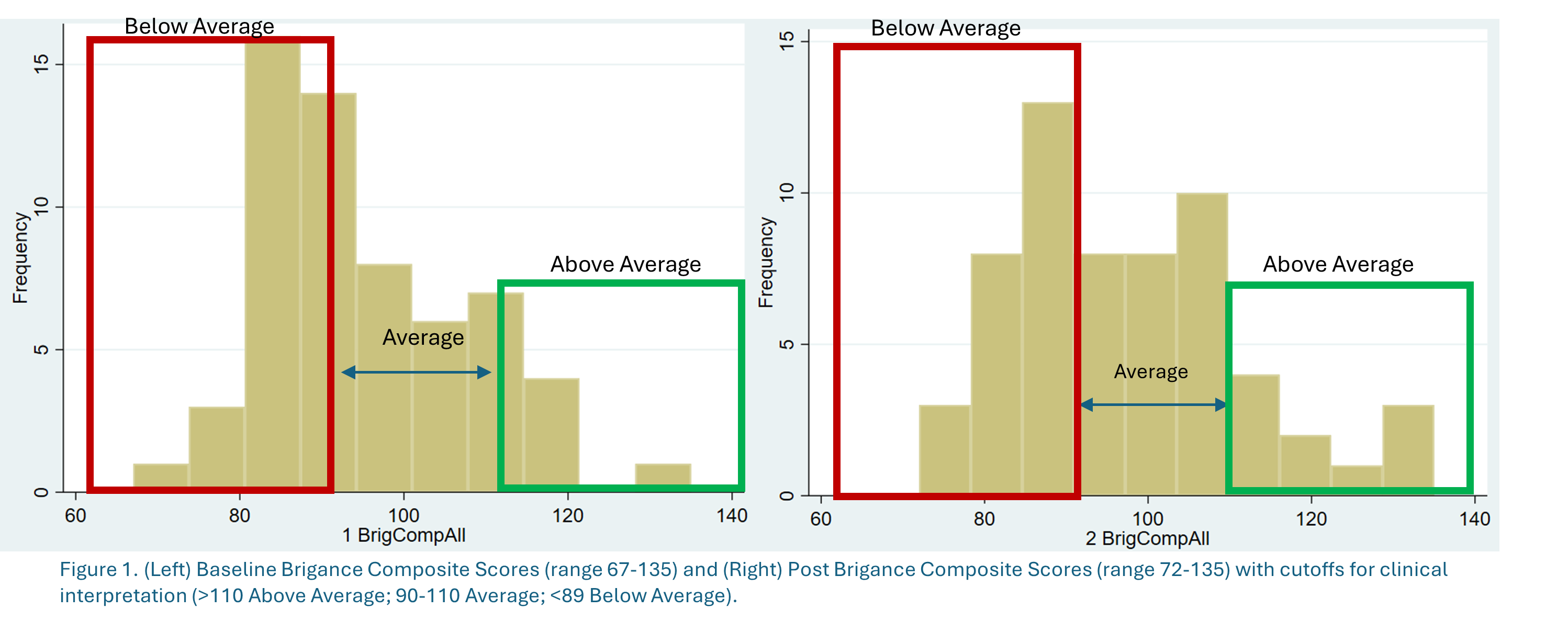
Background: The Kinder Coaching Program was co-developed with Latino parents to address the Latino school readiness (SR) gap in primary care. It includes two structured, individualized parent-child SR coaching sessions for 3- 5-year-olds with a bilingual community health worker (CHW). Each session provides SR knowledge, assesses child SR with Brigance III Screens, models skills for home practice and connects families to preschool. Objective: Evaluate impact of The Kinder Coaching Program on pre/post child, parent, and community level outcomes. Design/Methods: Intervention study of a Kinder Coaching Program with CHWs in three Oregon pediatric clinics serving children on Medicaid. Primary outcome: change in child pre/post SR scores (Brigance). Secondary outcomes: change in parent anxiety regarding math and reading (DREME; 10-point Likert scale) and change in child preschool enrollment (parent report; yes/no). Descriptive statistics for demographics, primary and secondary outcomes at baseline and follow up (frequency/ percent for categorical variables, mean/ standard deviation for continuous variables); Paired t-tests were performed to assess statistically significant changes between pre/post for outcomes; Cohen's d was calculated for effect size. Results: We enrolled 272 Medicaid families at 3 clinics from June 2023-October 2025. 60 child-caregiver pairs were included for pre/post analysis as paired samples (inclusion criteria: two visits with the same parent post coach training period). Analysis cohort were primarily Latina (80%), Spanish-speaking (57%) mothers (93%) with a 3-4-year-old child not in preschool at baseline (57%). Primary outcome: Child SR on the Brigance at baseline and follow up increased; 2.7 mean change (SD=9.3) post intervention (p =0.03), effect size 0.29 (Cohen d) (Table 1). Clinical shift from 'below average' to 'average' on Brigance (Fig 1). Secondary outcomes: Preschool enrollment increased from baseline to follow up (43% to 65%). Parents had more anxiety regarding math than reading at baseline (mean 4.11 vs. 1.5 for reading; 1 denotes "no anxiety at all"; 10 "very anxious"). Statistically significant changes were seen in parent anxiety: math anxiety decreased, while reading anxiety increased (Table 2).
Conclusion(s): Parent-child dyads had high participation in SR coaching embedded into primary care with a small effect size on child SR, higher preschool enrollment, and lower parent anxiety regarding math. SR Coaching with a CHW is a promising approach to address the Latino SR gap in primary care. Future research with a control group and different populations is needed to quantify impact.
Table 1. Pre- and Post-Intervention Differences in Brigance Early Childhood Screen III Scores after Kinder Coaching Intervention (n=60)
Table 2. Pre- and Post-Intervention Differences in Parent Anxiety around Math and Reading (DREME) after Kinder Coaching Intervention (n=53)
Figure 1. (Left) Baseline Brigance Composite Scores (range 67-135) and (Right) Post Brigance Composite Scores (range 72-135) with cutoffs for clinical interpretation (>110 Above Average; 90-110 Average; <89 Below Average).










.png)
.png)