379 - Association of Race/Ethnicity and Social Determinants of Health After Adjustment for Household Income and Caregiver Education Levels
Monday, April 27, 2026
8:00am - 10:00am ET
Publication Number: 4371.379
Muhammad Adil Siddiqui, McGovern Medical School at the University of Texas Health Science Center at Houston, Houston, TX, United States; Zoabe Hafeez, McGovern Medical School at the University of Texas Health Science Center at Houston, Houston, TX, United States; Sahiba Trehan, McGovern Medical School at the University of Texas Health Science Center at Houston, Houston, TX, United States; Justin Henderson, McGovern Medical School at the University of Texas Health Science Center at Houston, Houston, TX, United States; Kaleigh Riggs-Harpur, University of Texas Health Sciences in Houston, Spring, TX, United States
Pediatric Hospital Medicine Fellow McGovern Medical School at the University of Texas Health Science Center at Houston Houston, Texas, United States
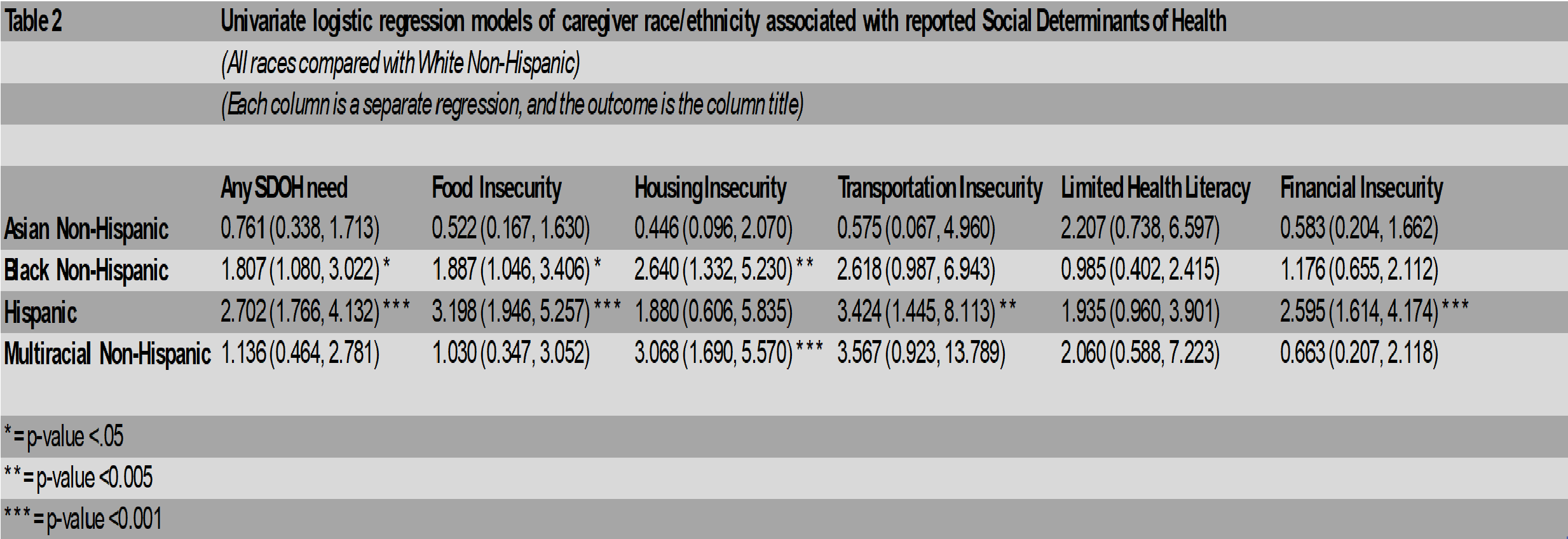
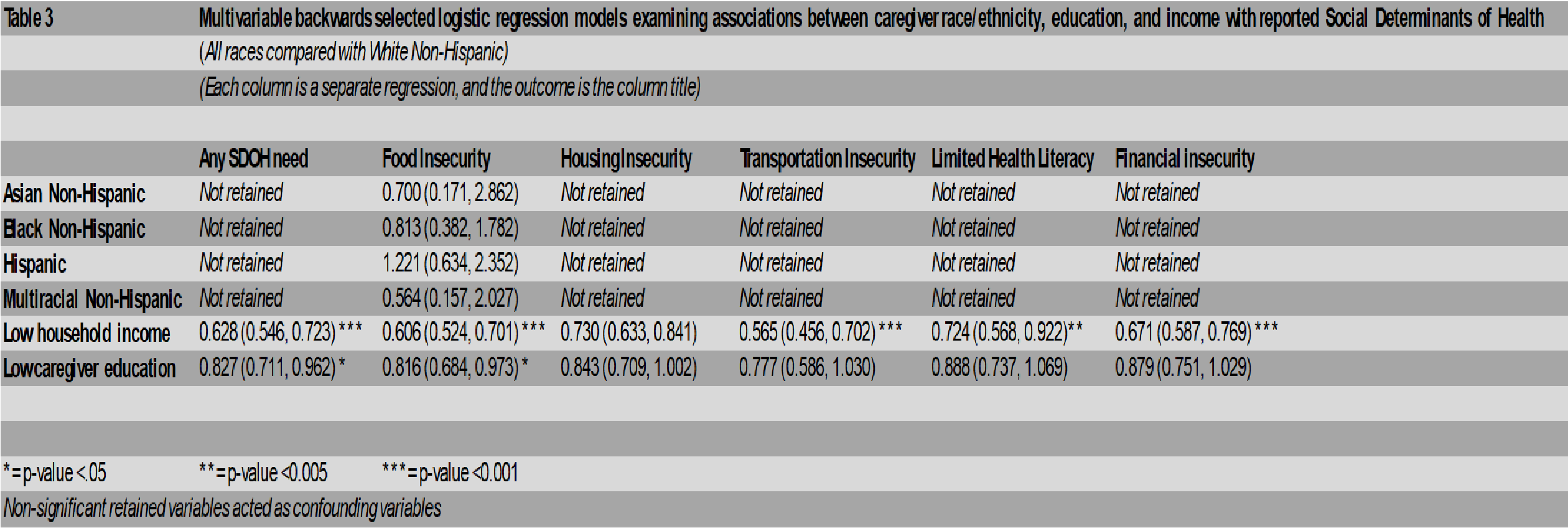
Background: Social determinants of health (SDOH), including financial strain, food insecurity, housing instability, transportation barriers, and limited health literacy, significantly affect child health outcomes. While racial and ethnic disparities in SDOH are well documented, it remains unclear whether these social needs persist after accounting for socioeconomic factors such as caregiver education and household income. Understanding these relationships is essential to designing equitable screening and intervention strategies in pediatric hospital settings. Objective: To determine whether caregiver race/ethnicity is independently associated with reported social needs after adjusting for education and income among caregivers of hospitalized children. Design/Methods: We conducted a cross-sectional study using caregiver-reported SDOH screening surveys completed during hospitalization at Children's Memorial Hermann Hospital between January and September 2024. Surveys assessed five domains: financial strain, food insecurity, housing instability, transportation barriers, and health literacy. Caregiver race/ethnicity, education, and household income were recorded. Univariate logistic regressions examined associations between race/ethnicity and each SDOH domain. Multivariate models adjusted for caregiver education and income, retaining race/ethnicity if it was independently significant or acting as a confounder. Results: A total of 814 caregiver responses were analyzed. Significant differences in income and educational attainment were observed across racial and ethnic groups. In unadjusted analyses, race/ethnicity was associated with multiple reported social needs. After adjustment for education and income, race/ethnicity was not independently associated with housing instability, transportation barriers, financial strain, or health literacy. When compared with non-Hispanic White caregivers, all other racial and ethnic groups acted as confounders in their association with food insecurity. Lower caregiver education and income were consistently linked to higher odds of reported social needs across all domains.
Conclusion(s): After accounting for caregiver education and income, race/ethnicity was not independently associated with most reported social needs among caregivers of hospitalized children. These findings suggest that socioeconomic inequities, rather than race/ethnicity alone, drive disparities in reported SDOH needs. Hospital-based screening and efforts to connect resources should prioritize addressing structural and economic barriers to promote equitable care for all children.
Baseline characteristics of study population
Univariate logistic regression models of caregiver race/ethnicity associated with reported Social Determinants of Health
Multivariable backwards selected logistic regression models examining associations between caregiver race/ethnicity, education, and income with reported Social Determinants of Health









.png)