








Neonatal Follow-up
Session: Neonatal Follow-up 3

Ariana Iranmahboub, BS (she/her/hers)
Medical Student
Creighton University School of Medicine
Phoenix, Arizona, United States
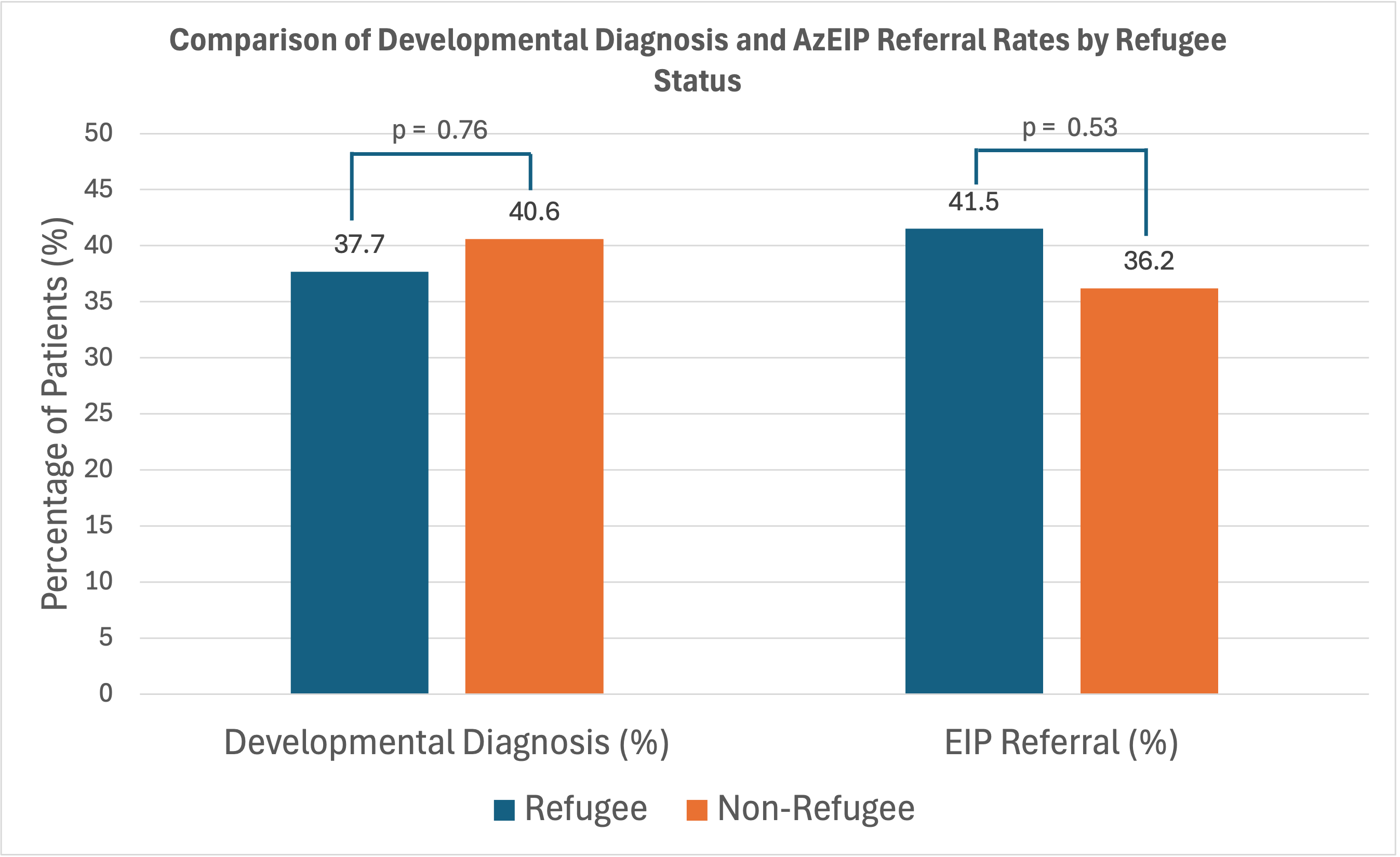 Across all patients, 37.7% of refugee patients and 40.6% of non-refugee patients were diagnosed with developmental delay (p = 0.76), and 41.5% of refugee patients and 36.2% of non-refugee patients received Arizona Early Intervention Program (AzEIP) referrals (p = 0.53).
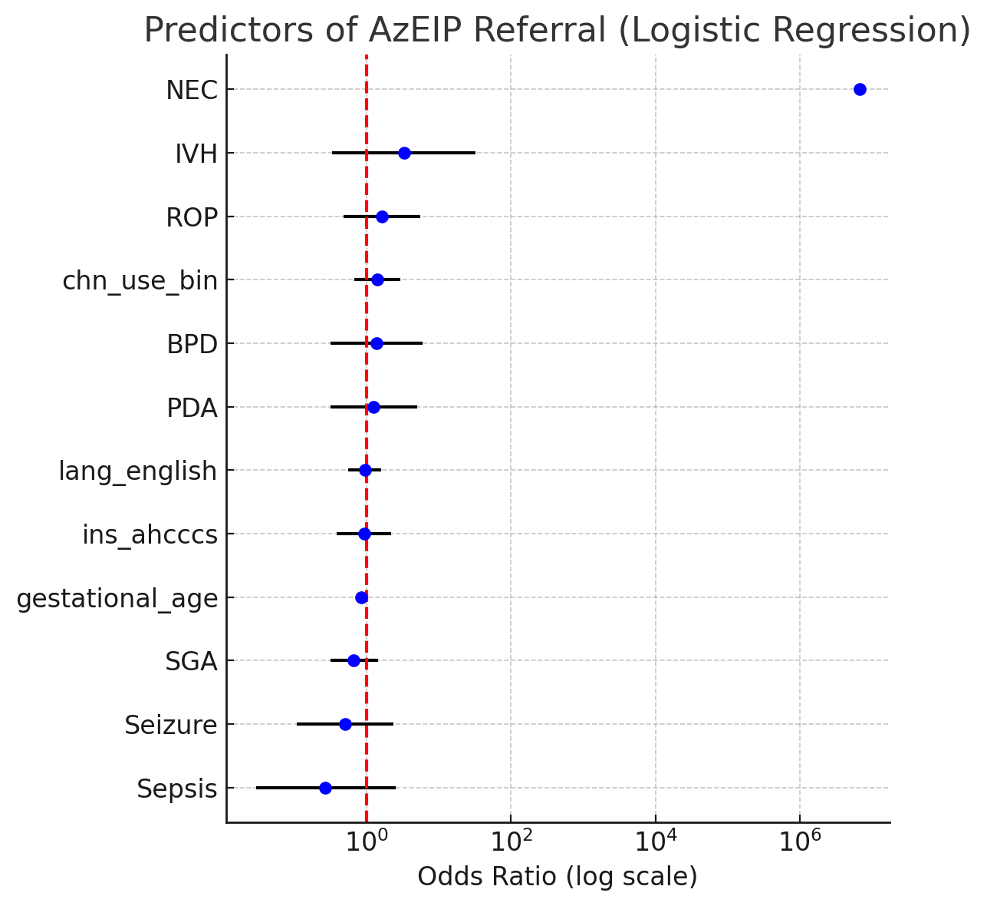 Predictors included necrotizing enterocolitis (NEC), intraventricular hemorrhage (IVH), retinopathy of prematurity (ROP), CHN use, bronchopulmonary dysplasia (BPD), patent ductus arteriosus (PDA), English language preference, AHCCCS insurance, gestational age, small for gestational age (SGA), seizure, and sepsis.
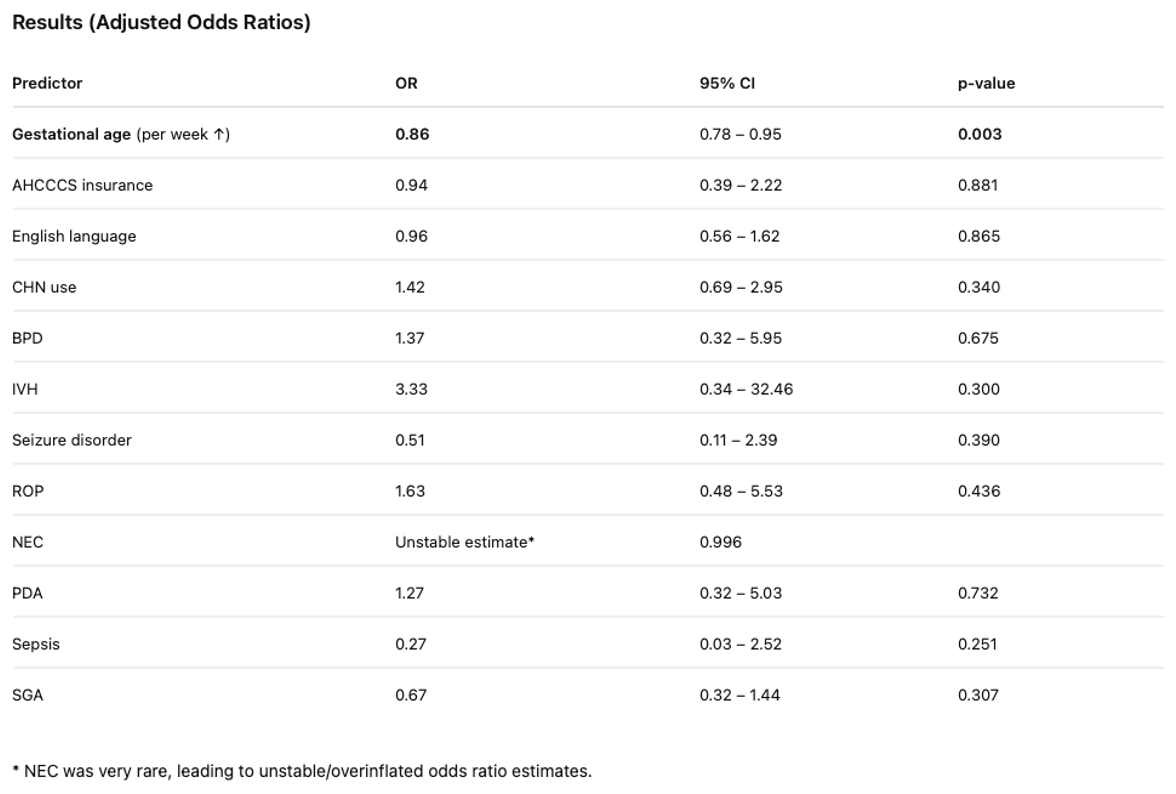 Adjusted odds ratios (OR), 95% confidence intervals (CI), and p-values for predictors of Arizona Early Intervention Program (AzEIP) referral. Variables included gestational age, AHCCCS insurance, English language, CHN use, BPD, IVH, seizure disorder, ROP, NEC, PDA, sepsis, and SGA. NEC was very rare, leading to unstable or over-inflated odds ratio estimates.