502 - Early Language Promotion Through Public Libraries: A Pilot Study with High Family Engagement
Monday, April 27, 2026
8:00am - 10:00am ET
Publication Number: 4493.502
Gretchen Domek, University of Colorado School of Medicine, Aurora, CO, United States; Mariarosa G. Gasbarro, University of Colorado - Anschutz, Aurora, CO, United States; Sarah McNeil, Denver Public Library, Denver, CO, United States; Lori Silveira, University of Colorado Anschutz, Elizabeth, CO, United States
Associate Professor University of Colorado School of Medicine Aurora, Colorado, United States
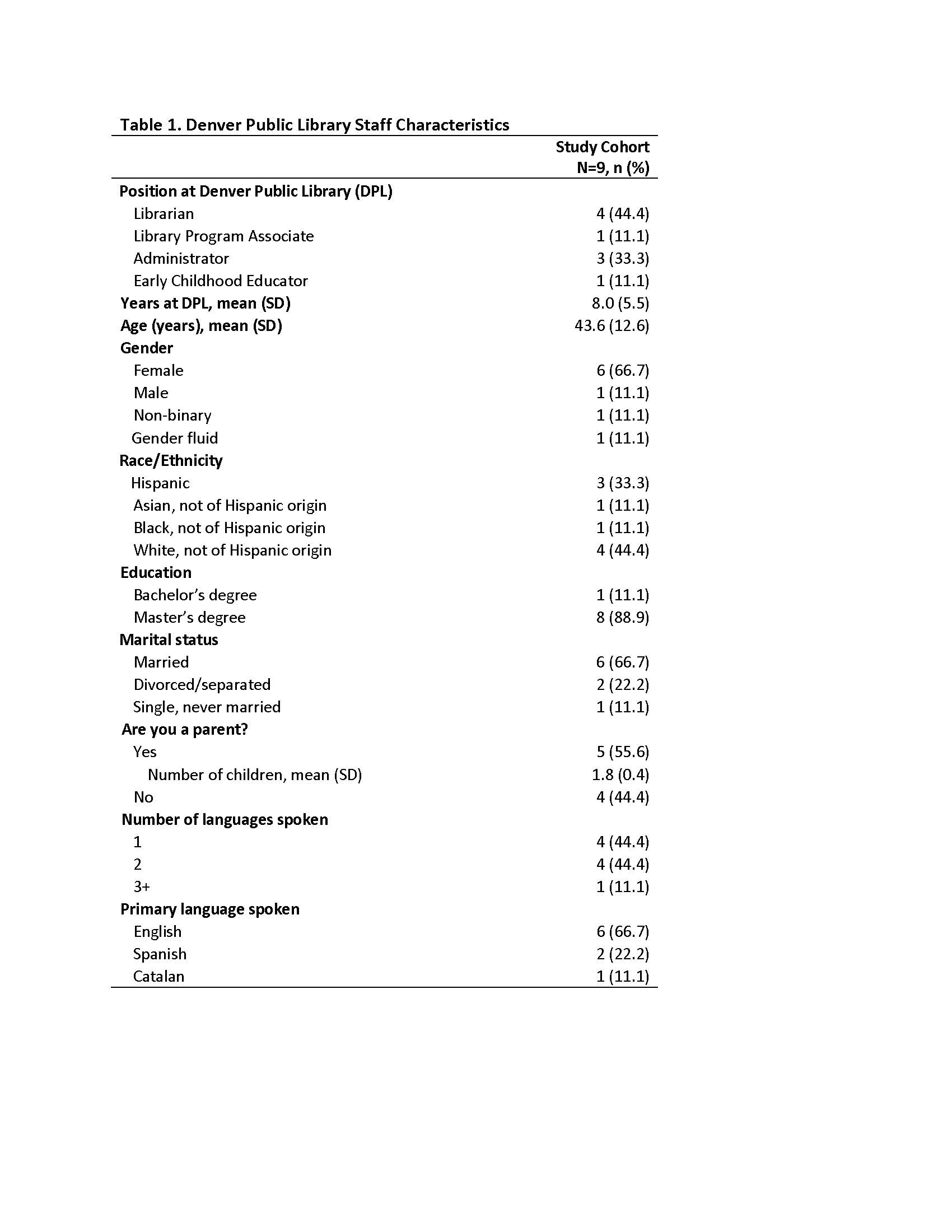
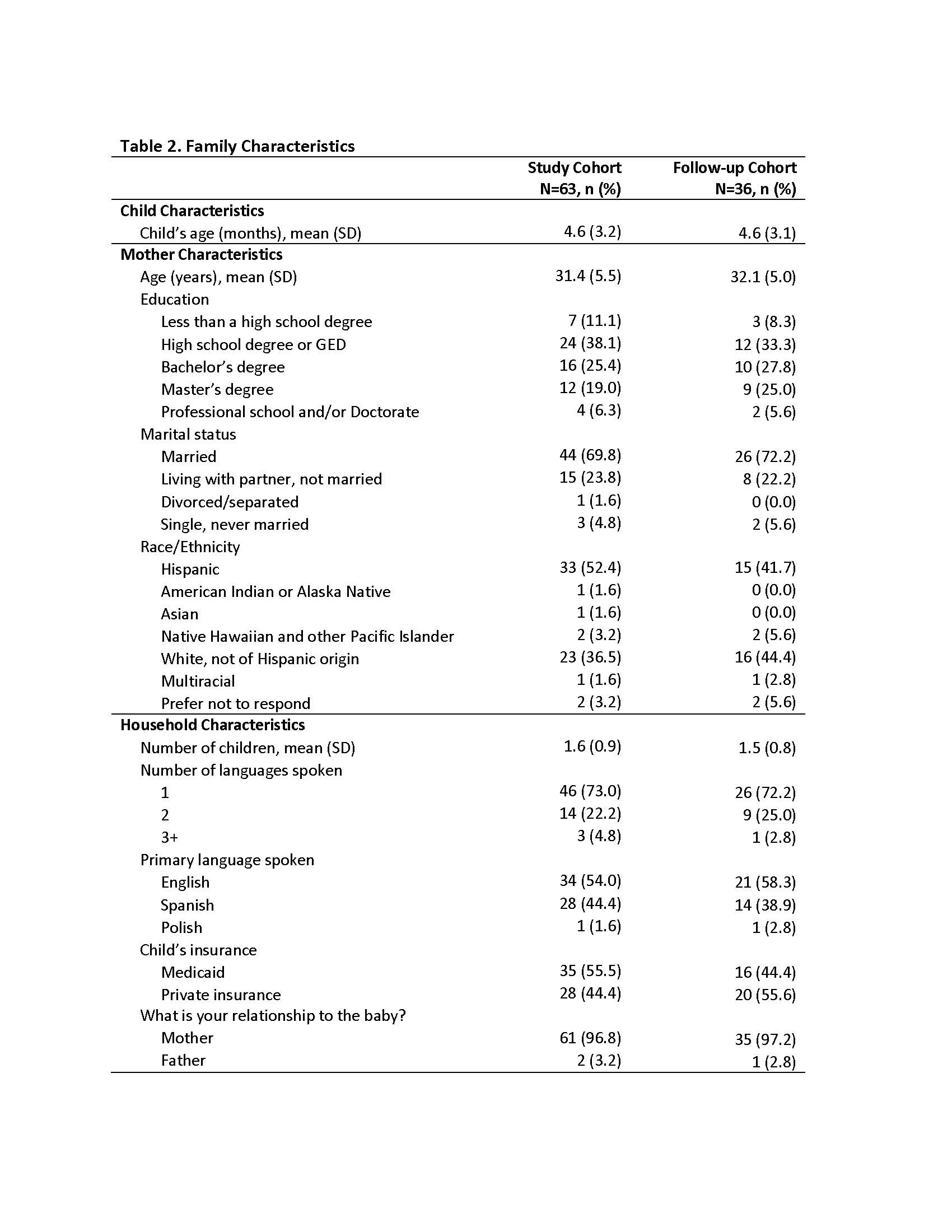
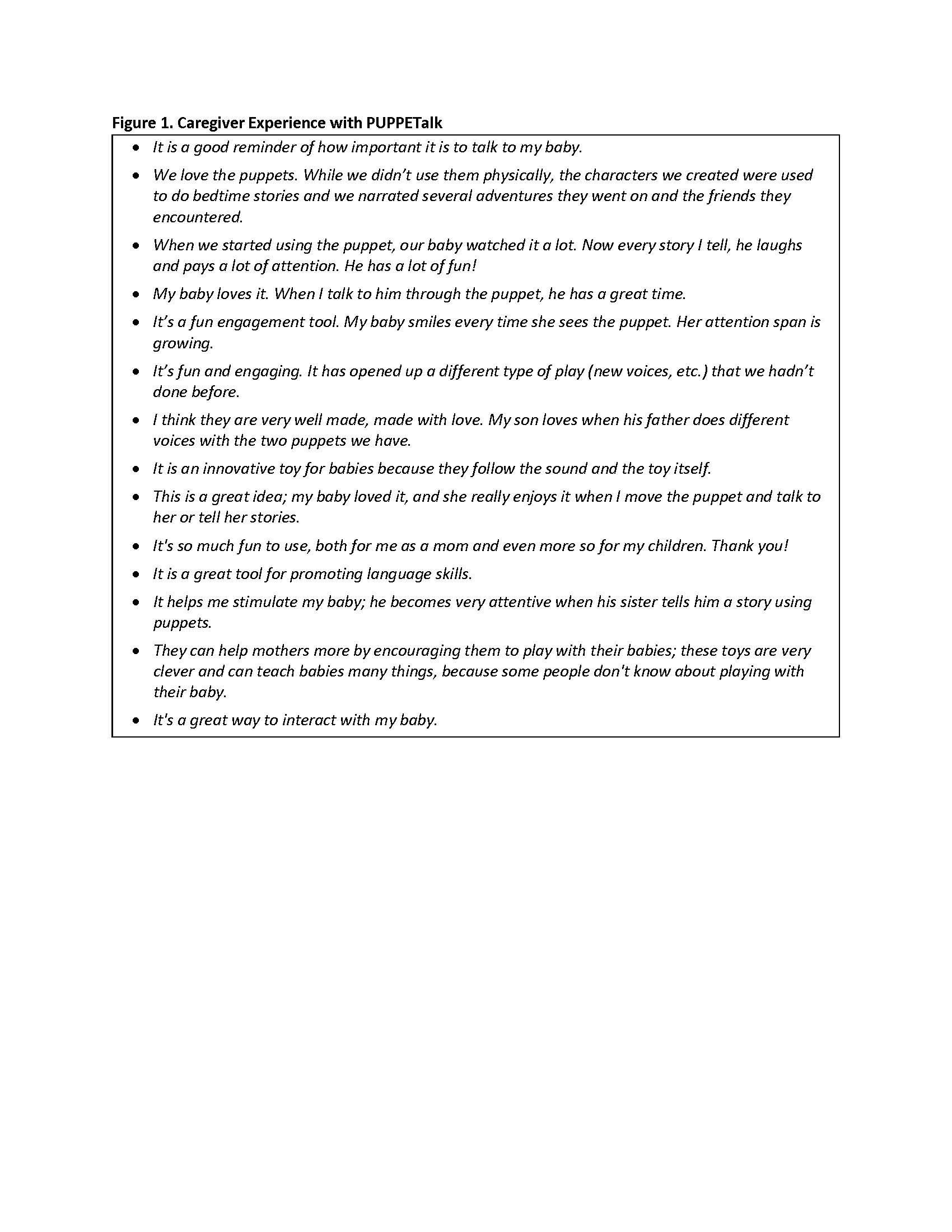
Background: Public libraries have been identified as an underused community resource for pediatricians to promote early literacy. Over the past decade, we developed PUPPETalk (PUppets to Play, Praise, Educate, and Talk) as a simple, low-cost intervention for clinical and community-based settings using finger puppets to support positive, language-rich caregiver-infant interactions for better language development. Objective: We explored the feasibility and acceptability of introducing PUPPETalk through Denver Public Library (DPL) to improve future dissemination and implementation within libraries. Design/Methods: Library staff in DPL's Early Learning Department completed a 1-hour workshop and delivered PUPPETalk as part of existing early literacy programs to families with infants under age 6 months. DPL staff and participating parents completed online surveys at baseline and follow-up. Primary outcomes were feasibility and acceptability. Pre-post changes to DPL staff child development knowledge (SPEAK-CAT) and parent-child interactions (BRIGANCE Parent-Child Interaction Scale, BPCIS) were compared using paired t-tests of mean differences. Results: Of 9 DPL staff trained, 8 (89%) completed 6-month follow-up. (Table 1) PUPPETalk was delivered through Baby Storytime, the LENA Start Program, Denver Health Well Visits, and the librarian desk. It took most providers (71%) 1-5 minutes to deliver, with most finding it very/somewhat easy to provide to families (71%) and very/somewhat well-received by families (86%). Almost all providers (88%) were very likely to recommend the program. DPL staff had no pre-post change in SPEAK-CAT scores (68.5 vs. 70.3, p=0.5). Of 63 families enrolled, 36 (57%) completed 1-month follow-up. (Table 2) All but one family used the puppet, with the mother (29%) or another family member (18%) using it at least daily. A mean of 3.1 (SD 1.8) family members used the puppet, including the mother (100%), father (71%), sibling (31%), grandmother (34%), grandfather (18%), aunt (26%), uncle (14%), and cousin (9%). Most families (67%) said the puppet helped them talk more often with their child, with most very/somewhat satisfied with the puppet (94%), very/somewhat likely to continue using the puppet (86%), and very/somewhat likely to recommend puppets (86%). (Figure 1) There was no change in BPCIS pre-post scores (10.9 vs. 10.1, p=0.1).
Conclusion(s): PUPPETalk was feasible and acceptable to disseminate through existing DPL early literacy programs with high parental and library staff satisfaction. The intervention was especially accessible, with a wide variety of family members using it in the home environment.
Table 1. Denver Public Library Staff Characteristics