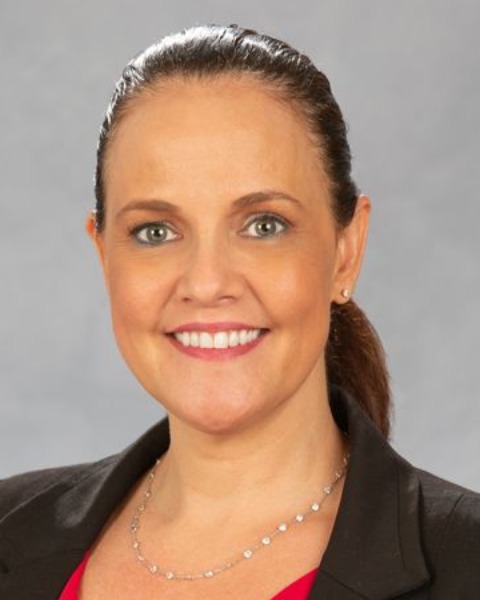
Session: Health Equity/Social Determinants of Health 7
24 - Promoting HEALTH: Partnering with Educators with Lived Experience to Prepare Interdisciplinary Trainees to Address Health Disparities in Children with Neurodevelopmental Disabilities
Monday, April 27, 2026
8:00am - 10:00am ET
Publication Number: 4023.24
Michelle Schladant, University of Miami, Miami, FL, United States; Jennifer Walton, University of Miami Leonard M. Miller School of Medicine, Miami, FL, United States; Shani A. Jones, Bluebird Kids Health, Fort Lauderdale, FL, United States; Damian P. Gregory, University of Miami Leonard M. Miller School of Medicine, Miami, FL, United States; Elana Mansoor, University of Miami, Miami, FL, United States
Associate Professor of Pediatrics University of Miami Miami, Florida, United States
Background: Health disparities significantly impact children with neurodevelopmental disabilities (NDD), particularly those from racial/ethnic minority backgrounds.The Mailman Center's Leadership Education in Neurodevelopmental Disabilities (LEND) Program trains over 100 interdisciplinary professionals annually from 17 disciplines including pediatric residents, psychology, social work, and public health. The program previously lacked comprehensive health equity education specifically addressing NDD populations at the intersection of disability and other lived experiences. Objective: To evaluate a novel Health Equity curriculum uniquely incorporating educators with lived experience as co-faculty and tailored to interdisciplinary trainees. The curriculum emphasizes the dual impact of ableism and racism on healthcare disparities affecting children with NDD. Design/Methods: We developed and integrated a 3-hour curriculum into the LEND interdisciplinary series. Novel elements included: 1) co-teaching by a developmental-behavioral pediatrician, general pediatrician, and a self-advocate with lived disability experience; 2) case-based discussions explicitly linking historical policies (redlining, institutionalization) to current NDD disparities; 3) interdisciplinary small groups from medicine and allied health disciplines. Twenty-eight trainees participated across eight cohorts. Pre- and post-curriculum surveys assessed knowledge and skills using Likert scales. Qualitative thematic analysis explored participant experiences. Statistical analysis compared pre- and post-intervention responses. Results: All domains improved significantly (p < 0.001): knowledge of ableism increased from 10.7% to 71.4%; understanding of intersectionality from 21.4% to 64.3%; recognition of historical policies' impact from 7.1% to 46.4%; and confidence in implementation from 3.6% to 21.4%. The lived experience partnership model was transformative with participants highlighting "authenticity" and "honest sharing." 71.4% rated sessions "Very Engaging." Five themes emerged: increased awareness, improved patient communication, understanding systemic barriers, commitment to earlier intervention, and practice integration.
Conclusion(s): Implementation of a targeted health equity curriculum significantly improved interdisciplinary trainees' knowledge and confidence in addressing healthcare disparities for children with NDD. The authentic partnership model, positioning disability community members as educators, not patients, offers a replicable framework for preparing professionals to address disparities at the disability-race intersection.