








Gastroenterology/Hepatology
Session: Gastroenterology/Hepatology
Sudarshan Jadcherla, MD, FRCP, DCH, AGAF (he/him/his)
Professor of Pediatrics
Nationwide Children's Hospital
Columbus, Ohio, United States
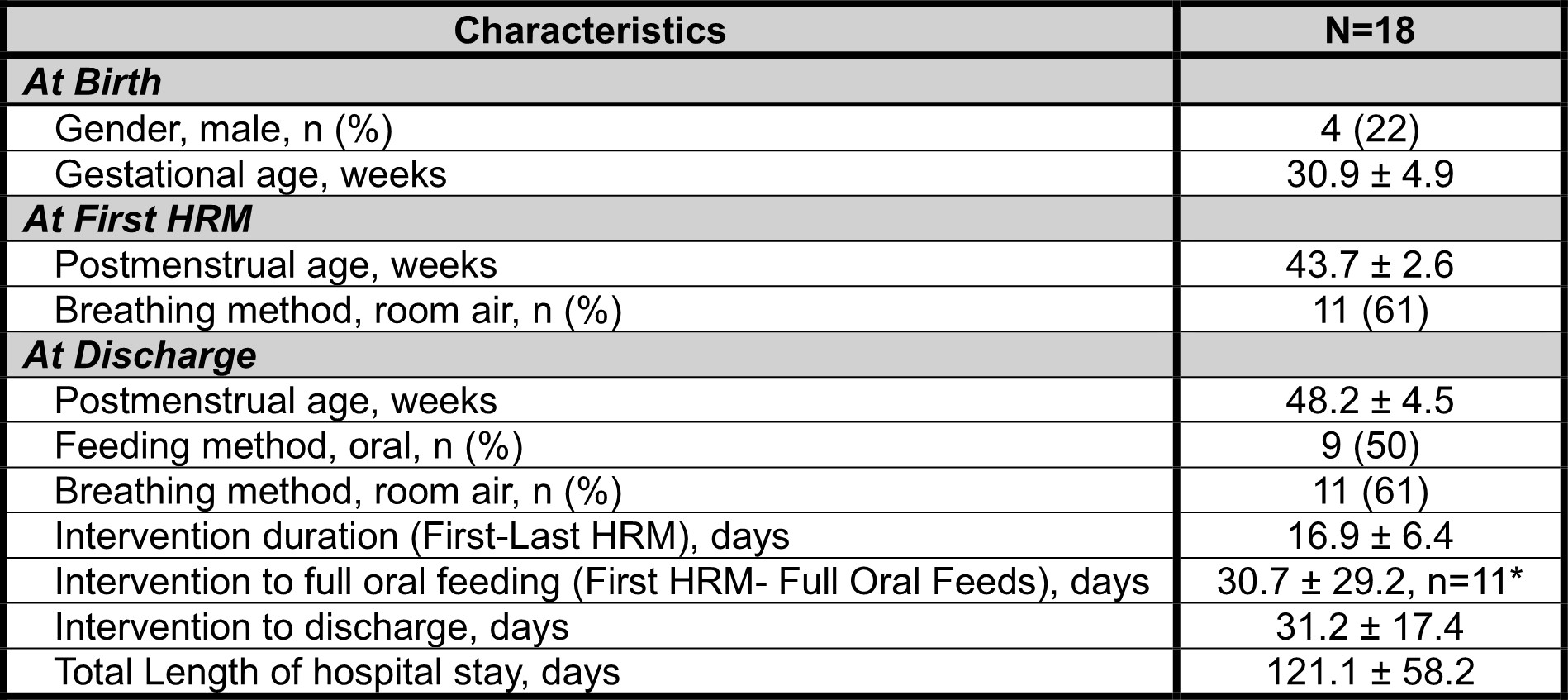 Data as n (%) or mean ± SD. *Two G-Tube recipients progressed to full oral in 2 months.
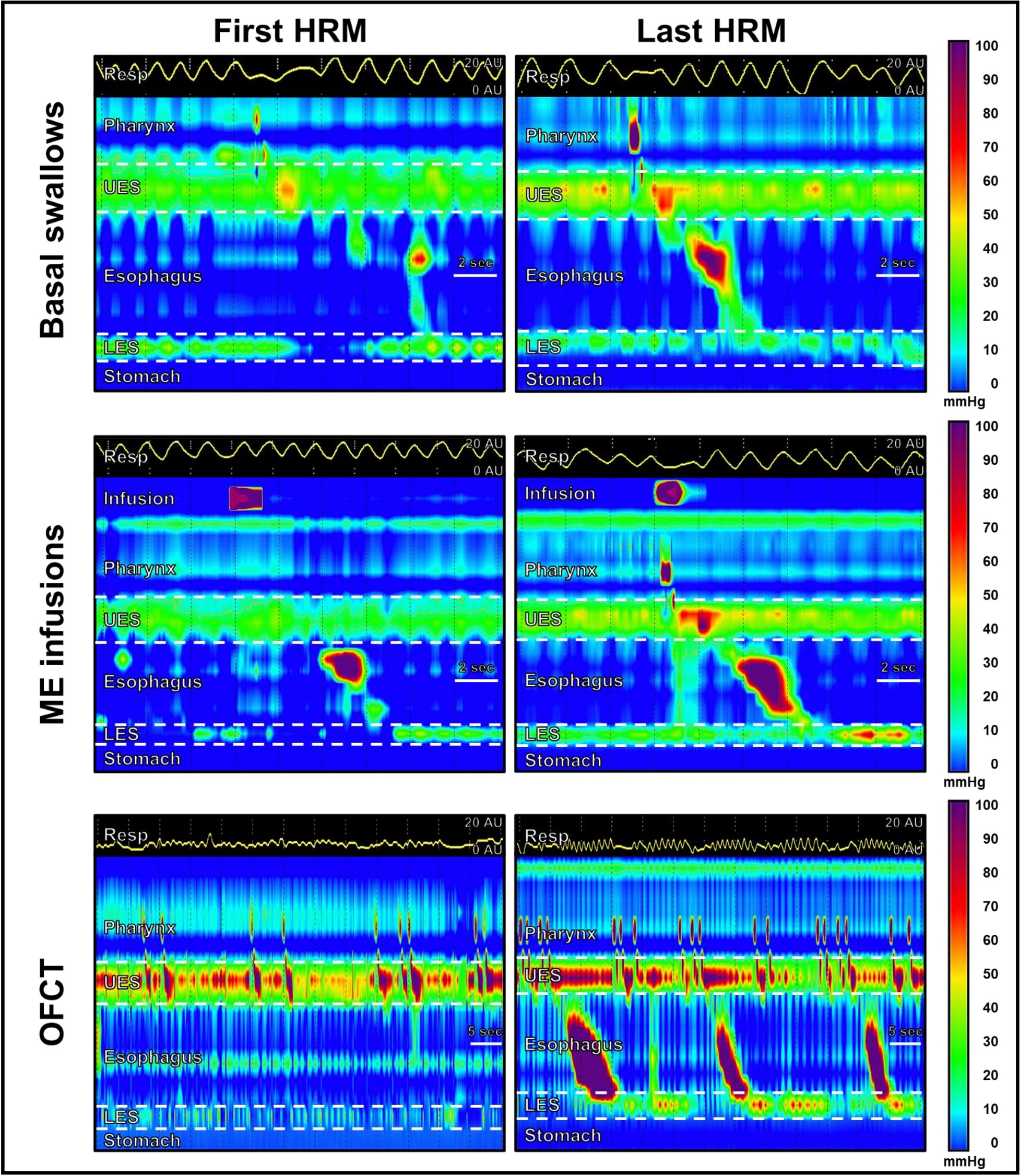 AU- Arbitrary units, LES-Lower esophageal sphincter, Resp-Respiratory, UES-Upper esophageal sphincter. Note the improvement of manometry patterns over time with basal spontaneous swallowing, mid-esophageal (ME) stimulation with infusions, and oral feeding challenge test (OFCT).
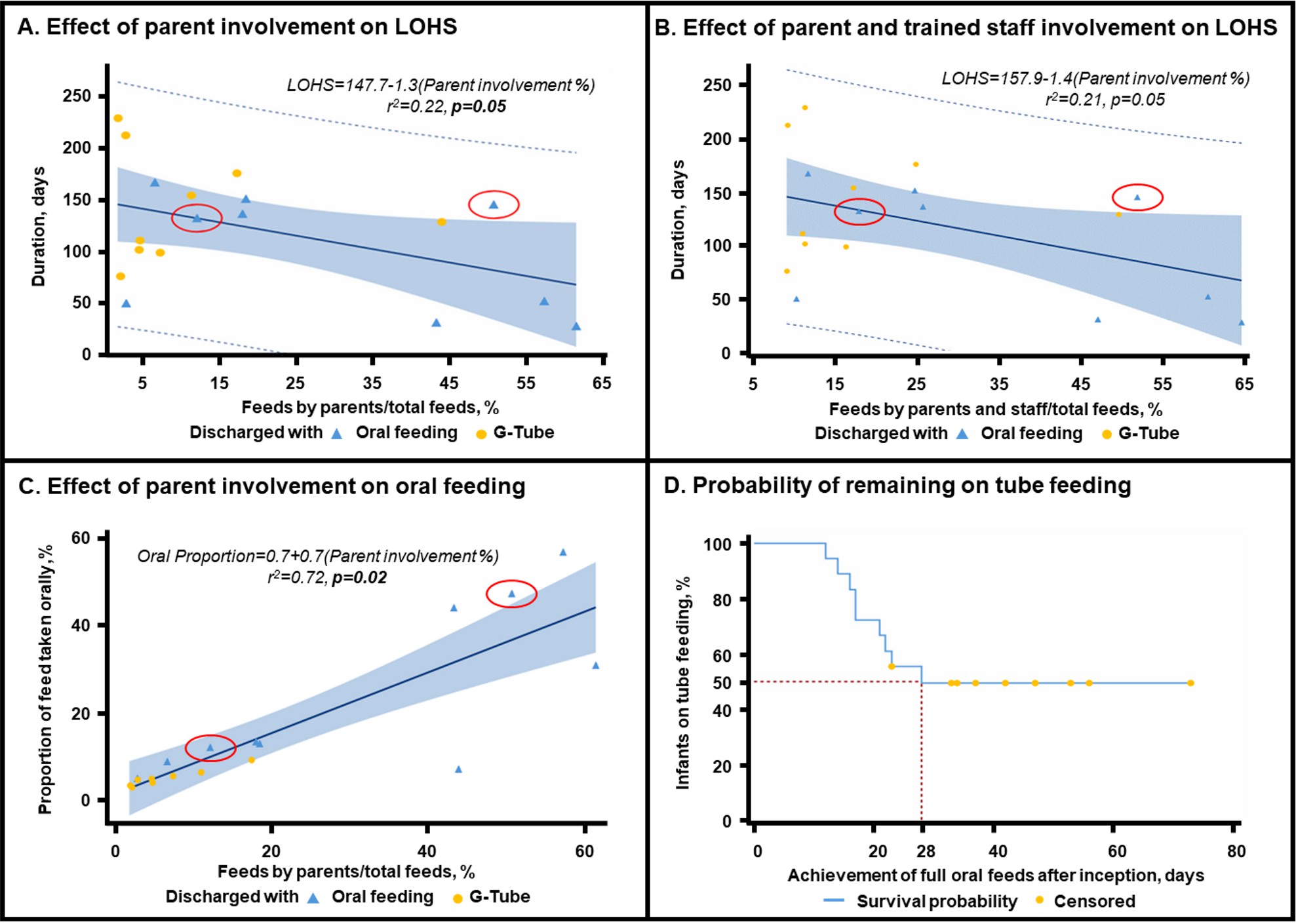 Parent involvement (%) was measured by the percent of oral feeds given by the parents over the total number of feeds during the study period. Trained staff involvement (%) was measured by the percent of oral feeds given by our specialty nurses over the total number of feeds during the study period. The red circles denote the infants who were orally feeding but needed nasogastric tube feeds upon discharge for supplemental nutrition. A) The LOHS decreased as the parent involvement increased. B) The LOHS decreased as the parent and trained staff involvement increased. C) The proportion of the feed taken orally increased as the parent involvement increased. D) The Kaplan-Meier curve shows that nine infants remained on tube feeding ≥20 days after inception. The median probability of remaining on tube feeding occurs at 28 days after inception which coincides with maximum study duration (4 weeks). The censors indicate the infants that did not reach full oral feeds before the end of the study period but feeding outcomes were still followed.