406 - Facial dog bite wounds in children: A tertiary Pediatric Emergency Department’s experience
Monday, April 27, 2026
8:00am - 10:00am ET
Publication Number: 4398.406
Elizabeth M. Waltman, University of Massachusetts Medical School, Milton, MA, United States; MARVIN B. HARPER, Harvard Medical School, NORTH READING, MA, United States; Eric Fleegler, MassGeneral Hospital for Children, needham, MA, United States; Assaf Landschaft, Boston Children's Hospital, Bergisch Gladbach, Nordrhein-Westfalen, Germany; Isabella G. Steidley, University Arizona College of Medicine, Tucson, AZ, United States; David Mills, University of California, San Diego School of Medicine, San Diego, CA, United States; Todd W. Lyons, Boston Children's Hospital, Wayland, MA, United States; Andrew F. Miller, Boston Children's Hospital, Brookline, MA, United States; Amanda Stewart, Children’s National Hospital, Washington, DC, United States; Chris A. Rees, Emory University School of Medicine and Children's Healthcare of Atlanta, Atlanta, GA, United States; Amir Kimia, Connecticut Children's Medical Center, Boston, MA, United States
Medical Student University of Massachusetts Medical School Milton, Massachusetts, United States
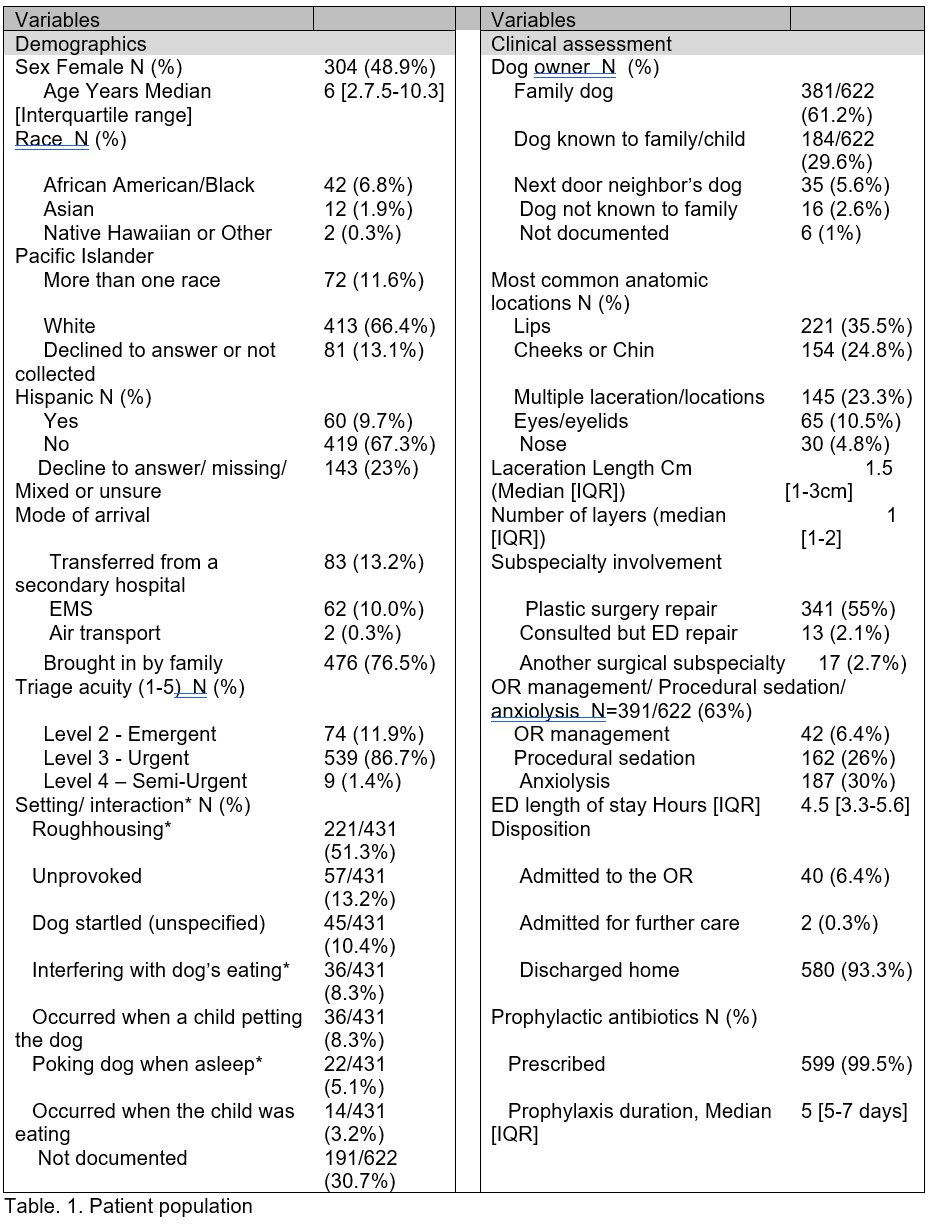
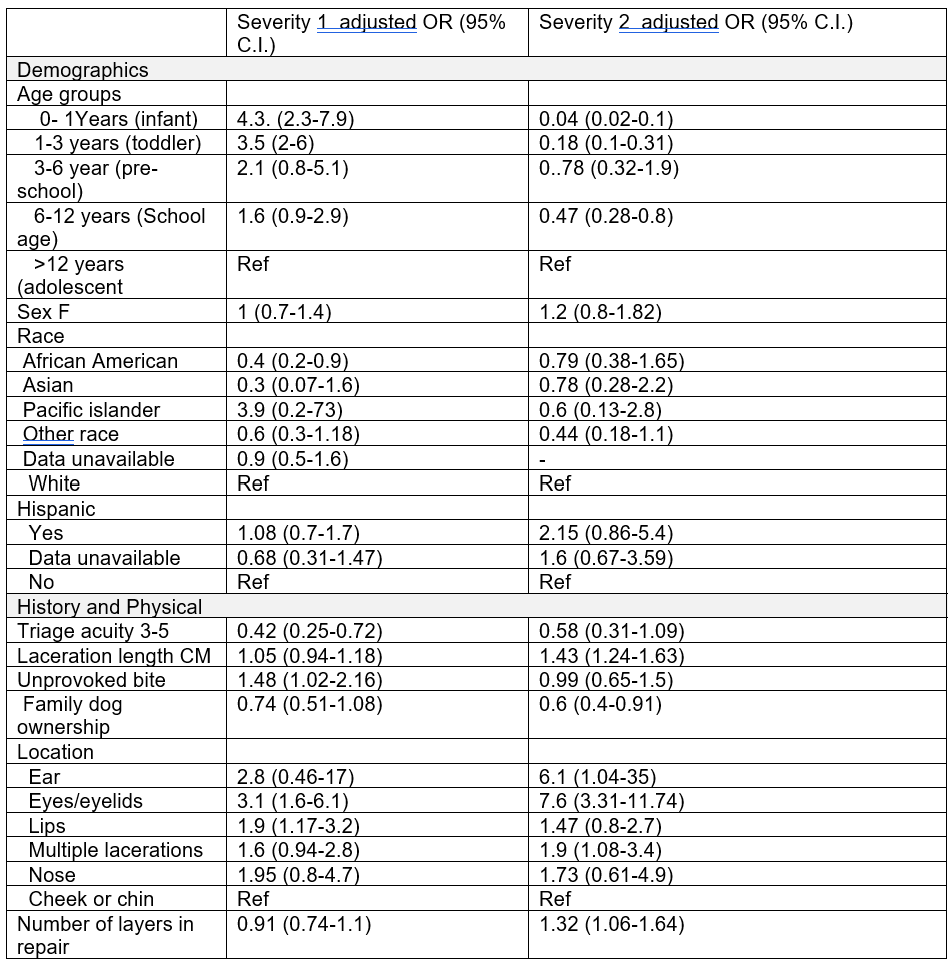
Background: Facial dog bites in children cause significant distress due to the nature of the injuries and the need for repair. Most studies on pediatric facial dog bites have been conducted by subspecialists such as plastic, maxillofacial, or ENT surgeons. These specialty-specific perspectives resulted in variability in outcomes, which likely reflects differences in subspecialty practices and patient populations. Traditional laceration severity measures (e.g., length, depth, complexity) may be less relevant than factors such as proximity to vital structures and risk of long-term morbidity. For example, short or shallow eyelid lacerations can result in substantial functional or cosmetic consequences. The need for ED based assessment led to this work. Objective: To describe emergency department (ED) resource utilization in pediatric facial dog bites and identify factors that may inform injury prevention efforts. Design/Methods: We conducted a retrospective, cross-sectional study of children (0-21 years) treated for facial dog bites requiring suturing in a large urban tertiary pediatric ED from 2016 to 2025. Data included demographics, injury circumstances, provoking factors, wound characteristics, and management. The primary outcome was a composite resource utilization score, assigning one point each for (1) sedation or surgical consultation, and (2) use of both sedation or operating room with a subspecialist involvement, or need for hospitalization. Descriptive statistics was used to report prevalence, and binary logistic regression was used to identify predictors of higher resource utilization. Results: Among 622 cases, 304 (49%) were female, with a median age of 6 years (IQR 2.8-10.3). In 96% of cases, the dog was familiar to the child or family. High-risk interactions were identified in 65% of cases with documented details and 45% of all cases (Table 1). The need for subspecialty intervention occurred in more than half of the patients (55% of the cases). About a third of the patients required conscious sedation or OR management. Predictors of high resource utilization are presented in Table 2.
Conclusion(s): Facial dog bites in children are both distressing and resource intensive. Public education promoting safe dog-child interactions may prevent some of these injuries. Additionally, antibiotic stewardship initiatives may help optimize prophylactic use following dog bites.