685 - Utilization of endoscopic ultrasound in pediatric tertiary care centers
Monday, April 27, 2026
8:00am - 10:00am ET
Publication Number: 4670.685
Alexa Altchek, Boston Children's Hospital, Boston, MA, United States; Enju Liu, Boston Children's Hospital, Lexington, MA, United States; Paul A.. Rufo, Boston Children's Hospital, Boston, MA, United States; Amit Grover, Boston Children's Hospital, Boston, MA, United States
Boston Children's Hospital Boston, Massachusetts, United States
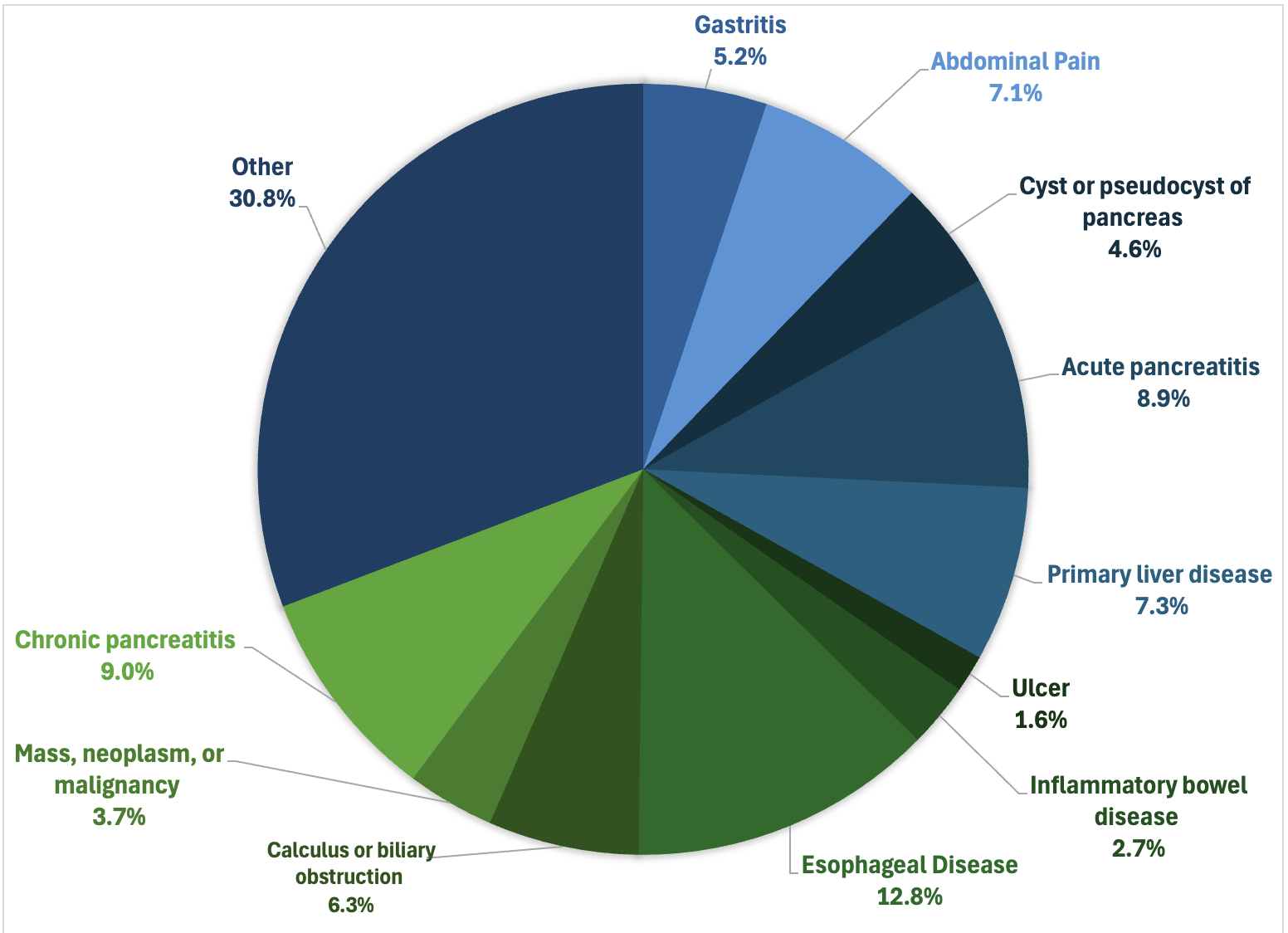
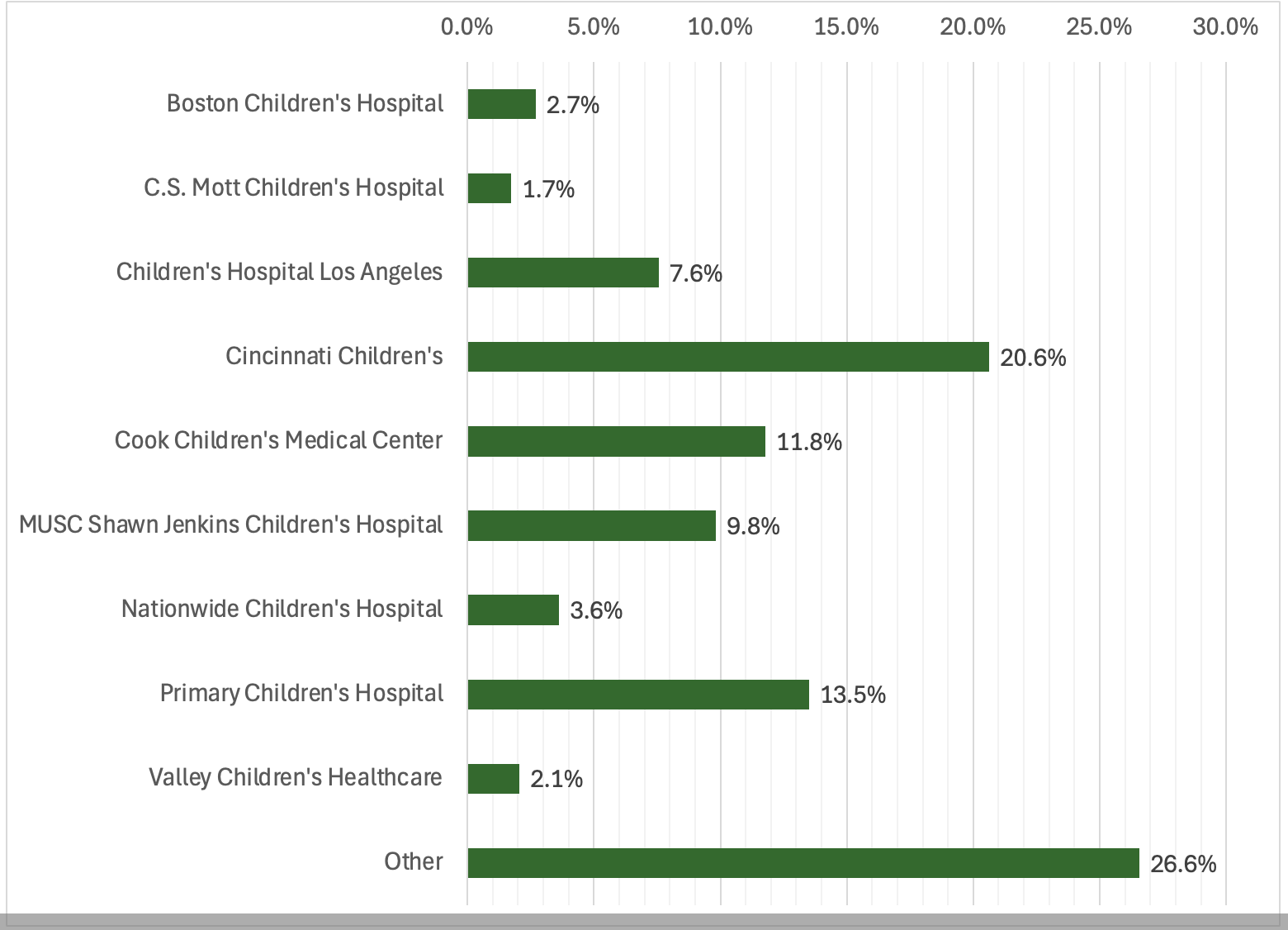
Background: Endoscopic ultrasound (EUS) is a diagnostic and therapeutic modality used extensively in adult patients since its introduction in 1980. EUS is a minimally invasive procedure that allows physicians to evaluate conditions within and surrounding the GI tract. The safety and efficacy of EUS in pediatrics were reported as early as 2005, yet it remains relatively underused compared to what is reported in the adult literature. Objective: We aim to characterize the utilization of EUS in pediatric patients, including primary indications. Demographic data of these patients will help assess referral patterns and potential disparities present in utilization. Design/Methods: This retrospective cohort study used data from the Pediatric Health Information System (PHIS), an administrative database of encounter‐level data from tertiary care pediatric hospitals affiliated with the Children's Hospital Association (CHA). Procedural CPT codes identified all encounters involving EUS or EUS-guided interventional procedures from 2004 to 2025. Descriptive statistics were used to characterize patients who underwent EUS and stratify them based on key demographic and diagnostic characteristics. Results: In this time frame, 1851 EUS procedures were performed. Prevalence increased over time, with 67.8% of these procedures performed from 2020 through 2024, and 23.2% from 2015 to 2019. 69.7% were completed at only six children's hospitals. The most common indication for the procedure was esophageal disease, accounting for 12.8% of the primary diagnoses for all procedures performed. Other common indications included chronic pancreatitis (9.0%), acute pancreatitis (8.9%), primary liver disease (7.3%), abdominal pain (7.1%), calculus or biliary obstruction (6.3%), gastritis (5.2%), cyst or pseudocyst of pancreas (4.6%), mass, neoplasm, or malignancy (3.7%), and others. The average age of patients undergoing EUS was 12.7 years (SD 5.67). 46.1% of patients were male. 72.6% of patients identified as White. 28.8% identified as Hispanic or Latino. 50.2% of procedures were paid for by commercial insurance, 40.9% by governmental insurance, and 1.2% self-pay. Only 5.9% of all procedures were performed in the Northeast census region.
Conclusion(s): EUS is increasing in prevalence within pediatrics, but most procedures are still centralized at very few centers. The most common indications of this procedure are esophageal disorders, chronic and acute pancreatitis, which differs from those in adult patients. There are potential disparities in regional access to this procedure, with lower prevalence of EUS in the Northeast region.









.png)