








Nephrology
Session: Nephrology 5

Justin Adler, Bachelor of Science
medical student
University of Rochester School of Medicine and Dentistry
Rochester, New York, United States
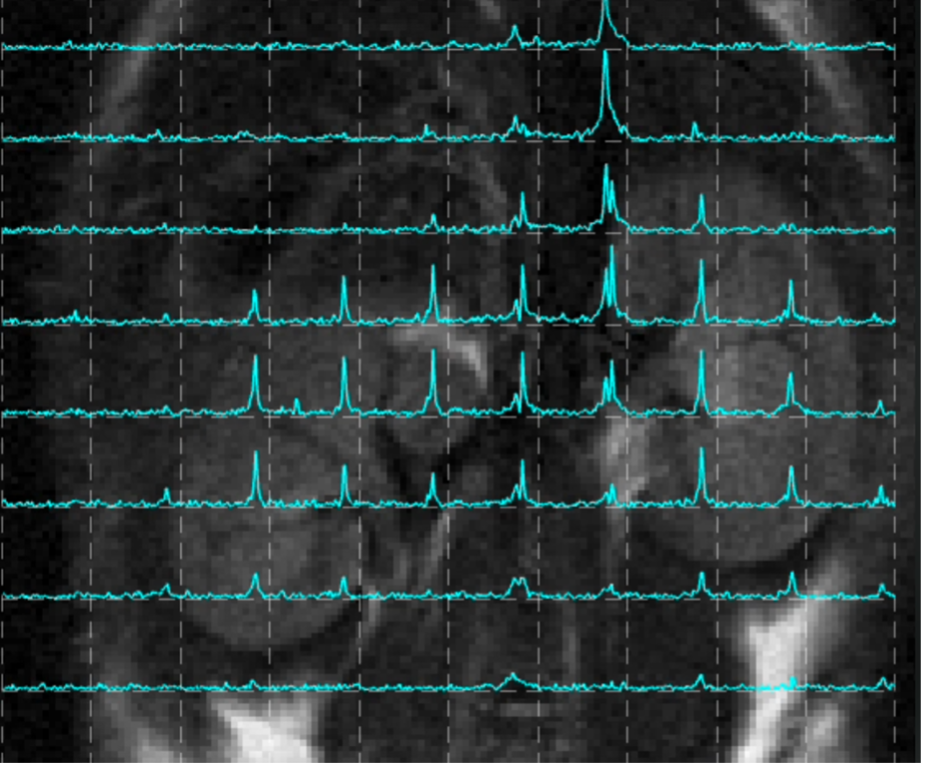 Overlaid dynamic spectra across the kidney reveal regional metabolic heterogeneity within the cortex, medulla, and perirenal tissue. This suggests altered lysine conversion pathways associated with microenvironmental differences.
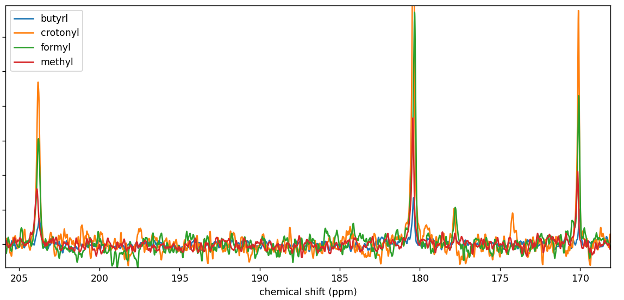 Overlaid spectra of butyryl-, crotonyl-, formyl-, and methyl-lysine show closely aligned chemical shifts ( < 0.2 ppm difference) across the 170-205 ppm range, indicating minimal variation in carbonyl resonance despite N-terminal modifications. These findings suggest that microenvironmental chemistry at the N terminus alone cannot explain the spectral imaging differences that were observed in vivo.
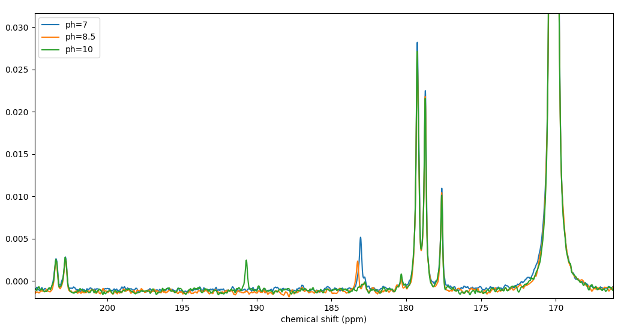 Small but notable chemical-shift variations are observed in select carbonyl resonances, indicating modest pH-dependent alterations in the lysine microenvironment. These in vitro findings suggest that local physicochemical conditions can influence spectral profiles, though the magnitude of change does not fully account for the in vivo spectral results.